

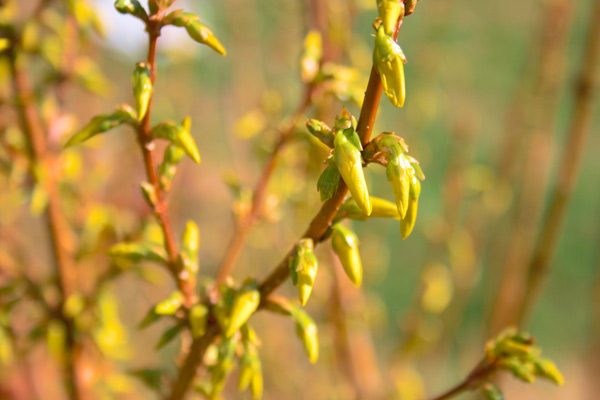
The climatic anomalies at the beginning of winter, with unusually high temperatures for the season, disrupted the hardening processes in the autumn-sown crops and provoked premature bud swelling in some tree species. In the eastern and southern regions, unusually for the season, flowering was observed in some early spring flowers (snowdrop, dandelion) and certain ornamental shrubs (forsythia). During most days of January, the agrometeorological conditions will be determined by temperatures above the climatic norms, but below the biological minimum required for the resumption of vegetative processes in wheat, barley and winter oilseed rape. In January, more suitable conditions for pruning of fruit crops will occur in the third ten-day period, when relatively dry and mild weather for the season is expected.
The unusually high temperatures at the beginning of winter (Vidin - 20°C, Vratsa - 20°C, Montana - 22°C, Lovech - 20°C, Veliko Tarnovo - 19°C, Razgrad - 18°C, Varna - 18°C, Pazardzhik – 18°C, Plovdiv - 20°C) disrupted dormancy in part of the autumn-sown crops in the arable regions of the country. After the unseasonably warm weather, the forecasted cold spell in the middle of the first ten-day period of January will hinder the undesired vegetation in the winter cereal crops, which would lead to a reduction in their winter hardiness.
During most days of January, the agrometeorological conditions will be determined by temperatures above the climatic norms, but below the biological minimum required for the resumption of vegetative processes in wheat, barley and winter oilseed rape. During the month, in most of the arable regions, the autumn-sown crops will remain in a state of dormancy. Exceptions will be observed in certain locations along the Black Sea coast, in the Struma River valley and in the southernmost regions. During the relatively warm periods, at the beginning of the month and in the third ten-day period, in these parts of the country conditions will be created for weakly expressed vegetation in wheat and barley, but it will not lead to changes in the phenological stages of the crops.
In January, the forecast minimum temperatures down to minus 13°C, under conditions without snow cover and with more prolonged persistence, will pose a risk only for the latest sown barley and wheat crops, which will overwinter at the second–third leaf stage. As a result of the above-normal temperatures at the end of autumn, the winter cereal crops and oilseed rape advanced in their development and a large part of them entered suitable stages for overwintering. In wheat and barley, the predominant stage is tillering, and in oilseed rape – rosette stage (7–8–9 leaves).
During the month, the expected precipitation (around and below the norm) will increase the soil moisture reserves also in the two-metre soil layer. At the end of autumn, the soil moisture reserves in the one-metre layer under wheat in most of the agricultural regions were very good, with levels above 90% of field capacity. Exceptions were observed only in certain locations in the Danube Plain (agrometeorological stations Kneja, Novachene) and in the north-eastern regions of the country.
In January, more suitable conditions for pruning of fruit crops will occur in the third ten-day period, when relatively dry and mild weather for the season is expected.
Source: NIMH-BAS