


The Agricultural Academy reports increased interest in Bulgarian varieties of vegetables and fruits. The scientists from the Maritsa Vegetable Crops Research Institute in Plovdiv believe that domestic vegetables have a future in our country. In recent years, a certain renaissance of already established Bulgarian varieties has been felt on the market. At present, Bulgarian produce is also offered in the retail network.
The new hybrid varieties are created mainly at the Maritsa Vegetable Crops Research Institute in Plovdiv. There is an increasing demand for local varieties that stand out with taste qualities traditional for Bulgarians. An example of this are the “Pink Heart” tomatoes. Farmers started seeking seeds for seedlings as early as 2014, when the variety was being tested at the Executive Agency for Variety Testing, Field Inspection and Seed Control (IASAS). A year later, when the breeding line was officially recognized, 8 times more seeds were produced. In 2016, production was increased by another 50%. The variety is the result of targeted breeding activity aimed at creating new tomato varieties with higher productivity, improved chemical-technological and taste qualities of the fruits, and resistance to abiotic and biotic factors. After repeated selection, the yield has been increased, the number of fruits per inflorescence has been raised without reducing the average fruit weight, and disease resistance has also been enhanced.
The already popular in Bulgaria “cherry” tomato variety IVC Alya is also part of the rich collection of hybrid varieties of the institute. It is intended for fresh consumption, drying and freezing. It is resistant to tobacco mosaic virus (race 0), Verticillium wilt and Fusarium wilt, and is tolerant to nematodes.
Bulgarian pepper varieties remain among the highest-quality and most sought after by consumers. In the last year alone, seeds for seedlings of “Kurtovska kapiya 1” have increased by 12%. This variety is relatively new and high-yielding and is suitable for medium-early field production. The produce is intended for consumption in fresh and processed form (roasting, pickling, purees and lyutenitsa), and its main advantage is that after roasting it peels very easily. The new variety slightly surpasses the standard (Kurtovska kapiya 1619) in resistance to Verticillium wilt (Verticillium dahliae Kleb.).
Demand has increased for the small-fruited pepper variety “Buketen 50” by nearly 50% on the Bulgarian market. The average yield of standard fruits varies from 1300 to 2000 kg per decare at a base of 18% dry matter. The produce of the “Buketen 50” variety is intended for processing into ground red pepper with a high content of coloring substances.
Demand for Bulgarian varieties of peas and beans recovered in the period 2015–2016. Both the old and the new pea varieties are grown, including “Marsy”, which retains excellent organoleptic qualities and color characteristics after six months of storage. The bean variety “Pagane” has a short vegetation period, which makes it suitable for cultivation as a first and second crop. It shows good resistance to the most important storage pest of beans – the bean weevil, as well as to the economically important diseases in our country: halo blight, Sclerotinia rot, rust, common bean mosaic virus and clover yellow vein virus. In recent years, the garden bean “Tangra”, which is excellent for canning, has also been gaining popularity among farmers. The variety has a short vegetation period – 44–46 days from emergence to technological maturity, and can be grown by sowing in stages from April until the second half of July. It has a high biological yield potential. It possesses good resistance to the causal agents of halo blight and Sclerotinia rot, as well as to the bean weevil. It is less susceptible to common bean mosaic virus (BCMV) and cucumber mosaic virus (CMV).
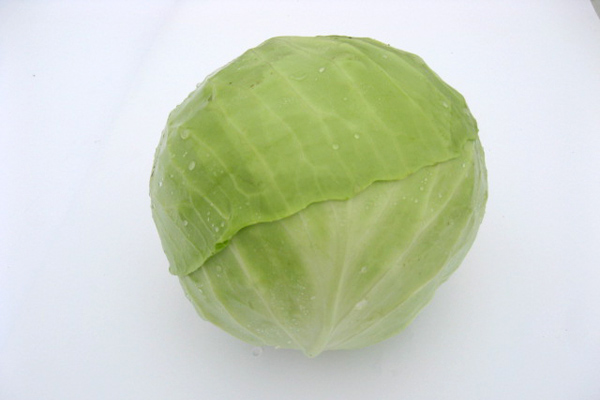
The well-known late cabbage varieties “Kyose” and “Balkan”, despite foreign competition, remain the best and most preferred by domestic producers and consumers. The “Balkan” variety is resistant to downy mildew, low air humidity and high temperatures. It has good storability.
The head cabbage variety “Puldiner” from the Maritsa Vegetable Crops Research Institute in Plovdiv was awarded a gold medal for very good performance at the Seventh National Exhibition “Inventions, Transfer, Innovations 2016”. It is intended for early field production with spring planting. The vegetation period is 65–70 days. The variety is characterized by good productivity and adaptability.
For onions, the most preferred variety is “Asenovgradska kaba”, whose seed production has been restored. For leek, the main variety for the country remains “Starozagorski 72”.
All seeds produced in the last two years of the melon varieties “Hybrid 1” and “Hybrid 15”, intended for cultivation in solar greenhouses, have been sold and proved insufficient to meet demand. They were created at the former Experimental Station for Vegetable Crops in Gorna Oryahovitsa, have a short vegetation period (75–90 days) and are resistant to the most widespread fungal diseases (downy mildew, powdery mildew, Fusarium wilt, etc.). At this year’s edition, attention was also drawn by the 6-kilogram melons of “Agrodelta Select” – a family company specialized in melon breeding and initial breeding of watermelons, courgettes and rootstocks for grafting melons and watermelons. At this stage the company has developed 30 new melon varieties, of which Lider F1 (Titan F1) is officially recognized and participated for the first time at the AGRA 2017 agricultural exhibition. The remaining varieties have the status of final in-house trials.
The “Lider F1” variety has been developed over a period of 12 years. Its official testing was carried out by IASAS in 2014 and 2015, and in 2016 it was recognized by Order of the Ministry of Agriculture and Food No RD 12-4/25.03.2016 and entered in the List of the Official Variety Catalogue of the Republic of Bulgaria. “Lider F1” has a high heterosis effect with regard to average fruit weight, high total yield and high earliness.