

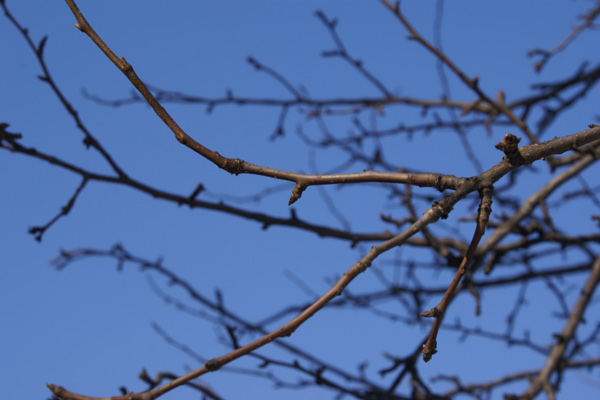
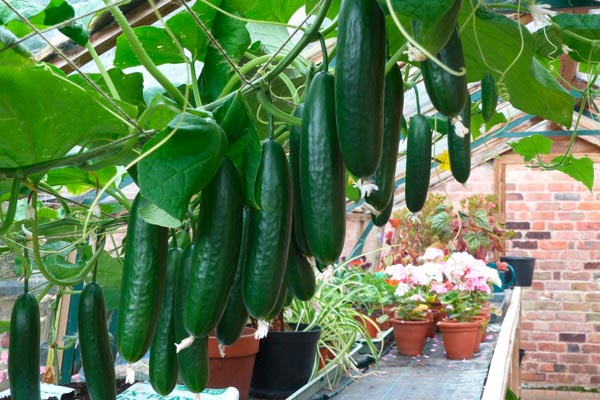
During the period when fruit trees are in the phenological stages of development “bud swelling”, „bud burst” and „mouse ear”, for pome fruit species there is a risk of development of a number of diseases and an increase in many pests.
FRUIT CROPS
Pome fruit species
Main pests for the period
Apple and pear scab Venturia inaequalis; Venturia pirina
Pear psylla Cacopsylla pyri
Apple blossom weevil Anthonomus pomorum
● Apple and pear scab Primary infections by the disease are caused by ascospores of the pathogen, which are found in the soil and are discharged under conditions of high soil moisture, air temperature above 5°C and establishment of the crop phenophase “mouse ear”. Symptoms on the leaves appear immediately after bud burst.
Strategy for pest control: To reduce primary infections from ascospores at this stage of crop vegetation, it is important to carry out the first preventive spraying.
Authorised plant protection products:
Apple:
shampion WP (MAKK 50 WP, Shamp WP) - 0.3%; Kuproksat FL - 0.3%; kaptan 50 WP - 0.2%; kaptan 80 WP - 150-180 g/ha; Merpan 80 WDG - 0.15%; Manfil 75 WG - 320 g/ha; Dithane M-45 - 200 g/ha; Dithane DG - 200 g/ha; Sancozeb 80 WP - 200 g/ha; Polyram DF – 0.2%/ha.
Pear:
shampion WP (MAKK 50 WP, Shamp WP) - 300 ml/ha; Kuproksat FL - 300 ml/ha; kaptan 80 WP - 150-180 g/ha; Manfil 75 WG - 320 g/ha; Dithane M-45 - 200 g/ha; Dithane DG - 200 g/ha; Sancozeb 80 WP - 200 g/ha; Scab 80 WG - 188 g/ha; Bordeaux Mix 20 WP - 375-500 g/ha; Kocide 2000 WG - 155-680 g/ha; Funguran OH 50 WP - 150-250 g/ha; Vitra 50 WP/Kuprohay 50 WP - 150 g/ha; Polyram DF - 200 g/ha.
Stone fruit species
Main pests for the period
Shot-hole diseases gen. Stigmina, Pseudomonas, Xanthomonas
Blossom blight (early brown rot) Monilinia laxa
Peach leaf curl Taphrina deformans
Black plum sawfly Hoplocampa minuta
Cherry weevil Rhynchites auratus
Peach twig borer Anarsia lineatella
European fruit lecanium Parthenolecanium corni
● Shot-hole diseases The causal agents are various species of fungi and bacteria, combined with unfavourable abiotic environmental factors. Dissemination of spores/bacteria occurs by rain, wind and insects. Pathogens attack all growing green parts. On young, still growing leaves, small purplish dots appear, which enlarge into small rounded spots. The tissues in the centre of the spots become necrotic and fall out. Small round holes are formed on the leaf blades. On the shoots, purplish dots also appear, which enlarge into rounded or elliptical and slightly sunken spots with a dark brown to reddish-brown colour.
Strategy for pest control: To reduce the damage from shot-hole syndrome, at this stage of the phenological development of the crops “bud swelling”, „bud burst”, treatments are carried out with the following PPPs.
Authorised plant protection products:
Peach: Bordeaux Mix 20 WP - 375-500 g/ha; Kocide 2000 WG - 155-285 g/ha.
Apricot:Bordeaux Mix 20 WP - 375-500 g/ha; Kocide 2000 WG - 185-280 g/ha; Funguran OH 50 WP – 150-250 g/ha; shampion WP (MAKK 50 WP, Shamp WP) – 300 g/ha; Vitra 50 WP/KUPROHAY 50 WP - 150 g/ha.
Plum: thiram 80 WG - 0.3%; Funguran OH 50 WP – 110-200 g/ha; shampion WP (MAKK 50 WP, Shamp WP) – 300 g/ha.
Sweet and sour cherry: thiram 80 WG - 0.3%; Funguran OH 50 WP – 130-200 g/ha; shampion WP (MAKK 50 WP, Shamp WP) – 300 g/ha.
VINEYARDS
Main pests for the period
Grapevine Phomopsis cane and leaf spot (excoriosis) Phomopsis viticola
European red mite Panonychus ulmi
European grapevine moth Lobesia botrana
● Grapevine Phomopsis cane and leaf spot (excoriosis) The causal agent of the disease overwinters as fruiting bodies in the bark of mature shoots and as mycelium in the buds and wood. The critical period for disease development is from the vine phenophase „bud swelling” to the phenophase „3rd – 4th leaf”, in combination with moderately warm weather and air humidity above 98-100%. Disease symptoms are expressed in the death of the primary buds, dieback of arms and their withering.
Strategy for pest control: Treatment with plant protection products is mandatory if the disease has been established in the vineyard during the previous year. A single independent spraying is carried out when about 40% of the buds located at the base of the shoots are in the phenophase „green tip (butterfly)”. In a cool and rainy spring, when the sensitive period for excoriosis is prolonged, a second spraying is carried out when 30-40% of the buds at the base of the shoots are in the phenophase „2-3 leaves”.
Authorised plant protection products: Antracol 70 WG - 0.3%; Verita WG - 0.2%; kaptan 50 WP - 0.3%; Mikal Flash - 0.3%; Momentum Extra WG - 300 g/ha; Pasodoble 70 WG - 200 g/ha; Pencozeb 75 WG - 210 g/ha; Solofol - 188 g/ha; Thiovit Jet 80 WG - 1250 g/ha; Folder 80 WG - 187.5 g/ha; Follow 80 WG/Freelur 80 WG/Flowet 80 WG - 187.5 g/ha.
VEGETABLE CROPS
Greenhouse production
Main pests for the period
Late blight of potato Phytophthora infestans
Early blight (brown leaf spots) Alternaria solani
Leaf mould Fulvia fulva
Grey mould Botrytis cynerea
Cucurbit downy mildew Peronospora cubensis
Powdery mildew of cucumber Sphaerotheca fuliginea
Tomato leaf miner Tuta absoluta
Greenhouse whitefly Trialeurodes vaporariorum
Leaf-mining flies Liriomyza sp.
Thrips Thrips tabaci, Franklinella occidentalis, Heliothrips haemorroidalis
Tomatoes and cucumbers
●Cucurbit downy mildew The disease first appears on the oldest leaves and gradually spreads to younger ones. On the upper side of the leaves, water-soaked spots of irregular shape, limited by the veins, are formed. On the underside of the leaves the spots are greasy, clearly delimited by the venation.
Strategy for pest control: Regular ventilation of greenhouses to reduce relative humidity. At the first signs of the disease, treat with systemic fungicides.
Authorised plant protection products: Aliette Flash - 0.3%, Bordeaux Mix 20 WP - 375 – 500 g/ha, Verita WG - 0.15%, Galben 8 M 65 - 0.25%, Equation Pro - 0.04% (40 g/ha), Infinito SC - 120-160 ml/ha, Corsate 60 WG - 20-30 g/ha, Corsate R DF - 0.25%, Kocide 2000 WG - 100 – 155 g/ha, Quadris 25 SC - 0.075%, mancozeb 80 WP - 0.25%, Polyram DF - 180-200 g/ha and Ridomil Gold MZ 68 WG - 0.25%.
●Powdery mildew of cucumber The disease attacks leaves, petioles and stems. On them surface whitish spots with powdery coating appear. In case of severe infection the leaves turn yellow and dry, the flowers fall off, and the fruit set dies. Powdery mildew appears first on plants located near the greenhouse entrance or ventilators, where temperature and humidity fluctuations are most frequent.
Strategy for pest control: Plants should not be irrigated with cold water, because it increases their susceptibility to the disease.
Authorised plant protection products: Vivando - 20 ml/ha (0.02%), Domark 10 EC - 50 ml/ha, Quadris 25 SC - 0.075%, Custodia - 50-100 ml/ha, Systhane 20 EW - 37.5 ml/100 l water (18.8 – 37.5 ml/ha), Systhane Ecozome EW - 65 – 165 ml/ha, Thiovit Jet 80 WG - 300 g/ha, Topaz 100 EC - 0.025%, Flint Max 75 WG - 20 g/ha, Cidely Top - 100 ml/ha and Shavit 25 EC/Tridemol 25 EC - 0.02%,
●Leaf-mining flies The flies cause damage by puncturing the upper epidermis of the leaves and feeding on the exuding sap. As a result of the punctures, small, pale, pinpoint spots are formed, which later turn brown. Damage from the larvae results from their feeding on the parenchyma. The mines formed are curved, narrow, long, very often intersecting or joining each other, and the excrement forms a narrow streak inside.
Strategy for pest control: To monitor the flight and population density of the pests, orange sticky traps should be used.
Authorised plant protection products: For tomatoes: Vaztak New 100 EC - 0.03%, Sinéis 480 SC - 25-112.5 ml/ha and Trigard 75 WP - 0.02%.
for tomatoes and cucumbers: Valmek - 15-100 ml/ha, Vertimec 018 EC - 100 ml/ha, Lanat 25 WP - 80-100 g/ha and Picador 20 SL - 0.05%.