

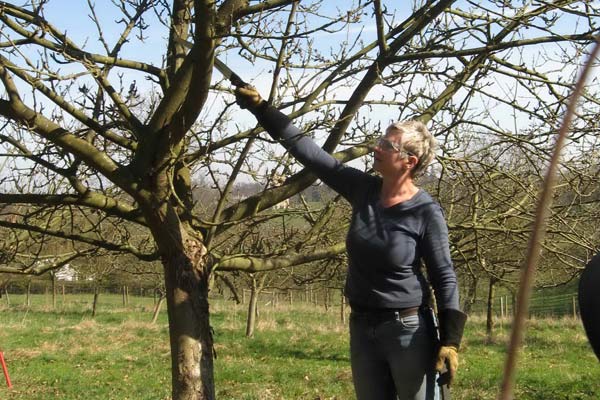
In February, agrometeorological conditions will be determined by temperatures around and below the climatic norms. During the month, the forecast minimum temperatures, in the range of minus 14–19°C, will once again test the winter hardiness of part of the overwintering agricultural crops. Suitable conditions for pruning in the vineyards and orchards will occur during the first half of the month.
The low negative temperatures in January caused, to varying degrees, frost damage to fruit trees and vines in many places in Southwestern Bulgaria.
After the frosty January weather, an increase in temperatures is forecast for the first ten-day period of February, but their mean daily values will remain within limits that will keep the autumn-sown crops in deep dormancy.
During the second ten-day period, a more substantial improvement in temperature conditions is expected and part of the winter cereal crops in the southern regions of the country will pass from deep to relative dormancy.
During the warmer periods of the second and third ten-day periods, when maximum temperatures above 14–15°C are forecast, the mean daily values – in places in the southern and southeastern regions – will approach the biological minimum required for the resumption of vegetative processes in winter cereal crops. In some locations, in wheat and barley, conditions may arise for weakly expressed vegetation, but this will not lead to a change in the phenological state of the crops. At the end of February, the winter cereal crops will be in the growth stages of third leaf and tillering.
The forecast temperatures during the third ten-day period of February will disrupt forced dormancy in part of the fruit crops. In early-flowering stone fruit species (almond, apricot, peach, cherry) in the field regions of the country, bud swelling will occur.
Precipitation in February, around and below the monthly norm, will increase soil moisture reserves also in the two-metre layer. As a result of above-normal January precipitation (Vratsa 76 l/m², Veliko Tarnovo 78 l/m², Varna 66 l/m², Dobrich 57 l/m², Plovdiv 66 l/m², Kardzhali 62 l/m², Haskovo 120 l/m², Chirpan 74 l/m², Stara Zagora 79 l/m², Burgas 58 l/m²), after snowmelt, soil moisture reserves in the one-metre layer in most of the country are expected to reach levels close to field capacity (FC).
In February, more suitable conditions for carrying out pruning in vineyards and orchards will occur during the first half of the month. In areas where minimum temperatures below minus 17–18°C have been recorded (Vidin, Knezha, Shumen, Pazardzhik, Plovdiv, Stara Zagora, Chirpan), pruning of vines should be carried out later, after determining any potential frost damage.
During the second half of the month, the forecast frequent showers will keep the upper soil layers waterlogged in many parts of the country, which will hinder the top-dressing of autumn-sown crops with nitrogen mineral fertilizers.
Source: NIMH-BAS