

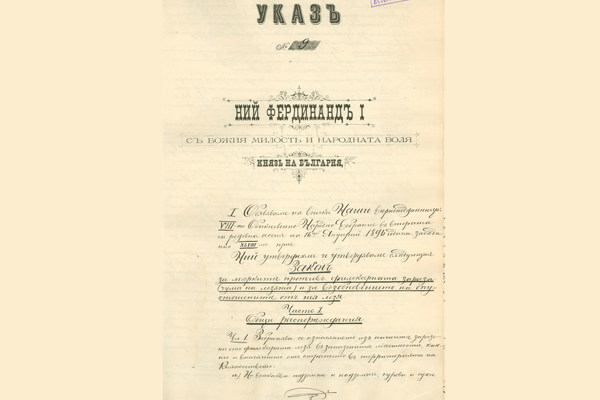

On January 16, 1896, a Decree by Prince Ferdinand adopted the "Law on Measures Against the Phylloxera Infestation (Vineyard Plague) and for the Restoration of Vineyards Devastated by It." This act officially marked the beginning of regulated pest control and plant protection activities in our country. 121 years later, January 16 is officially celebrated as the professional holiday of plant protection specialists in Bulgaria. This year, the celebration was held on January 16 in the auditorium of the Agricultural University in Plovdiv.
Happy holiday to all the "doctors" of plants, who diagnose and prescribe the right medications.
Back in Time
In the beginning, there was chaos. Bulgarian agriculture was small-scale and fragmented, a large part of the harvests were completely devastated by pests, and the fight against them was left to fate. The lack of experience and knowledge among farmers was not an isolated case but a widespread practice, leading to enormous agricultural losses.
It was only when the phylloxera infestation destroyed almost all vineyards during the time of Prince Ferdinand, in 1896, that the first law in plant protection was adopted - the "Law on Measures Against the Phylloxera Infestation (Vineyard Plague) and for the Restoration of Vineyards Devastated by It."
However, plant protection activities truly began to function in Bulgaria with the adoption of the first general law regulating the protection of plants from diseases and pests by Decree No. 21 of Tsar Boris III in 1930. Parallel to this, in 1933, the International Plant Protection Convention of Rome 1929 was ratified.
Despite the existing laws and the establishment of plant protection as a specialty, plant protection activities were carried out by various structures, but there was no independent service in accordance with the requirements laid down in the International Plant Protection Convention of Rome 1951.
At the beginning of the second half of the 20th century, the state adopted a strategy for cooperativizing agricultural production, thereby creating preconditions for conducting research work in crop production and plant protection. A Plant Protection Department was established at the Ministry of Agriculture, along with regional inspectorates, quarantine inspections, and district forecast and warning stations.
A Central Control Laboratory for Plant Protection was also opened. The Institute for Plant Protection in Kostinbrod became the main research unit providing scientifically based pest control across the country's territory.
The Law for the Protection of Plants from Diseases and Pests, as well as the Law for Restricting the Import of Seeds and Planting Material, were also adopted.
Gradually, plant protection became a respected scientific field, confident in its ability to train and educate new specialists. In 1950, a Plant Protection specialty was opened at the Agronomy Faculty in Sofia, and a Plant Protection Department was established at the Plovdiv Agricultural Institute.
Following the political changes in the early 1990s, 40 years later, based on the ratified International Convention from Rome, an independent body was created that corresponds to international norms and standards in plant protection. With *Council of Ministers Decree No. 131 of July 15, 1992, and the subsequent Order of the Minister of Agriculture and Food Industry from October 14 of the same year, the National Plant Protection Service was established.*
The regulation of the Service's statute also fulfilled one of the main requirements of the EU, namely that each country in the Community must have a single official national authority in the field of plant protection. This is especially true for candidate countries for EU membership. As an external phytosanitary border of the Community, our country, with the help of the National Plant Protection Service, laid the foundations for harmonizing national legislation with that of the EU in organic farming, phytosanitary control, and biological testing and authorization of plant protection products.
Ironically, again due to requirements from the European Union in 2011, the Bulgarian Food Safety Agency was created, whose structure merged the three main and independent services in the field of agriculture: the National Veterinary Service, the National Plant Protection Service, and the National Grain and Forage Service, thereby terminating the independent existence of the National Plant Protection Service. The Agency serves as the national authority for food safety and quality and, of course, follows all European practices in applying high standards. Thus, the short independent history of plant protection in Bulgaria ended as a ripple in the general flow of the entire food chain.
What Happened in Plant Protection in 2016?
Despite increased control, the trade in illegal plant protection products continues to grow. Nearly 6 tons of products, in the form of liquid preparations and unregistered fertilizers, were seized by BFA inspectors last year. Currently, Turkey is leading in the trade of illegal plant protection products. According to the Bulgarian Food Safety Agency, the problem of illegal imports will remain a priority in the current year 2017 as well. However, there is a tangible need for assistance from other state institutions such as the police, investigative bodies, as well as from the private sector.
At the Central Plant Quarantine Laboratory in Sofia, BFA phytosanitary inspectors confirmed an infestation by a new pest for the country - a gall-forming eriophyid mite (Aceria kuko - Godji berry gall mite) in the regions of Plovdiv, Vidin, Vratsa, Varna, Blagoevgrad, and Pernik. Primarily affected were plantations and nurseries with goji berries and peppers. The mite was discovered during inspections of organic production farms. In 2017, the approval of products and the development of control programs against this new mite are pending. Unlike Drosophila suzukii, which has already been identified as an economically significant pest, the gall-forming eriophyid mite is strictly specialized on goji berry plants and some pepper varieties.
Also, as of October 4, 2016, Ordinance No. 14 on the protection of plants and plant products from economically important pests is in force, regulating the conditions for the application of biological agents, the rules for good plant protection practice, and control. The monitoring and diagnosis of economically important pests will be carried out by the BFA.
Despite the lack of serious pest attacks on agricultural crops in 2016, the spread of Drosophila suzukii continues to expand into more regions of the country. The adoption of a national program for measures and control of this pest is a huge step in the fight against it, as it is extremely dangerous for fruit production in Bulgaria.
In 2016, over 240 plant protection products were authorized - renewed, with changes in authorization, and zonal authorizations. With the establishment of the Food Chain Risk Assessment Center, this trend of increasing the number of authorized products is likely to continue in 2017.
The process of issuing ordinances under the new Plant Protection Law has also been completed. Some of them have been published and are already promulgated in the State Gazette.
What's Next in Plant Protection in the Current Year 2017
The legislative initiative continues - the entry into force of a regulation on phytosanitary control is expected, which will include rules that will harmonize criteria for all EU member states regarding plant health and crop protection.
At the beginning of 2018, Bulgaria, along with two other countries, will assume *the presidency of the Council*, which also means the presidency in plant protection. Therefore, this year, a team of specialists will be organized and prepared to take on the responsible task of regulating laws and activities in the field of plant protection.
Forward in Time
Plant protection is no longer just a national priority. Within the scale of contemporary global problems such as feeding the population, climate change, invasive species, and deficits in the immune and nutritional systems of biological organisms, it strives to adequately meet the set needs. However, the picture is again chaotic, to the extent that common rules and supranational laws manage to be applied harmoniously at a regional level. The fight against pests is turning into a struggle for the survival of a specialty with a long and interesting history in Bulgaria, which currently shares common management and policy with another - animal husbandry, and only as part of the food system.
The hope remains that the "doctors" of plants will continue to diagnose and prescribe the right medications.
Plant Protection Specialist Day 2017
The celebration of the professional holiday of plant protection specialists this year was held on January 16 in the auditorium of the Agricultural University in Plovdiv. Scientific reports were presented at the ceremony, highlighting various problems and solutions in plant protection in organic farming and new pests in Bulgaria.
Discussions included Deputy Minister of Agriculture Tsvetan Dimitrov, Deputy Executive Director of the BFA Anton Velichkov, Chairman of the Agricultural Academy Prof. Totka Trifonova, Rector of the Agricultural University Prof. Hristina Yancheva, and Chairman of the Management Board of the Bulgarian Association for Plant Protection Assoc. Prof. Dr. Petar Nikolov.
Following the presentations, a general assembly of the Bulgarian Association for Plant Protection was held, the agenda of which included the adoption of a declaration against the illegal import of pesticides.
*The member states holding the presidency work in close cooperation in groups of three member states, called "trios." This system was introduced by the Treaty of Lisbon in 2009. The trio sets long-term goals and prepares a common agenda outlining the themes and key issues to be addressed by the Council over an 18-month period. Based on this program, each of the three countries prepares its own more detailed six-month program.