

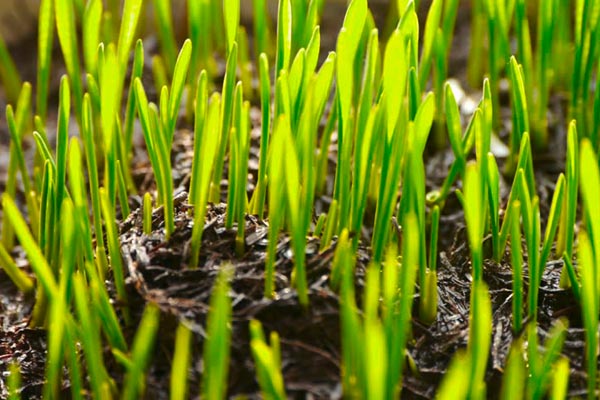
The prolonged drought and the subsequent substantial, in places above-normal, October precipitation were the reason for missing the agrotechnical deadlines for wheat sowing in part of the field areas of the country. Under our climatic conditions, sowing of winter cereal crops carried out later, in November, limits the possibilities for the crops to enter the tillering stage by the end of their autumn vegetation. Plants in the tillering stage have increased winter hardiness, which is of great importance for their successful overwintering. At the end of November, in oilseed rape sown in September, within the agrotechnical deadline, the rosette stage (6–8 leaves) will be observed.
At the beginning of November the agrometeorological conditions will be determined by colder-than-normal weather for the season. The forecast values of the average daily temperatures in many parts of the country, with the exception of the southern regions, will be close to the biological minimum required for the vegetation of the sown autumn crops.
An improvement of the thermal conditions and activation of the vegetation processes in the winter cereal crops and winter oilseed rape is forecast for the middle of the first ten-day period. The expected precipitation during the ten-day period will hinder the implementation of the delayed autumn sowing. The prolonged drought and the subsequent substantial, in places above-normal, October precipitation (N. selo - 79 l/m2, Vidin – 89 l/m2, Vratsa - 84 l/m2, Montana - 78 l/m2, Kneja - 73 l/m2, Sofia - 60 l/m2, Dragoman – 77 l/m2, Sofia - 60 l/m2, Ruse - 53 l/m2, Razgrad - 51 l/m2, Dobrich – 63 l/m2, Varna - 102 l/m2, Karnobat - 66 l/m2, etc.) were the reason for missing the agrotechnical deadlines for wheat sowing in part of the field areas of the country.
During most days of the second and third ten-day periods the agrometeorological conditions will be highly dynamic.
After a brief cold spell at the beginning of the second ten-day period, above-normal temperatures are forecast for the second half of the month, which will maintain active vegetation of the winter cereal crops and winter oilseed rape.
At the end of November, in wheat and barley, depending on the sowing dates, the following stages will be observed: tillering in crops sown within the agrotechnical deadline; third leaf stage in those sown at the end of October and the beginning of November. In late-sown crops, during the second half of November, emergence will predominate. Under our climatic conditions, sowing of winter cereal crops carried out later, in November, limits the possibilities for the crops to enter the tillering stage by the end of their autumn vegetation. Plants in the tillering stage have increased winter hardiness, which is of great importance for their successful overwintering. At the end of November, in oilseed rape sown in September, within the agrotechnical deadline, the rosette stage (6–8 leaves) will be observed.
During the month the forecast values of the minimum temperatures, down to minus 5ºC, will not pose a risk to the late-sown crops in the emergence stage.
In November the expected precipitation, around the monthly norm, will increase the autumn soil moisture reserves in the 100 cm soil layer. At the end of October in most of the field areas of the country (agrometeorological stations: Bazovets, Nikolaevo, Borima, Pavlikeni, Sandanski, Tsarev Brod, Dolni Chiflik, Karnobat, etc.) the soil moisture reserves in the 50 cm layer were at levels above 75–80% of field capacity. Lower reserves, below 70% of field capacity, were reported in places in Southern Bulgaria (agrometeorological stations Plovdiv, Haskovo, Sliven, Yambol).
In November more favourable conditions for planting fruit trees will occur during most days of the second and third ten-day periods. Under the climatic conditions of our country, autumn planting of fruit crops is recommended, with the exception of walnut.
Source: NIMH-BAS