

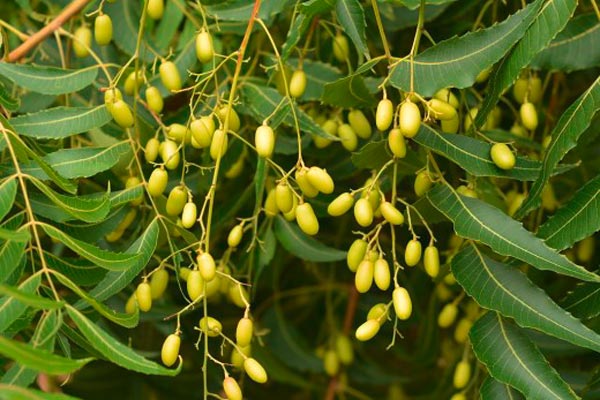
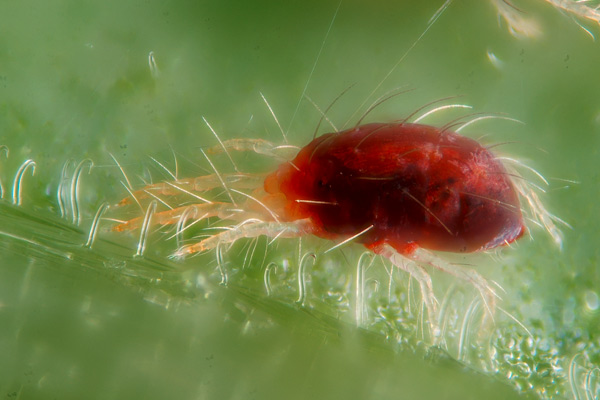
New pesticides based on plant extracts (phytopesticides) are already entering plant protection technologies; they have repellent and toxic effects against pests, which are due to the natural compounds contained in them. The presented botanical and bioproducts are registered and authorized for use in organic vegetable production. Phytoinsecticides, products from the pyrethrin group, and microbial products.
Phytoinsecticides
Products from the Indian neem tree (Azadirachta indica A. Juss:Meliaceae):
Nim Azal T/C®
Manufacturer: Trifolio-M
Active substance: 1% azadirachtin A + 0.5% azadirachtin B, C, D and E, and 2.5% neem substance.
Mode of action: Nim Azal T/C® forms a fine film on the sprayed plant parts, has strong penetrating action through the leaves and is transported throughout the entire plant. The product has a stomach action and blocks the formation of the larval hormone ecdysone in the pest organism. The development of the larvae is halted, they become less mobile and stop feeding, thereby interrupting their harmful activity. They die after a few days.
Advantages of the product:
- Non-toxic to humans and warm-blooded animals.
- Safe for bees and most entomophagous species.
- No pre-harvest interval.
- Authorized for use in the production of organic produce.
Registration: In Bulgaria the product is registered at a concentration of 0.3% for the control of the two-spotted spider mite (Tetranichus urticae Koch.) in greenhouse vegetable crops.
Bionim Plus 1.5 EC®
Manufacturer: Aum Consultancy
Active substance: Azadirachtin A - 0.15% (1.5 g/l) Emulsifier (Polysorbate 20) - 5%, Oil from A. indica - 35%
Mode of action: Repellent; Antifeedant; Ovicidal action; Deterrent action – sterilization and reduced activity of adults; Growth-regulating action – in larvae it stops growth and development through direct interference with hormonal secretion.
Advantages of the product:
- Does not induce resistance in pest populations;
- No phytotoxicity when used at the registered dose;
- Safe for warm-blooded animals and beneficial species;
- The product is compatible with most of the commonly used fungicides and insecticides;
- No pre-harvest interval is required.
Registration: In Bulgaria the product is registered against the two-spotted spider mite (Tetranychus urticae Koch.) on cucumbers at a concentration of 0.25%.
Products from the pyrethrin group
Pyrethrum FS EC®
Manufacturer: Andermatt Biocontrol
Active substance: Natural extract from Chrysanthemum cinerariefolium;
Formulation components - 32% pyrethrum extract (25% pyrethrins) + 32% sesame oil + 36% adjuvants (soft potassium soaps)
Mode of action: Pyrethrum FS EC® is a biological insecticide with contact action and a very fast initial effect, expressed in paralysis of insects and blockage of sodium channels.
Advantages of the product:
- Harmless to humans and the environment;
- Rapidly degradable;
- Suitable for organic farming and integrated production.
Registration: In Bulgaria the product is registered against cotton aphid (Aphis gossypii Glov.) on vegetables, applied twice at 5-7 day intervals. Concentration - 0.05%.
Pyros®
Manufacturer: Serbios
Active substance: 36.6% pyrethrum extract.
Mode of action: When entering the insect organism through food, contact or via the tracheae, natural pyrethrins reach the nervous system. They inhibit the activity of acetylcholinesterase and disrupt the processes of sodium and potassium ion exchange. When used, it first causes paralysis and then death of the pests. It is characterized by extremely rapid action and short residual effect - “knock-down effect”. Advantages of the product: - Extremely rapid action and short residual effect, which allows the release of beneficial species 24-36 hours after treatment; - No phytotoxicity; - Compatible with most fungicides and insecticides.
Registration: The product is registered in Bulgaria against greenhouse whitefly on vegetables at a concentration of 0.08%.
Microbial products
Products based on Bacillus thuringiensis var. kurstaki Registered formulations in Bulgaria: Bactecin 1 DP 2.5 kg/ha Dipel 2 X 0.1%.
They are used mainly against caterpillars of cabbage white butterflies, cabbage moth and diamondback moth. - May be mixed with other pesticides. - Treatments are carried out at temperatures above 16 °C. Bacterial products are applied when the pests are in 1st – 3rd larval instar. - If necessary, treatments can be repeated at intervals of 7-8 days.
Preferal WG®
Bioinsecticide for the control of greenhouse whitefly (Trialeurodes vaporariorum Westw.) in greenhouses Manufacturer: Biobest Active substance: Paecilomyces fumosoroseus strain Apopka 97 Preferal is approved at a concentration of 0.1%. It is necessary to carry out 3-4 treatments at 7-10 day intervals, maintaining air humidity above 80% for at least 12 hours per day. Mode of action:
1. The fungus infects all stages of the greenhouse whitefly.
2. The spores adhere, germinate and penetrate into the whitefly, leading to the death of the insect.
3. The fungus develops inside the insect.
4. Preferal does not kill immediately, but gradually reduces the whitefly population over several weeks after its use.
Bio Act WG®
Manufacturer: Profyta Active substance: spores and mycelium of the soil fungus Paecilomyces lilacinus, strain 251. Effective against: nematodes (Meloidogyne spp., Pratylenchus spp., Heterodera spp., Globodera rostochiensis, etc.) Advantages: - granulated bionematicide convenient for application; - sparing to beneficial species; - allowing the combined use of other bioagents;
suitable for inclusion in organic and integrated plant protection systems. Rate and method of application:
1. Broadcast soil treatment at 400 g/ha 14 days before transplanting and incorporation at a depth of 10-15 cm.
2. Treatment of seedlings by watering before transplanting, at 10 g/100 plants.
3. Treatment after transplanting – by watering the plants with a Bio Act solution at 0.2 g/plant with 200-250 ml of water (if necessary, treatment during the vegetation period may be repeated).
Necessary conditions: Very well prepared fine-structured soil, which allows uniform incorporation of the product.
Registration: The product is registered in Bulgaria against root-knot nematodes in greenhouse vegetable crops.