

![MultipartFile resource [file]](/assets/img/articles/овощна-градина-октомври-2026.jpg)
In early October, dynamic meridional circulation may continue, with cold air masses from the north reaching Europe.
The second ten-day period of October is the time when the transition from early to typical autumn will likely be felt more distinctly. It is not excluded that Bulgaria may fall between two different air regimes – cooler air from the north and warmer air from the south.
With a southerly flow, temperatures may temporarily rise significantly above the norm for the period. Such warmings in October can be particularly pronounced in Southern Bulgaria, the Thracian Lowland, and the areas around the Black Sea coast. However, after the passage of a cold front, temperatures can drop rapidly.
With a likelihood of cyclogenesis deepening over the western or central Mediterranean Southern and Eastern Bulgaria may receive significant amounts of precipitation. At the same time, with a more northwesterly circulation, precipitation may be more unevenly distributed and pass quickly across the country.
In the high parts of Rila, Pirin, and the Balkan Mountains, conditions will already exist for the first more persistent snowfall with a sufficiently strong intrusion of cold air. However, this does not mean the beginning of a lasting snowy winter in the mountains.
For Bulgaria, the third ten-day period may bring more frequent periods with temperatures around or below normal. Here, the probability of the first more serious autumn cold spells increases.
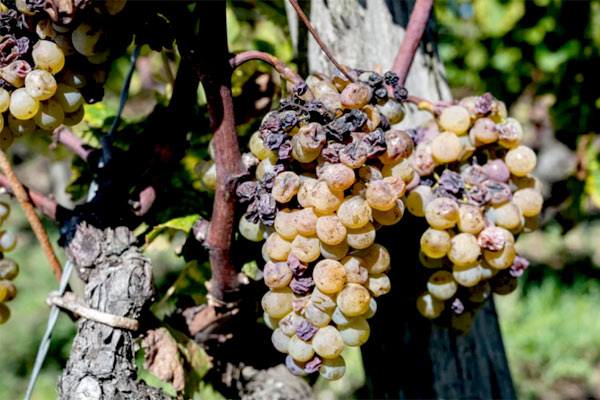
Gray mold on grapes (Botrytis cinerea) is caused by the fungus Sclerotinia fukeliana. Under suitable conditions (high humidity), gray mold attacks the buds, young shoots, leaves, and grapes. However, it causes the greatest damage when it attacks the grapes. In certain years, gray mold destroys up to 60-70% and more of the harvest of susceptible grape varieties. The disease spreads to neighboring berries, covering the entire cluster, which becomes covered with mold. Grapes can be attacked while on the vines, during transportation, and during storage.
The forecasted cool and humid weather on most days from October 1-10 will be a prerequisite for the development of pathogens - late brown rot on the fruits of autumn fruit tree varieties (Monilia fructigena), gray mold (Botrytis cinerea) on the unharvested grape crop. Against gray mold, in order to comply with quarantine periods, treatment is carried out with some of the biofungicides - Polyversum (50-100 g/ha) and Serenade Aso SC (400 ml/ha). Against late brown rot, the preparation you can use is Switch 62.5 WG – 80-100 g/ha with a 3-day quarantine period.
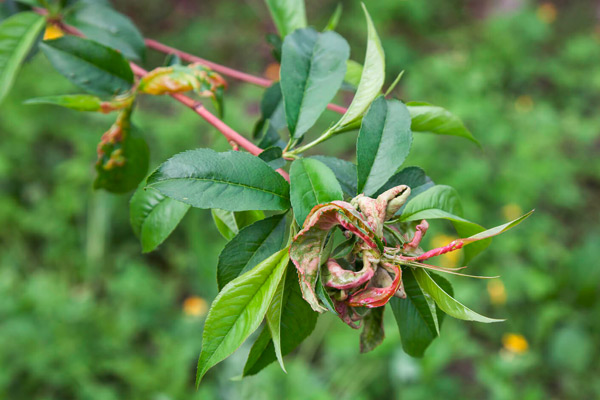
Peach leaf curl is the most harmful disease of peach. Besides peach, the pathogen is capable of infecting nectarine and apricot. The damaged leaves cannot nourish the fruit, and later necrotize and fall off. After the diseased leaves drop, the tree forms new ones that remain healthy, but this severely depletes it, predisposes it to freezing during winter, and affects the setting of fruit buds. The causal agent of peach leaf curl is the fungus Taphrina deformans, which parasitizes the leaves. The fungus overwinters between the bud scales or on the bark of attacked shoots. It develops one life cycle per season and infects only from overwintering infection.
For stone fruit species, after mass leaf fall, spraying with 2% Bordeaux mixture is recommended against the causal agents of shot hole disease, early brown rot, and peach leaf curl.
Agrotechnical Activities
In fruit tree nurseries
Care is taken to preserve the germinability of seeds collected for stratification from stone fruit species.
The plants should not have leaves. If the leaves have not fallen, 0.1-0.2% calcium chloride is used for this purpose. Irrigation facilitates lifting.
In fruit orchards
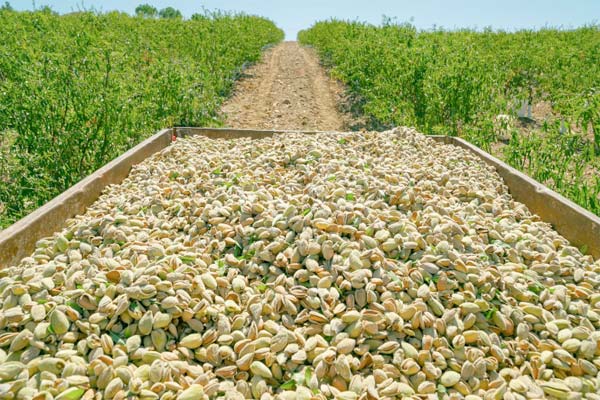
The harvesting of almond and some plum fruits continues. And by the middle of the month at the latest, the harvesting of autumn-winter apple and pear varieties must be completed.
The soil in the inter-rows of annual and young plantations is cultivated deeply, unless they are grassed down.
If pre-planting fertilization with phosphorus and potassium fertilizers has not been carried out, 50-60 kg of superphosphate and 20-22 kg of potassium sulfate are applied - or another phosphorus and potassium fertilizer in the same amount per decare. Phosphorus and potassium fertilizers are also applied deeply in fruit-bearing plantations.
In strawberry plantations
The establishment of new strawberry plantations continues. Planting of seedlings must be completed no later than the middle of the month. The seedlings should be pricked out, with a little soil around the roots. After planting, water with 0.5 – 1 dm3 of water per plant.
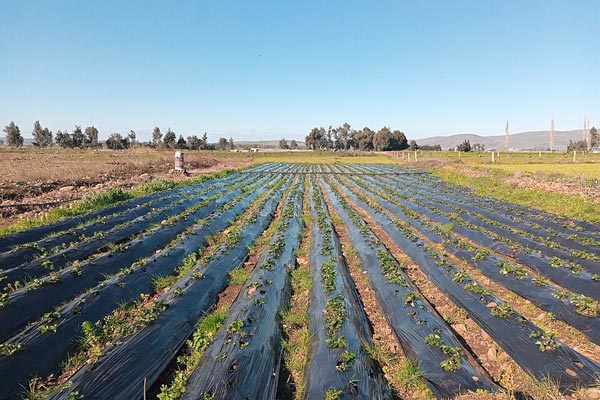
The last cultivation of fruit-bearing plantations is carried out – at a depth of 10-15 cm, with the plants being slightly earthed up.
The lifting and preparation for cold storage of seedlings for spring-summer planting continues.
In raspberry plantations
Areas are being prepared for establishing new raspberry plantations. Fruit-bearing plantations are fertilized with 2-3 t of farmyard manure, 20-30 kg of superphosphate and 10-15 kg of potassium sulfate - or another phosphorus and potassium fertilizer in the same amount per decare, after which the fertilizers are plowed in deeply – 20-25 cm.
In blackcurrant plantations
During drought, fruit-bearing and young plantations are irrigated. Autumn fertilization is carried out with 1-2 t of farmyard manure, 20-40 kg of superphosphate and 10-15 kg of potassium sulfate – or another phosphorus and potassium fertilizer in the same amount per decare. The soil in the inter-rows is cultivated at a depth of 15-18 cm, and near the plants – at 5-6 cm.
In plantations with other crops
Autumn plowing is carried out at a depth of 18-20 cm, which contributes to good moisture storage in the soil from winter precipitation.
After the third year, the above-ground part of laurel plantations is cut back to 20-25 cm from the root collar. The cut stems are transferred to a dry, ventilated room for drying the leaves.
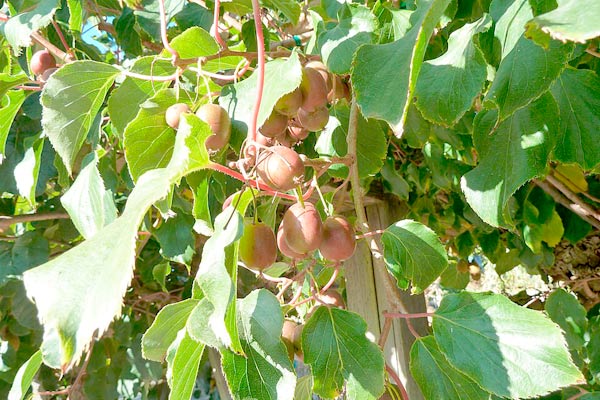
The harvesting of fruits from persimmon, pomegranate, kiwifruit (kiwi) begins.
At the end of the month, when there is a danger of cold and relatively dry weather, all laurel plants (laurel leaf, bay) are earthed up with a plow.
The harvesting of fig fruits continues. Care for the green cuttings set for rooting of kiwifruit, chokeberry and sea buckthorn and others continues. Collection of seeds from smoke tree begins for the production of rootstocks for pistachio.
In vineyard plantations
The harvesting of grapes continues and is completed. The grape harvest should begin in the morning after the dew has lifted, avoiding harvesting during the warm periods of the day. If there is precipitation, it should be carried out 48 hours after the rain. To preserve the waxy bloom, the clusters are held carefully by the stem without touching the berries. For this purpose, the grapes are placed in the crates in only one layer.
To protect them from early autumn cold and frost, the vines earthed up in August in the rooting nursery are covered with 3-4 cm of soil above the graft union. Under favorable conditions at the end of the month, rows are mechanically constructed in the places designated and deep-plowed for rooting nurseries.
Plant Protection Activities
In fruit orchards
Nests and feeders are placed in the fruit trees to attract beneficial birds.
The corrugated cardboard hunting belts with the existing caterpillars of codling moth, plum fruit moth and walnut moth are collected and placed in hanging cages in the fruit orchards – the woodpecker and other birds destroy the caterpillars in the belts.
On the trunk of each tree in plantations attacked by winter moths, one sticky belt is placed at a height of 20-100 cm. The belts are made of paper, 20 cm wide, with the upper and lower edges tied. A slow-drying glue is used for coating. To prevent insects from hiding before reaching the belt, the cracked bark from the belt to the soil surface is scraped off beforehand.
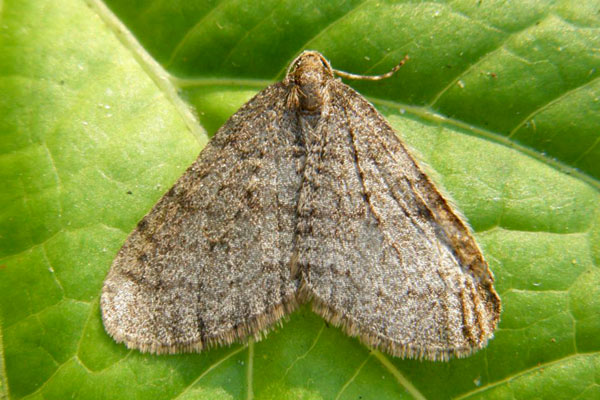
The winter moth (Operophtera brumata) develops one generation per year. The hatching of caterpillars in spring begins when the buds swell. The hatching of butterflies is in late autumn. Male butterflies fly in the evening until the beginning of winter. Female butterflies cannot fly and crawl up the tree trunks, where the males find and fertilize them. They overwinter as eggs, which they lay singly or in small clusters in the cracks, under the cracked bark of the trunk, at the base of branch forks or on twigs, near the buds. The eggs are highly resistant to low temperatures.
Apple and pear fruits are checked at the handling stations for the presence of San Jose scale and mulberry scale in uninfected areas.
The caterpillar nests of the fall webworm are counted to establish the density of the insect.
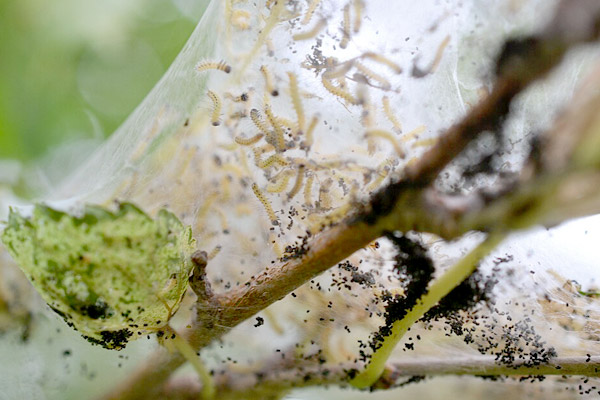
The fall webworm (Hyphantria cunea) is a polyphagous species that attacks more than 200 plant species - fruit and broadleaf trees, shrubs. The caterpillars of the pest cause the greatest damage to mulberry, cherry, walnut, apple, plum, pear, quince, sour cherry. Apricot is less attacked. The insect develops two generations per year, with the second generation in July-August. The pupae overwinter in the soil under the attacked trees.
The shaking started at the end of September continues to determine the density of the pear bud moth. At a density above the economic threshold, before egg-laying, the trees are sprayed with a contact insecticide from all groups - Decis 100 EC (12.25 ml/ha) or another preparation based on deltamethrin, Sumi Alpha 5 EC (0.03%), Karate Zeon 5 CS (15 ml/ha), Lamdex extra (100-120 g/ha) and others.
Pear plantations are sprayed against the common pear psylla with some of the insecticides - Bermectin (40-120 ml/ha) or another preparation based on abamectin, Voliam Targo 063 SC (75 ml/ha), Imidan 50 WG (150 g/ha), Delegate 250WG (30 g/ha), Deca EC (50 ml/ha) or another preparation based on deltamethrin, Movento 100SC (0.12-0.15%), Naturalis (100-200 ml/ha), Sineis 480 SC (30-44 ml/ha), Flipper (1-2 l/ha).
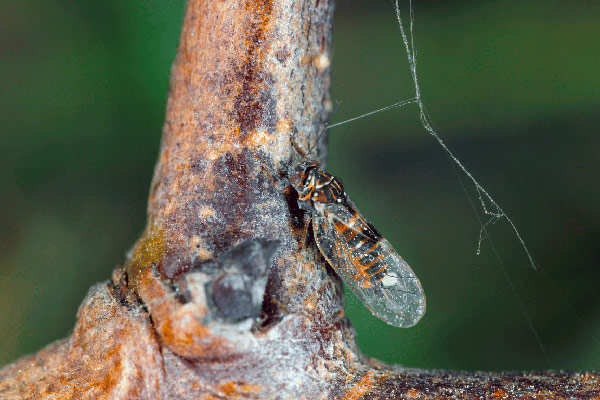
The common pear psylla (Psylla pyri) has two forms - summer and winter. The winter form has a dark gray body and gray-brown head and thorax. The pest develops 4-5 generations per year, and sometimes 6. The adults, larvae and nymphs cause damage by sucking sap from the buds, leaves, flowers, fruits and shoots of the pear. During feeding, the psyllids excrete "honeydew", which contaminates the attacked parts, as sooty molds develop secondarily. It causes premature aging of shoots, twigs and leaves by increasing the nitrogen content in them. With mass reproduction, it causes depletion and death of pear trees.
It overwinters as an adult insect under fallen leaves, in the cracks of trees, under old and cracked bark and in other shelters. In early spring, the pest leaves its winter shelters.
Twigs with woolly apple aphids parasitized by the parasitic wasp A