

![MultipartFile resource [file]](/assets/img/articles/семе-качество-заглавна.jpg)
Summary
Quality seed material is the first prerequisite for successful crop establishment and for realizing the productive potential of common winter wheat (Triticum aestivum L.). High laboratory germination is important, but it is not sufficient to predict seed behavior in the field. Seed vigor, varietal and physical purity, seed size and uniformity, phytosanitary condition, and proper storage also matter. These qualities support rapid and uniform emergence and the formation of a well-developed crop stand, especially when sowing takes place under moisture deficiency or temperature fluctuations.
However, quality seed does not act in isolation. Its effect depends on the variety, sowing date, conditions of the year, and the applied agrotechnology. In a changing climate, the most reliable approach is combining good seed material with an adapted genotype and flexible determination of the sowing date according to actual soil and climatic conditions.
Keywords: Triticum aestivum L., seed material, germination, seed vigor, winter wheat, climate change, sowing date, adaptability, sustainable production.
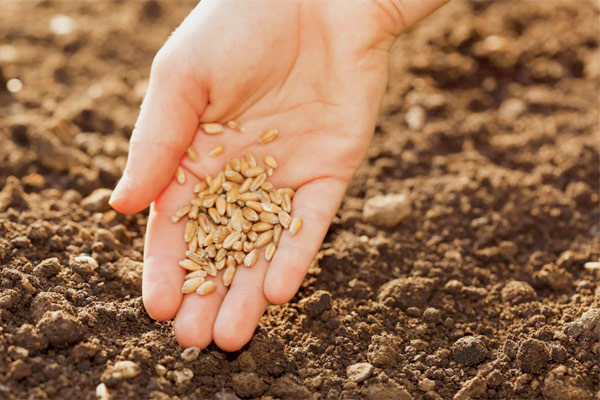
Everything Begins with the Seed
Common winter wheat (Triticum aestivum L.) is among the most important agricultural crops, but its high productive potential is realized only when the genotype, environmental conditions, and agrotechnology act in a favorable combination. Temperature, precipitation, and soil moisture influence all stages of development, and in recent years situations with insufficient moisture at sowing, high autumn temperatures, short-term droughts, and sharp temperature fluctuations have become increasingly frequent.
This is precisely why the beginning of vegetation is gaining increasing importance. The seed carries the genetic information of the variety and provides the reserves necessary for germination and initial development. If emergence is rapid and uniform, plants have a better opportunity to develop synchronously, to tiller, and to prepare for winter.
Seed quality is not a guarantee of high yield in itself. It is the initial foundation upon which the variety, weather, nutrition, water supply, phytosanitary condition, and other elements of the technology subsequently act.
What Does „Quality Seed Material“ Mean?
The quality of seed material is not determined by a single indicator. It is a combination of genetic, physiological, physical, and phytosanitary characteristics.
Varietal purity and authenticity are important because the crop stand must correspond to the biological and economic characteristics of the selected variety. Different varieties differ in vegetation length, tillering ability, and response to cold, drought, and diseases. Physical purity also has direct practical significance – the seed lot should not be dominated by impurities, damaged seeds, or seeds from other crops and weeds.
The phytosanitary condition should not be underestimated either. Seeds can be carriers of pathogens that may hinder germination and early development. Therefore, the assessment of seed material should also include control of its health status.
Seed size and uniformity are also useful indicators. Larger and well-matured seeds generally have more nutrient reserves for early development, but size should not be used alone as a sign of high quality. Large seeds may have lost some of their physiological qualities due to aging or improper storage. More important is the combination of good size, uniformity, germination, and vigor.
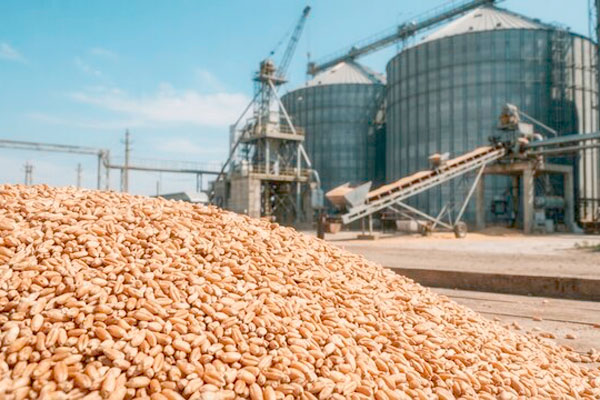
Storage is the last, but no less important part of this chain. Seed qualities change over time. Inappropriate temperature and humidity can accelerate aging, reduce vigor, and lead to slower and uneven germination. Therefore, quality control must continue until sowing itself, rather than ending with the initial certification of the lot.
Germination Is Not Everything – Why Vigor Matters
Germination indicates the ability of seeds under certain conditions to form normal seedlings. This is a fundamental indicator of sowing qualities, but the laboratory test is conducted under controlled and relatively favorable conditions. The field rarely offers the same comfort.
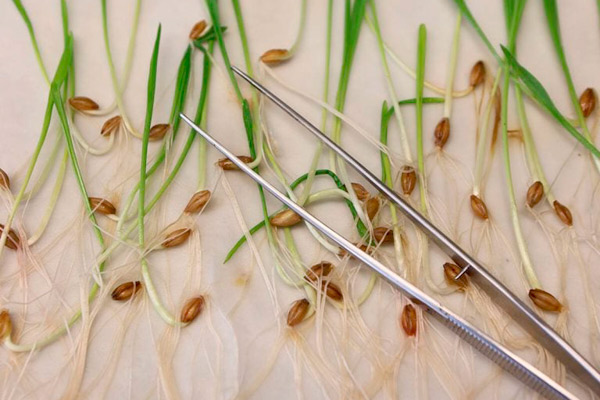
Two seed lots may have similar laboratory germination but behave differently after sowing. One may emerge quickly and uniformly, while the other – more slowly and unevenly. This is precisely where the importance of seed vigor manifests itself.
Finch-Savage and Bassel (2016) link vigor to the ability of seeds to germinate rapidly and uniformly and to establish successfully under various seedbed conditions. Reed et al. (2022) also consider it a complex characteristic, including germination, seedling development, and the ability of seeds to overcome early stress conditions.
In winter wheat, this is particularly important. After sowing, seeds may encounter insufficient moisture, lower temperatures, or uneven soil moistening. In such situations, more vigorous seeds have a better opportunity to utilize brief favorable periods and to form a more uniform crop stand.
From Seed to Uniform Crop Stand
A well-developed and uniform crop stand is the first real step toward utilizing the potential of the variety. When plants emerge at similar times, they develop more synchronously and have similar opportunities for tillering and utilizing available resources.
In winter wheat, delayed emergence has another consequence – later-emerged plants have a shorter period for autumn development and may form a smaller number of productive tillers. Thus, already at the beginning of vegetation, an unevenness is created that may later affect the structure of the crop stand.
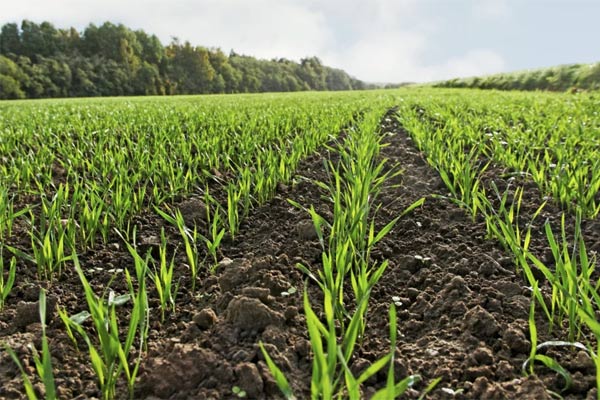
This explains why quality seed material is one of the first factors that the producer can manage. However, the relationship between seed quality and final yield is not direct. If the optimal crop density has already been achieved, higher vigor does not necessarily mean proportionally higher yield. Its effect manifests most clearly in more reliable plant establishment, especially under stress conditions.
Variety, Sowing Date, and Climate – Decisions Must Work Together
The sowing date is one of the main agrotechnical factors in winter wheat. It determines how much time plants will have for autumn development, tillering, and accumulation of reserve substances before winter. However, the optimal date should not be understood as the same calendar date every year.
The decision must take into account soil moisture, temperature regime, and the biological characteristics of the variety. Under insufficient soil moisture, early sowing does not guarantee successful emergence even with very high-quality seeds. Excessive delay, on the other hand, shortens the period for autumn development and may limit tillering.
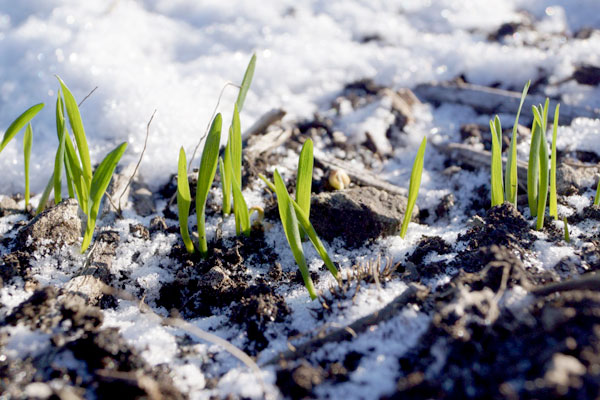
This becomes even more important under a variable climate. Elevated temperatures and changes in precipitation patterns can influence both the formation and physiological condition of the seeds themselves and the conditions they encounter after sowing. Reed et al. (2022) point out that temperature conditions during seed development can influence their subsequent vigor and germination.
Quality seed cannot compensate for severe soil moisture deficiency, but it can increase the likelihood that plants will utilize available moisture in a timely manner when suitable conditions occur. In this sense, seed quality, variety, and sowing date should be considered as parts of a common strategy for adapting production. Gabriel et al. (2025) also identify sowing date and vegetation cycle length as possible tools for adapting wheat to changing climatic conditions.
The Bulgarian Context: Why an Adapted Variety Matters
Bulgaria is characterized by significant diversity of soil and climatic conditions. Therefore, a variety that shows very high yield in one location or in one year does not necessarily maintain the same level of productivity and stability under a different temperature or water regime.
Data from studies in the Sadovo region confirm this dependency. In a study of 56 common winter wheat varieties during the period 2019–2021, the genotype had the strongest influence on yield variation – 40.7%, and environmental conditions – 20.7% (Dimitrov, Uhr and Chipilski, 2022). For individual varieties, a combination of high productivity, stability, and adaptability to unfavorable climatic conditions was established.
More recent studies in Sadovo also show a statistically significant influence of genotype, environment, and genotype × environment interaction on yield. This is an important argument for evaluating varieties not only by average productivity but also by stability of their performance under different conditions.
Local and adapted genotypes are valuable both for practical production and as a genetic resource for breeding. They provide the opportunity to combine quality seed material with a genotype that is better adapted to the specific environment.
What Should the Producer Look for When Choosing Seeds?
The practical conclusion is simple: good seed material does not come down to a high germination percentage alone. For winter wheat, it is important that the seed lot combines several qualities:
- high varietal purity and authenticity;
- high laboratory germination;
- good seed vigor;
- high physical purity;
- good size and uniformity;
- good phytosanitary condition;
- appropriate storage conditions until the time of sowing.
None of these qualities should be considered separately from the choice of variety and the sowing date. Even an excellent seed lot cannot fully compensate for an inappropriate genotype, severe water deficit, or an unfavorably chosen date. The opposite is also true – a suitable variety can hardly realize its potential if the start of the crop stand is compromised by low-quality seeds.
Conclusion
Quality seed is the first step toward a uniform and well-developed crop stand, but it is not an independent guarantee of high yield. Its role is to create the best possible start for the plants – rapid and uniform emergence, good initial development, and a more homogeneous crop stand structure.
Under conditions of climatic uncertainty, the most reliable approach is comprehensive: quality seed material, a suitable and adapted genotype, a sowing date consistent with actual soil moisture and temperature regime, and adequate agrotechnology. It is precisely the interaction between these factors that determines the extent to which the productive potential of winter wheat will be realized in a given year.
For Bulgaria, local and proven adapted varieties are of particular importance, as they represent a valuable resource for combining productivity, stability, and resilience to changing environmental conditions.
References
Finch-Savage, W. E., Bassel, G. W. 2016. Seed vigour and crop establishment: extending performance beyond adaptation. Journal of Experimental Botany, 67(3), 567–591. DOI: 10.1093/jxb/erv490.
Reed, R. C., Bradford, K. J., Khanday, I. 2022. Seed germination and vigor: ensuring crop sustainability in a changing climate. Heredity, 128, 450–459. DOI: 10.1038/s41437-022-00497-2.
Dimitrov, E., Uhr, Z., Chipilski, R. 2022. Study of yield and stability by common winter wheat varieties by changing climatic conditions in Sadovo region. Bulgarian Journal of Agricultural Science, 28(2), 271–278.
Desheva, G., Deshev, M. (2021). Evaluation of the stability and adaptability of yield in varieties and breeding lines of common winter wheat. Bulgarian Journal of Crop Science, 58(1), 3–13.
Desheva, G. N., Deshev, M. G., Valchinova, E. K., Kyosev, B. N. 2025. AMMI and GGE biplot analyses of adaptability and yield stability of advantage varieties of common winter wheat. Bulgarian Journal of Agricultural Science, 31(5), 940–950.
Dudka, R., Onipko, V. 2025. Yield and quality of winter bread wheat depending on sowing dates and methods: a review of global and domestic experience. Scientific Progress & Innovations, 28(3), 103–108. DOI: 10.31210/spi2025.28.03.17.
Gabriel, J. L., Allende-Montalbán, R., Nieto-Taladriz, M. T. et al. 2025. Sowing date and cycle length as wheat climate change adaptation tools under Mediterranean conditions. European Journal of Agronomy, 170, 127738. DOI: 10.1016/j.eja.2025.127738.
Kyosev, B., Desheva, G., & Deshev, M. (2022). Viability of Triticum sp. seeds after 30 years long-term storage. Bulgarian Journal of Crop Science, 59(6), 9–15.