

For apple trees during this period, spraying is carried out against the second generation of the codling moth and, if necessary, against scab and fruit rot pathogens.
For control of the codling moth, the list of approved insecticides includes: Afirm 095WG - 0.3%, Vaztak Nov 100EC – 0.0125%, Voliam Targo 063SC – 75 ml/daa, Decis 2.5EC – 0.03%, Dikline 2.5EC – 0.03%, Deca EC – 0.03%, Dursban 4E – 0.2%, Nexid 015CS – 0.03%, Sumi Alpha 5EC – 0.02%, Karate Zeon 5CS – 0.02%, Karate Express WG – 60-100 g/daa, Calypso 480SC – 0.02%, Coragen 20SC - 0.016% Reldan 40EC – 0.12%, Pirinex 48EC – 0.12%, Sineis 480SC – 20 – 37.5 ml/daa, Supersect Mega – 0.015%, Efcimetrin 10EC - 0.03%, Cyclone 10EC – 30 ml/daa, Cyperfor 100EC – 30 ml/daa, Sherpa 100EC – 0.03%. In orchards where damage from leafmining moths has been detected, treatment should also be carried out. The insecticides Dursban 4E – 0.2%, Sumi Alpha 5EC – 0.02%, Karate Express WG – 60-100 g/daa, Calypso 480SC – 0.02% and Sineis 480SC – 20 – 37.5 ml/daa can be used for simultaneous control of the codling moth and leafmining moths.
The fungicide Luna Experience – 20–75 ml/daa should be added to the insecticide solution to protect the fruits from late infections of scab and fruit rot pathogens from fungi of the genera Monilinia, Penicillium, Botrytis, Alternaria, Botryosphaeria, etc. Apple varieties whose fruits will be harvested in the second half of September should be sprayed with insecticides that have a short pre-harvest interval.
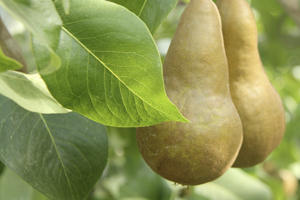
For late-ripening pear varieties, the control against fruit worms/codling moth, oriental fruit moth, and pear fruit worm/ and fruit rot pathogens should continue. The insecticides and fungicides mentioned for apples are used.
If a high density of the common pear psyllid is allowed /4-6% shoots with colonies/, pear plantations are sprayed with Decis 2.5 EC – 0.03%, Decis 100EC – 12.5 ml/daa, Deca EC – 30-50 ml/daa, Karate Express WG – 60-80 g/daa, Vaztak Nov 10 EC – 0.02%, Sineis 480SC – 37.5 ml/daa, Sumi Alpha 5EC – 0.03%.
In pear orchards where regular pest control has not been carried out, the pear bud moth usually multiplies and its density often exceeds the economic threshold of harmfulness - 5-8 per tree, which necessitates spraying against the adults before oviposition with Dursban 4E – 0.15% or Vaztak Nov 100EC – 0.0125%.
The fruits of quince varieties grown in our country are highly susceptible to late brown rot, gray mold, and soft rot, which are particularly harmful during frequent rainfalls during fruit ripening and later during storage. This necessitates spraying with Luna Experience – 20 – 75 ml/daa or Topsin M 70WDG – 0.12%. To protect the fruits from infestation by the codling moth and oriental fruit moth, one of the insecticides indicated for codling moth control is added to the fungicide solution.