

![MultipartFile resource [file_data]](/assets/img/articles/заглавна-август-агро-2026.jpg)
In August, the growth of shoots has completed. The fruits of autumn varieties of apples, pears, and peaches are intensively enlarging, alongside which the process of differentiation of fruit buds is taking place. The trees are being stocked with reserve nutrients.
During most days of August, the forecast relatively dry weather will necessitate the application of increased irrigation rates for later varieties of fruit trees. The highest probability of precipitation is during the first half of the month, when weaker frontal systems will pass over the Balkans. During the second half of August, areas of high atmospheric pressure will become more frequent, bringing more sunshine and summer heat.
In August, the agrometeorological conditions will be determined by temperatures above the climatic norms and precipitation around the norms for the month.
At the beginning of the month, the development of agricultural crops will proceed under hot weather, and in some places in the Danubian Plain and in part of the southern regions – also under a deficit of soil moisture. July precipitation was unevenly distributed. At the end of July, above-normal precipitation and good soil moisture reserves in the 50 and 100 cm layer were recorded in Northeastern Bulgaria and in part of the Upper Thracian Lowland (Shumen - 123 l/m², Silistra - 89 l/m², Dobrich - 69 l/m², Varna - 90 l/m², Plovdiv - 73 l/m²).
During the first ten-day period of the month, the forecast extremely high maximum temperatures, up to and above 38-39 °C, will disrupt the normal course of physiological processes in agricultural crops. During this period, early dessert grape varieties (Amira, Superran Bolgar, Pleven, Mechta, Misket Ran, Cherna Perla, etc.) will enter consumer maturity. There will be many sunny hours, but in the afternoons conditions for local thunderstorms will not be lacking, especially over mountainous areas and Western Bulgaria. In some places, short-lived intense precipitation, hail, and strong wind gusts are possible.
Temperatures will be typically summer-like - minimums between 15 ° and 21 °C, maximums most often between 32 ° and 35 °C, and in the Danubian Plain, the Upper Thracian Lowland, and the Struma Valley locally up to 36 °C–40 °C. Along the Black Sea coast, temperatures will remain lower – between 28° and 31°C, thanks to the sea breeze.
During the second ten-day period, prolonged sunny periods and more days with hot weather are expected. Afternoon local showers will be limited mainly to the high mountains.
Maximum temperatures will rise - between 32 ° and 37 °C in most of the country (in traditionally warmest areas values may reach above 38 °C). Nights will remain relatively warm, with minimum temperatures between 18 ° and 23 °C, and more tropical nights will be observed in large cities and along the Black Sea coast. This will likely be the most stable and most summer-like period of the month.
During the third ten-day period of August, sunny days will alternate with periods of temporary increases in cloudiness. Afternoon thunderstorms will develop in more places, especially in the western and mountainous regions. Locally, intense precipitation and hail are possible.
Temperatures will remain high, but will gradually begin to decrease - minimum temperatures will be between 15 ° and 20 °C, maximums between 29° and 34°C, with values up to 35–36 °C still possible in the warmest areas.
The meteorological conditions in August will limit the development of fungal diseases, with the exception of powdery mildews on fruit trees and vines. During the month, the harmful activity of the second generation of fruit worms continues. An increase in the mite population is expected. In vineyards, it is necessary to monitor the emergence and density of caterpillars from the third generation of the European grapevine moth. If necessary, plant protection sprays should be carried out during the cooler hours of the day, at temperatures below 25 ºC, with products having an appropriate pre-harvest interval aligned with the ripening period of the crops.
In fruit nurseries
Seedbeds are being cultivated and irrigated.
Budding (T- budding) in August – step by step
Grafting with a single bud
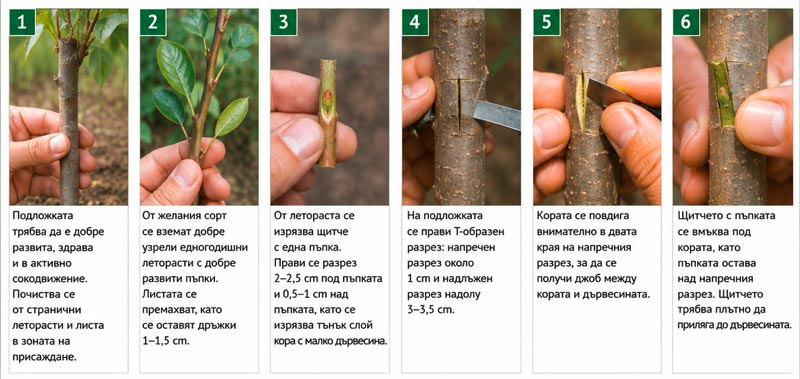
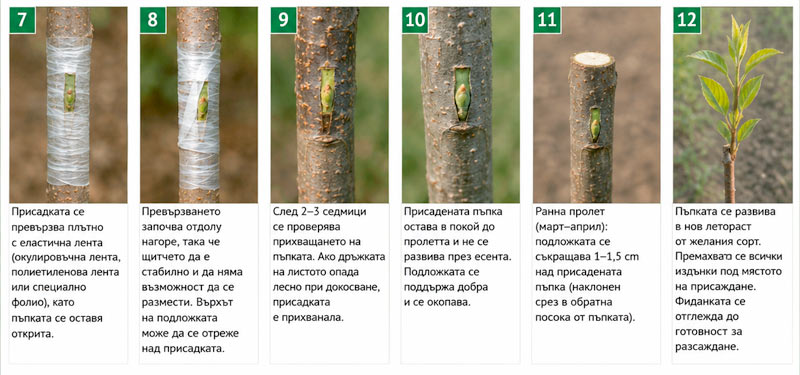
Important!
- Budding is performed when the bark is slipping and there is active sap flow (usually July-August)
- Work with a sharp and disinfected knife
- Scion material is kept moist and in the shade until use
- Most suitable time – morning or evening, in moderately humid weather.
In the first-year nursery, budding of rootstocks continues, and in the second-year nursery, a final removal of side shoots on the rootstocks below the budding point is carried out as necessary.
Mother plantings are inspected, and all off-types are uprooted. The gaps are promptly filled with plants of the main variety.
Until the end of August, apple, pear, peach, and cherry trees can be budded. During the second and third ten-day periods of the month, grafting of quince begins.
The rootstocks budded in July are inspected, and if the scion and rootstock have healed well, the ties are removed.
In fruit tree plantations
Soil moisture is monitored and irrigation is applied as needed. After rain or watering, shallow tillage is carried out to break up the crust that has formed.
Mechanical weed control is carried out in the inter-rows, if they are not grassed, and in the row strips.
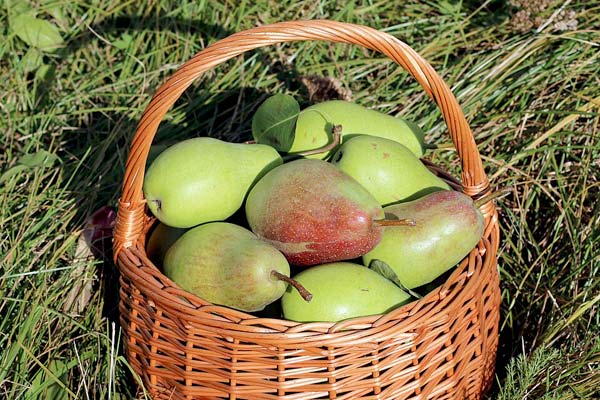
Harvesting of peaches and early varieties of apples, pears, and plums continues. At the end of the month, the fruits of some early walnut varieties are also harvested.
The necessary organizational work is carried out in preparation for the harvest of mid-early and late varieties of apples, pears, and plums.
Fruit storage facilities are disinfected and prepared to receive the new produce. Fruit sorting machines are repaired and prepared for operation.
Pre-planting preparation of areas for establishing new plantations begins – deep ripping, base fertilization, and leveling.
In strawberry plantations
It is very important that all strawberry plantations are irrigated in a timely manner. The leaves should not be allowed to dry out. In August, the plants form the yield for the next year, and an optimal water regime must be maintained. Depending on the age of the plantation and the soil type, 2-3 irrigations are carried out.
The runners of plants from which seedlings are not intended to be obtained are cut off.
Care is provided for mother plantings – weeding, irrigation, and soil cultivation.
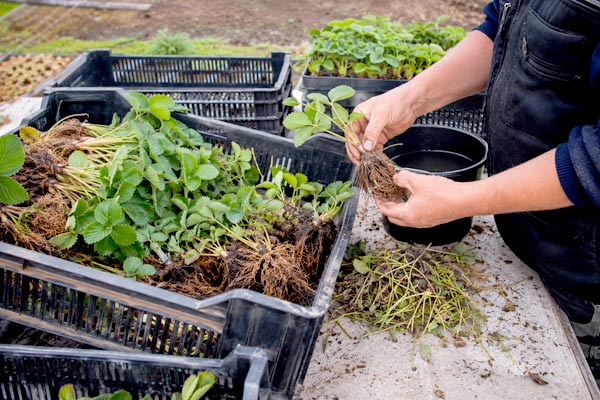
Preparation of new areas for autumn strawberry planting continues. In some higher areas, planting may begin.
In raspberry plantations
Care for newly established plantations continues – irrigation as needed and cultivation if weeds are present.
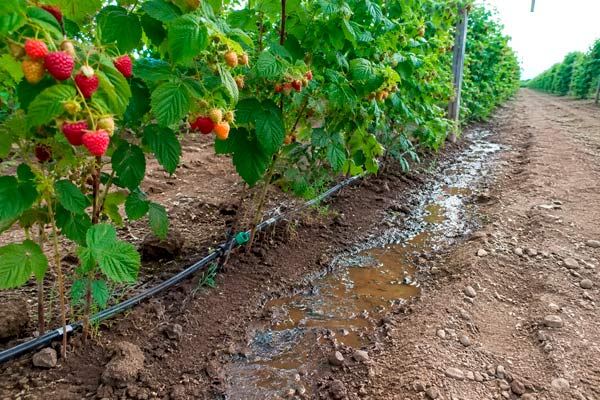
Fruiting plantations are irrigated so that the fruits can enlarge and flower buds can form for the next harvest. Towards the end of the month, irrigation is stopped so that the new replacement shoots can ripen.
Care for mother plantings continues – irrigation, fertilization with nitrogen fertilizers, and cultivation. Towards the end of August, irrigation is stopped so that the shoots can ripen.
Harvesting continues.
By the end of the month, all fruited canes are cut out, removed, and burned.
Sites for new plantations to be established in the autumn are being prepared. The soil is fertilized with 3-5 t of farmyard manure, 80-100 kg of superphosphate (or the same amount of another phosphorus-based fertilizer), 25-30 kg of potassium sulfate (or the same amount of another potassium-based fertilizer) per decare.
In blackcurrant plantations
Care for rooting beds and young plantations continues. Drying out and weed infestation of the soil are not allowed. In case of weak growth of plants in rooting beds and young plantations, fertilize with 10-15 kg of ammonium nitrate (or the same amount of another nitrogen-based fertilizer) per decare.
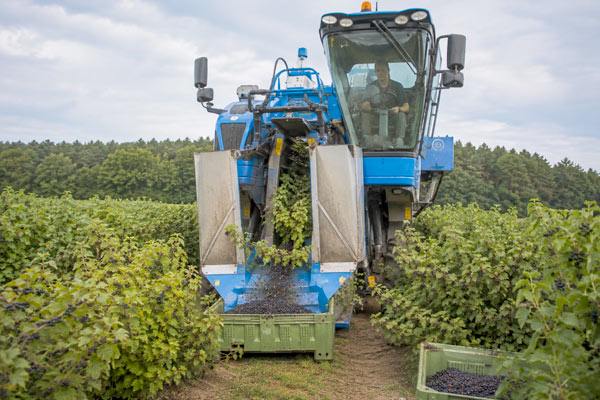
Harvesting of fruits in higher locations is completed. Plantations are irrigated and cultivated regularly.
In plantations with other crops
Summer budding of rootstocks for persimmon, actinidia (kiwi), jujube, and pistachio is carried out. 5-6 days before grafting, the nursery is watered abundantly for better bark slipping. 3-5 days before budding, scions are collected and kept in the shade in a cool room. The take of the budded persimmon plants, etc., is checked.
Lemon is budded with a dormant bud. Lemon seedlings are watered abundantly one week before grafting and immediately after it.
Marking of desired varieties and forms of figs, pomegranates, etc., continues.
Rooting of green cuttings from actinidia, aronia, sea buckthorn, and pomegranate continues.
Care for irrigation and hoeing of plantations with southern crops continues, with great attention paid to newly established ones.
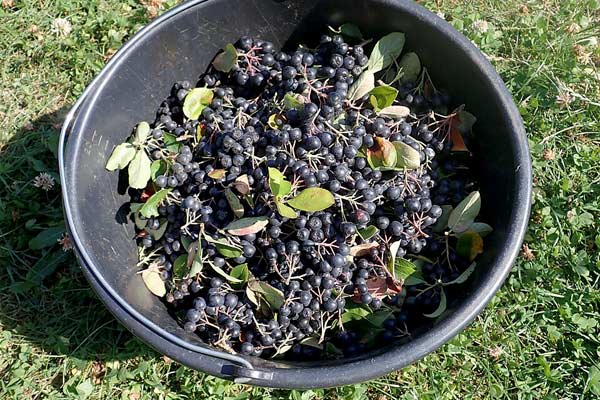
Harvesting of fruits from fig, sea buckthorn, and aronia continues.
In vineyards
Harvesting of early dessert varieties is carried out.
Harvesting should be carried out when the grapes have acquired the variety-specific coloring of the skin, a beautiful appearance, and a pleasant taste and aroma characteristic of the variety.
The organoleptic method, based on the assessment of the taste qualities and appearance of the grapes, is most widely applied. Much more precisely, the date of grape harvest is determined by chemical analysis for the content of sugar and organic acids. A synthesizing indicator of the taste qualities of grapes is the harmonious ratio of sugars and acids, which is illustrated by the glucoacidimetric index. When sugars are below 14%, the grapes are considered unfit for consumption.
Harvesting is carried out in stages depending on the climatic conditions during the growing season, the load on the vines, the biology of the variety, and other factors. Grapes should be picked in dry weather or after the dew has lifted. If it has rained, one waits for the water droplets to evaporate from the berries and leaves.
Care must be taken not to rub off the waxy bloom on the berries, because it protects them from strong transpiration. It improves the transportability and appearance of the grapes.
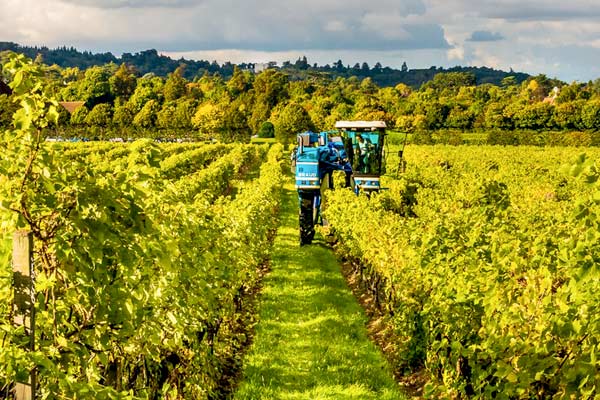
Last but not least, the grapes are sorted and prepared: cleaned and arranged in crates.
Mass selection for positive and negative traits is carried out for the production of vine planting material.
In vegetative propagation of the vine, both the positive and negative qualities of the parent forms are preserved.
The method of individual selection or clonal selection is applied, with vines being selected for fertility, moderate growth, and clusters typical of the variety, without signs of viral or other diseases.
To ensure the production of pure-variety and high-quality grafted vines from the most important industrial varieties, it is necessary to establish mother vineyards. However, the planting of mother vineyards must be done with vines selected by the method of mass selection. Subsequently, cuttings must be collected only from them.
In some dessert and wine varieties, inferior variations have been identified, the cultivation of which causes great losses to the farm. This necessitates conducting mass selection for negative traits as well. Marking of the vines is carried out as in mass selection for positive traits. Further, the marked vines are grafted in place by cleft grafting or green grafting with scions from elite vines of the same variety.
Care is provided for the vines in the rooting bed.
The dew roots are cleaned. In August, the second cleaning of the dew roots is carried out. Furthermore, as a regular practice, it is necessary to uncover the rooted vines. The soil is removed from the tops of the vines so that the grafts and the base of the shoots, which were previously covered, remain exposed. It is desirable that the uncovering for hardening be done simultaneously with the last cleaning of the dew roots. Irrigation is carried out.
The soil is cultivated in order to keep it free of weeds, if the inter-rows are not grassed.
A control inspection of the vines in the rooting bed is carried out. All varietal impurities, as well as rotted rootstocks, are destroyed.
In vine mother plantations, suckering and tying of the shoots continues. The soil is cultivated in fruiting vineyards and in mother plantations. It is done shallowly, to a depth of 8–10 cm, with a cultivator or tiller, depending on the soil density and its weed infestation.
Part of the leaves in fruiting vineyards is removed. This operation consists of removing the first 5–6 leaves at the base of the shoots, which are aged and only shade the clusters. Leaf thinning is particularly useful in years when the ripening period is characterized by frequent rains, cloudy and cold weather, and increased atmospheric humidity. In areas with high temperatures, care must be taken when opening the clusters, as sunburn spots may appear, which worsen the appearance, transportability, and storage of the grapes.
Suitable areas for new vineyards, mother plantations, and vine rooting beds are selected and prepared for planting. New industrial plantations should be established only in those areas and hilly terrains where absolute minimum temperatures drop below -21 to -22 oC no more than once every 5–6 years. Most suitable are hilly and sloped terrains where cold air drains away. Vine plantations should under no circumstances be established in low-lying areas, enclosed basins, where cold air is retained and frost pockets form.
The most favorable exposure is the southeast, followed by south and southwest. The greater the slope of the terrain, the less the danger of sharp drops in absolute minimum temperatures.
To ensure at least 150–200 mm of productive moisture, which together with precipitation for the April–September period ensures an optimal water regime without irrigation, the depth of the soil profile should not be less than 1 m.
For red table wines, the growing season temperature sum should be above 3700 oC, the average monthly temperature of the warmest month — from 22 to 25 oC, and the annual precipitation sum — from 400 to 700 l/m2. For white table wines, the growing season temperature sum should be from 3400 to 3700 oC, the average monthly temperature in July — from 20 to 23 oC, and the annual precipitation sum — from 400 to 800 l/m2. For dessert wines, the growing season temperature sum should be above 3800 oC, the average monthly temperature in July should be from 22 to 26 oC, and the annual precipitation sum — up to 600 l/m2. For dessert grape production, the growing season temperature sum should be above 3700 oC, the average monthly temperature for July — from 22 to 25 oC, and the annual precipitation sum — up to 600 l/m2.
Mother plantations should be located in the warmer areas, on slopes with moderate incline and southern or southwestern exposure, on fertile, sufficiently deep, warm, and light soils. The temperature sum during the growing season should be above 3900 oC, the average temperature for July — from 22 to 23 oC. The establishment of mother plantations on soils infested with nematodes that transmit viral diseases is not permitted. It is very important that mother plantations be established in a place that has not been a vineyard for 5–6 years. When choosing a site for a mother plantation, the different resistance of rootstocks to the carbonate content in the soil must be taken into account.
For rooting beds, well-ventilated areas with light sandy or clay-sandy soils, located on flat ground or with a slope not greater than 1–2 oC, should be selected so that irrigation can be carried out properly.
In the organization of the territory, the area of the massif is divided into blocks, quarters, and plots. A block encompasses 1 or several quarters. The length of the quarters should be between 1000 and 1500 m. It is determined mainly by the distances between turning roads. Provided that the slope of the terrain is not a limiting factor, the optimal width of the quarters is 500 m. Grape varieties are arranged along the length of the quarter. By means of transverse roads, the area of the quarter is divided into plots. The distance between these roads, which corresponds to the width of the plots with the available machinery set, should be from 300 to 400 m. This also determines the row length. The width of the turning area in the direction of movement of the machine-tractor units should be 10 m, and the width of the transverse roads between plots — 8–9 m. The direction of the rows and the layout of the road network should be aligned with water erosion and the possibilities for combating it. On such terrains, rows are arranged along the contours. For industrial vineyards, the maximum slope should not exceed 10о.
Before deep ripping of the area designated for vineyards, some land improvement works are carried out: uprooting of trees and shrubs, leveling. It is very important to clear the area of rhizomatous weeds; for this purpose, plowing to a depth of 20–25 cm is recommended, accompanied by collecting the weeds with spring harrows. This activity is combined with treating the areas with soil herbicides before plowing.
After uprooting an old vineyard, the area should be occupied for 3 to 8 years with other crops — mainly legumes, grasses, cereals, and row crops. After that, the same area can be planted with a new vineyard.
Deep ripping holds a primary place in the pre-planting soil preparation. Compared to low-trained vineyards, deeper ripping is required. The drier the climate of a given area, the deeper the ripping should be carried out.
If the soil profile is not a limiting factor, to improve the nutritional regime, before the deep pre-planting tillage, poorer soils are fertilized with 3–4 t/daa of well-rotted farmyard manure or with 100–150 kg of superphosphate and 46–50 kg/daa of potassium sulfate.