

![MultipartFile resource [file_data]](/assets/img/articles/1-брашнеста-мана-зеленчукови-заглавна.jpg)
Summary
The article presents an overview of powdery mildew attacks on cultivated representatives of the family Solanaceae. The causal agents of this disease are described - Leveillula taurica, Oidium neolycopersici, Oidium lycopersici, Golovinomyces cichoracearum and Golovinomyces orontii - and the damage they cause. Attention is also focused on the conditions necessary for the development of the pathogens, as well as on the methods and means of control.
Powdery mildew is a common disease affecting many types of vegetables. It is caused by several pathogens – Leveillula spp. and Oidium spp. Each pathogen attacks only specific plant species.
Among the vegetable crops belonging to the family Solanaceae that are attacked by powdery mildew are tomatoes, peppers, eggplants, and potatoes. All pathogens causing powdery mildew develop on plant tissues. They are obligate parasites, so the presence of cultivated and weed hosts is a favorable and necessary condition for their development. They cover the surface of leaves, stems, and fruits with a white, powdery layer of mycelium and spores of the pathogen. For their development, the causal pathogens do not require a drop of water for conidia germination, but they need high humidity and air temperature.
The disease is characteristic of the Mediterranean regions in Israel, Turkey, Greece, Spain, and others. For some vegetable crops, it ranks second in economic importance after downy mildew. The spread of the infection occurs through air currents, which carry conidia from diseased to healthy plants. When there is a favorable combination of temperature and air humidity, the conidia germinate and infect healthy plants. The first symptoms are associated with the appearance of light spots, covered with a white, chalky coating, on the whole plant – leaves, stems, flowers, and less frequently on fruits. Later, the leaves turn yellow, burn, and die. Affected plants produce lower yields, the fruits remain small and ripen prematurely, and the vegetation period is shortened.
The disease is widespread throughout the world, both in cultivation facilities and in open fields. Yield losses can reach up to 50% under severe infection.
Powdery mildew on tomatoes.
The tomato (Solanum lycopersicum L.) is one of the most significant vegetable crops, with a total of 186 million tons produced worldwide in 2020 on over 5 million hectares of area, of which approximately 0.1 million hectares are grown in Italy. The tomato market is constantly growing, but a large number of different pathogens affect this crop, some of which are the causal agents of powdery mildew. In tomatoes, it is caused by the pathogens Leveillula taurica (anamorph: Oidiopsis sicula), Oidium neolycopersici and Oidium lycopersici.
Distribution: Leveillula taurica and Oidium neolycopersici are distributed worldwide, wherever there are hosts and favorable conditions for their development. Oidium lycopersici is distributed mainly in Australia and the USA (California).
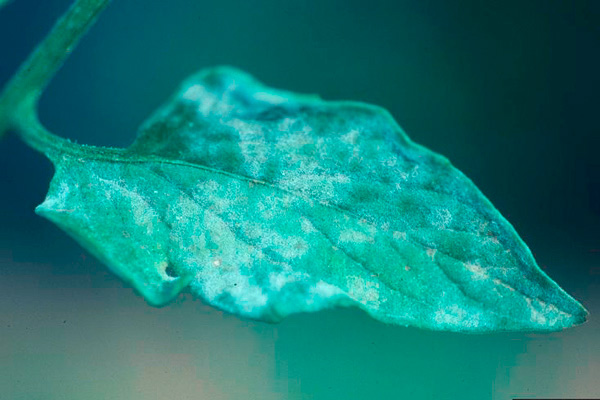
Leveillula taurica
Symptoms: Leveillula taurica is the causal agent of typical powdery mildew on tomatoes. It is widespread in almost all production areas. It is well adapted to drier seasons and to the conditions of the Mediterranean basin. It is found in field conditions and in cultivation facilities. It penetrates the leaves and develops inside them. This distinguishes it from other powdery mildew pathogens, which develop superficially. The symptoms are light green to yellow spots of varying intensity on the upper side of the leaves, with irregular margins, limited by the veins, which gives them an angular appearance. On their lower side, a discreet white coating appears. These are conidiophores and conidia that emerge through the stomata, which is characteristic of this fungus. Later, the center of the spots necrotizes and becomes brownish. Sometimes the necrotic tissues are concentrically mottled. Under favorable conditions, the spots enlarge, their number increases, and the leaves can dry out.
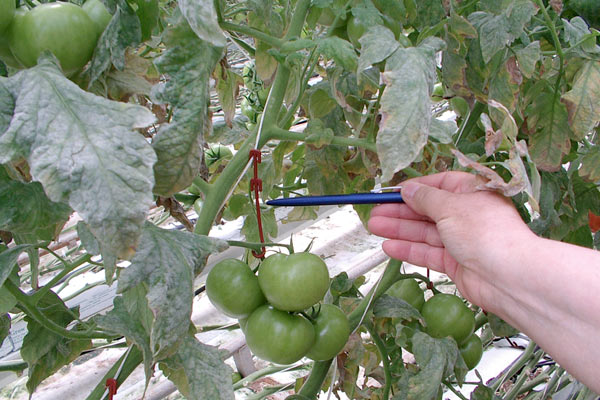
Oidium neolycopersici
With O. neolycopersici and O. lycopersici, small, round spots appear first, covered with a loose white coating mainly on the upper surface of the leaves. The sporulation observed on the upper leaf surface distinguishes Oidium from Leveillula, where the spore-bearing coating is only on the lower surface. The leaves later wilt and die but remain attached to the stem. Symptoms on fruits or stems are absent, but leaf loss can lead to sunscald on the fruits. The appearance of spots on the lower surface is characteristic of the late stages of the disease. Under severe attack, the conidia cover the entire surface of the leaves, petioles, and sepals, but the fruits remain uninfected. Oidium neolycopersici has also been registered on outdoor-grown tomatoes, but it is mainly a problem in production under cultivation facilities.
The spores are spread by the wind, and about one week is needed for them to infect new plants and provoke new sporulation. Oidium neolycopersici does not overwinter outdoors, but in weeds or cultivated hosts in greenhouses. Conidia produced in warmer regions are carried north by prevailing winds. The pathogen mainly infects tomatoes (Solanum lycopersicum), but it can also infect tobacco, petunia, Arabidopsis thaliana, and other members of the nightshade family. It has a wide host range. It has been reported on over 60 species from 13 plant families. The fungus develops well under low light, temperatures between 20–27°C, and high relative humidity (85–95%). Infection can also occur at 50% humidity. Unlike other pathogens, O. neolycopersici does not require free water on the leaf surface, but dew facilitates spore germination.
Conditions for disease development: Leveillula taurica has a wide host range, on which it survives and transfers to tomatoes. Its conidia are dispersed over long distances by air currents and germinate at low (52-75%) relative humidity. Disease development is favored by high temperatures >27ºC, but conidia can germinate in the temperature range of 10 - 32ºC.
The optimal conditions for the development of Oidium neolycopersici and O. lycopersici include low light intensity and temperatures between 20 and 27ºC, accompanied by high (85-95%) relative humidity. But as with L. taurica, infection can also occur at low (50%) relative humidity.
Powdery mildew on peppers
Powdery mildew on peppers is caused by the obligate fungal pathogen Leveillula taurica. It poses a serious threat to the cultivation of this crop worldwide and can reduce yields by up to 50%, compromise entire greenhouses with early infections and inadequate control. Besides in greenhouses, the fungus can seriously reduce yields outdoors as well, favored by the specific characteristics of the climate.
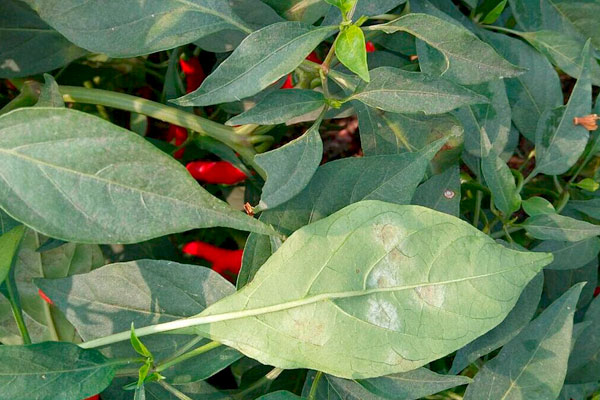
Powdery mildew on pepper
Distribution: The pathogen is widespread throughout the world. Its density is highest in Central Asia, with its distribution coinciding to a significant extent with the main pepper-growing regions worldwide. It has been established that powdery mildew attacks on peppers have increased almost twofold over the last 20-25 years. This may be due to the adaptability of L. taurica to diverse agroecosystems. Alternating daily and nightly temperatures with a wide range stimulate infections. This is the explanation scientists give for the severe outbreaks in the Jordan Valley and Moroccan greenhouses, where daily temperatures vary between 10°C and 52°C. The fungus can also survive in extreme conditions, including dry desert regions where daily temperatures vary significantly.
Symptoms: The first symptoms include chlorotic spots on the upper surface of the leaves, which later coalesce and burn. Their lower surface becomes covered with a white coating of conidia and conidiophores of the fungus. The pathogen attacks only the leaves of the plants. The disease begins first on the older leaves, immediately before or during fruit set, but it can also appear at any stage of crop development. The fungus develops mainly on the underside of the leaves, often remaining hidden for up to 21 days before visible symptoms appear. This latent growth allows the pathogen to spread widely before being detected. Infected leaves lose their photosynthetic capacity, their growth is slowed, and this also delays fruit development. Severely attacked leaves curl and may fall off. As a result of defoliation, sunscald appears on the fruits, and their yield and quality are severely impaired. The pathogen causes significant yield losses both in greenhouses and in open fields, favored by the specific characteristics of the climate. These yield losses can be exacerbated by processes related to ongoing climate change, especially increased humidity after heavy rainfall. The natural structure of the pepper plant, with dense foliage and limited air circulation, can further favor the development of the pathogen. Leveillula taurica is highly adaptable, can infect various hosts, and develops well under conditions characteristic of pepper cultivation. The fungus's ability to grow unnoticed in leaf tissue, combined with dense foliage and environmental stress factors, makes the crop particularly susceptible to this disease.
Conditions for disease development: Powdery mildew develops most actively in warm days and cool nights, with optimal temperatures between 15°C and 25°C, and high humidity at night (90–95%), combined with daytime humidity above 85%. Spores can germinate over a wide range of atmospheric humidity - from very low to saturated, which makes peppers vulnerable in both humid and dry climatic conditions. After spore germination and infection establishment, disease development is favored by warm days and cool nights, with the most severe disease levels observed at daytime temperatures around 30оС and nighttime temperatures below 25оС. Disease development is suppressed at temperatures above 35оС. While infection is most severe under humid conditions, drier conditions favor defoliation. Therefore, the impact of the disease is strongest when humidity levels shift from wet to dry. This promotes leaf fall and is additional stress for the plant. Under favorable conditions, secondary infections appear every 7 to 10 days, and the disease can spread rapidly. The pathogen is most active during the hottest part of the summer and can cause significant yield losses. It has a very wide host range, and inoculum from one host species can infect other hosts. As an obligate parasite, the fungus can overwinter on other hosts, including weeds.
Powdery mildew on eggplants
Powdery mildew on eggplants is a common fungal disease that significantly affects plant productivity and fruit quality. The danger from it also stems from the fact that it weakens the plant in the infection zones and encourages the appearance of new pests (diseases and pests). It is caused by the microscopic fungi Leveillula taurica and Golovinomyces cichoracearum.
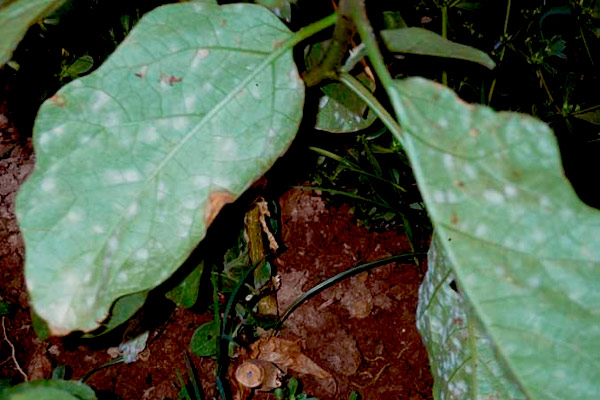
Powdery mildew on eggplant
White, powdery spots appear on the upper and lower surface of the leaves. These spots can enlarge, covering the entire leaf, petioles, and stems. Later, the affected tissues turn yellow and necrotize. Under severe attack, premature leaf fall occurs, which also reduces photosynthesis.
Distribution: The causal agents are widespread in all agricultural regions where eggplants are grown: Ukraine, Czech Republic, Austria, America, Canada, Brazil, Mexico, in East and West Asia. Besides eggplants, they have a wide spectrum of other hosts. The appearance of the disease and inadequate response from growers can cause losses of up to 80%.
Symptoms: Leveillula taurica. Initially, light green to bright yellow spots appear on the upper surface of the leaves. Later, the spots necrotize. Infected leaves curl upwards, and on their lower surface, a powdery, white coating of pathogen conidia is visible. When the spots are numerous, they coalesce, general chlorosis appears, the leaves burn and fall off. The pathogen moves from older to younger leaves. As a result, the fruits of affected plants are exposed to direct sunlight and sunscald appears on them, which severely impairs their quality.
Golovinomyces cichoracearum. The first signs caused by this pathogen are small, round to irregular, whitish, powdery areas on the upper and lower surface of the leaves. The infected areas enlarge and can cover the leaves, petioles, and stems. As with L. taurica, the older leaves are attacked first, and later the pathogen moves to younger ones. The affected leaves turn yellow and dry out. The fungus attacks the flowers, which later dry out. Spots covered with a powdery coating appear on the fruits. These signs are observed on still unripe fruits.
Conditions for disease development. The fungus survives on residues of infected hosts and is transmitted through airborne spores. The infectious pressure intensifies when the plants are vigorous, well-leafed, ventilation is poor, irrigation is carried out by overhead sprinkling, and unbalanced nitrogen fertilization is applied. These fungi have a wide host spectrum. Airborne conidia can be carried over long distances by the wind and serve as an initial source of inoculum. High relative humidity is not necessary for infection. High temperatures and low light favor disease development.
Powdery mildew on potatoes
Causal agent: The fungi Leveillula taurica and Golovinomyces orontii are distributed worldwide across a wide range of hosts. The strain of G. orontii that attacks potatoes is a separate physiological race. Unlike other representatives of the family Solanaceae, potatoes irrigated by gravity are more susceptible than those irrigated by overhead sprinkling.
Symptoms. Powdery mildew on potatoes is not always as easily noticeable as on other hosts from the same family. The first signs are the appearance of brown lesions of various sizes on the stems and petioles. Later, they coalesce and form short stripes or spots. The white powdery coating typical of powdery mildews on other hosts often does not develop on potatoes. If air humidity is high, the diseased leaves can be covered with the characteristic coating. As the disease progresses, the leaves and stems dry out, and only the tip of the plant may remain green. Infection and collapse of the plants can also occur over large areas in the field. Late in the autumn, small black dots – the overwintering fungal bodies – may appear in the powdery coating. It has been established that early planting reduces losses.
Control
Preventive measures are of great importance for the successful management of this dangerous disease:
- Application of optimal and balanced fertilization rates. High levels of nitrogen fertilization should be avoided;
- Optimal crop density to ensure normal air circulation. Increased density and shading should be avoided, as they can lead to increased air humidity around the plants and create favorable conditions for pathogen development;
- Selection of sites – sunny, well-ventilated terrains;
- Tomatoes should not be irrigated by overhead sprinkling;
- Seedlings should be grown in specialized nursery units, isolated from older plants;
- Growing resistant or less susceptible varieties. Different varieties have different susceptibility to the causal agents of powdery mildew;
- Keeping the fields and surrounding areas free of weeds;
- Regular, weekly inspection of the crops. Early detection of the disease is important, as early control will limit the development and extent of pathogen infection;
- Removing infected leaves is not good agricultural practice, as this will increase the spread of pathogen spores;
- Treating the plants with conventional registered plant protection products (PPPs) upon the appearance of the first spots or when their appearance is forecast. The aim is to protect the plants and destroy the infection that has already appeared;
- Biological products that can be used include plant oils and extracts, biofungicides, etc. Plant oils from sesame, rosemary, thyme, and neem are effective. They should not be used during drought and high temperatures, as they cause burns.
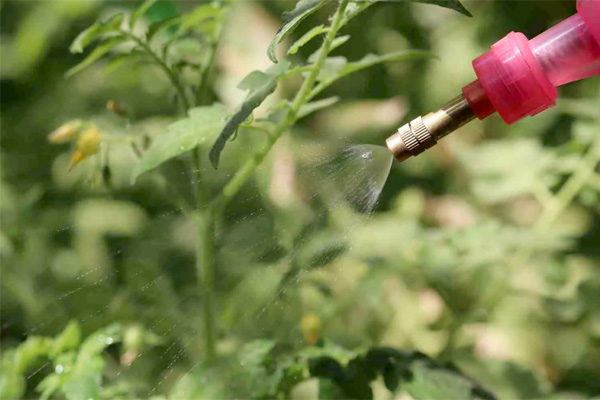
Biofungicides are usually based on active strains from the genera Bacillus and Streptomyces. The most effective preventive treatment is with sulfur. It should be carried out in the morning or evening, when temperatures are not high, because it can also cause burns. If the plants have been treated with oils, sulfur should be used no earlier than two weeks later. Conversely, if the crops have been treated with sulfur, the use of oils should also be at least 2 weeks later;
- The causal agents of powdery mildew easily develop resistance to the PPPs used, so they should be rotated. A key element is high-quality application – complete coverage of the leaf surface;
- When choosing PPPs, their pesticidal properties, efficacy, pre-harvest intervals, their impact on pollinators and honeybees, their impact on beneficial species and the environment should be taken into account;
- Maintaining relative air humidity below 80%;
- Removing plant residues at the end of the growing season;
- Introducing 2-3 year crop rotations.
- Registered PPPs:
Tomatoes: Azaka 80 ml/dka; Azumo 80 WG/Solfo 80 WG/ 200 g/dka; Vivando 30 ml/dka; Dagonis 100 ml/dka; Diagonal 80-100 ml/dka; Domark 10 EC 40-50 ml/dka; Zoksis 250 SC 70-80 ml/dka; Carbicure 300 g/dka; Kozavet DF 500 g/dka; Kolpen DG/Thiovit Gold/ 750 g/dka; Kumulus 750 g/dka; Custodia 320 SC 50-100 ml/dka; Legado 80-100 ml/dka; Neodif 40-50 ml/dka; Norios 250 SC 70-80 ml/dka; Orius 200 EW 125 ml/dka; Ortiva Top SC 100 ml/dka; Pol-sulfur 80 WP 60-200 g/dka; Pol-sulfur 80 WG 60-200 g/dka; Pol-sulfur 800 SC 200 ml/dka; Pousis / Flosul/ 200 ml/dka; Prev-gold 160-600 ml/dka; Problad 320 g/dka; Samba 80 SC 200 ml/dka; Sivar 80-100 ml/dka; Sinala 160-600 ml/dka; Synstar 70-80 ml/dka; Score 250 EC 0.05%; Sonata SC 500-1000 ml/dka; Sulgran 500 ml/dka; Sulfolac 80 WG 300 g/dka; Sulfur WG 300 g/dka; Taegro 18.5-37.0 g/dka; Tazer 250 SC 80-100 ml/dka; Thiovit Jet 80 WG 300 g/dka; Topaz 100 EC 35-50 ml/dka; Trezin / Trunfo/ 100 ml/dka; Favia 50 ml/dka; Fytosev 200 ml/dka; Heliosufr S 150-600 ml/dka; Cidely Top 100 ml/dka.
Peppers: Vivando 30 ml/dka; Dagonis 100 ml/dka; Diagonal 80-100 ml/dka; Zoksis 250 SC 64-80 ml/dka; Carbicure 300 g/dka; Kozavet DF 500 g/dka; Custodia 320 SC 50-100 ml/dka; Legado 80-100 ml/dka; Norios 250 SC 64-80 ml/dka; Orius 200 EW 125 ml/dka; Ortiva Top SC 100 ml/dka; Pousis/Flosul 500 ml/dka; Prev-gold 160-600 ml/dka; Sivar 80-100 ml/dka; Sinala 160-600 ml/dka; Score 250 EC 0.05%; Sonata SC 500-1000 ml/dka; Sulgran 500 ml/dka; Sulfolac 80 WG 300 g/dka; Sulfur WG 300 g/dka; Taegro 18.5-37.0 g/dka; Tazer 250 SC 80-100 ml/dka; Thiovit Jet 80 WG 300 g/dka; Topaz 100 EC 35-50 ml/dka; Favia 50 ml/dka; Fytosev 200 ml/dka; Cidely Top 100 ml/dka.
Eggplants: Vivando 30 ml/dka; Dagonis 100 ml/dka; Zoksis 250 SC 64-80 ml/dka; Carbicure 300 g/dka; Kolpen DG/Thiovit Gold/ 750 g/dka; Custodia 320 SC 50-100 ml/dka; Legado 80-100 ml/dka; Neodif 40-50 ml/dka; Norios 250 SC 64-80 ml/dka; Ortiva Top SC 100 ml/dka; Pol-sulfur 800 SC 200 ml/dka; Pousis/Flosul 500 ml/dka; Prev-gold 160-600 ml/dka; Problad 320 g/dka; Signum 150 g/dka; Sinala 160-600 ml/dka; Score 250 EC 0.05%; Sonata SC 500-1000 ml/dka; Sulfolac 80 WG 300 g/dka; Sulfur WG 300 g/dka; Taegro 18.5-37.0 g/dka; Tazer 250 SC 80-100 ml/dka; Thiovit Jet 80 WG 300 g/dka; Topaz 100 EC 35-50 ml/dka; Favia 50 ml/dka; Fytosev 200 ml/dka; Cidely Top 100 ml/dka.
Potatoes: Sulfolac 80 WG 300 g/dka; Sulfur WG 500 g/dka; Thiovit Jet 80 WG 500 g/dka.
More on the topic:
Botanical plant protection products as an attractive alternative to synthetic chemical insecticides
Biofungicides for disease and pest control in vegetable crops
Rules for preparing decoctions and some environmentally friendly plant protection products
References
1. Cerkauskas, R. Ferguson, G., and Banik, M. 2011. Powdery mildew (Leveillula taurica) on greenhouse and field peppers in Ontario – host range, cultivar response and disease management strategies, Canadian Journal of Plant Pathology, 33:4, 485-498.
2. Elad, Y., Messika, Y., Brand, M., David, D., and Sztejnberg, A. 2007. Effect of microclimate on Leveillula taurica powdery mildew of sweet pepper. Phytopathology 97:813-824.
3. Levente, K. I., Roger, T. A., Saenz, G. S., Cunnington, J. H., Takamatsu, S., Pascoe, I., Bardin, M., Nico,t P. C., Sato, Y., and Rossman, A. Y. 2001. Identification of two powdery mildew fungi, Oidium neolycopersici sp. nov. and O. lycopersici, infecting tomato in different parts of the world. Mycological Research, 105(6):684-697.
4. Reddy, J., 2024. How to identify Powdery mildew: Symptoms, Treatment, and Prevention. Agriculture Farming.
5. Termorshuizen, A. J., 2007. Fungal and fungus-like pathogens of potato. Potato Biology and Biotechnology: Advances and Perspectives. 643–665.