

![MultipartFile resource [file_data]](/assets/img/articles/заглавна-пипер-бактерии-болести.jpg)
Summary
Bacterial spot, caused by members of the genus Xanthomonas, is one of the most significant diseases of pepper (Capsicum annuum) worldwide. The disease is particularly destructive in warm and humid regions, where conditions favor the rapid development and spread of the pathogen. Symptoms begin as small water-soaked lesions that darken and become surrounded by a chlorotic halo, and under severe infections lead to defoliation and significant yield losses. The pathogens (Xanthomonas euvesicatoria pv. euvesicatoria and X. vesicatoria) demonstrate high genetic heterogeneity, an expanding host range, and complex pathogenicity mechanisms. Dissemination occurs through seeds, air, water, insects, and human activity, which determines the wide biogeography of the disease. Diagnosis includes traditional and modern methods, and management includes copper-based products, biological control, and selection of resistant varieties. Despite progress, bacterial spot remains a serious challenge for growers, requiring integrated approaches for early detection and sustainable management.
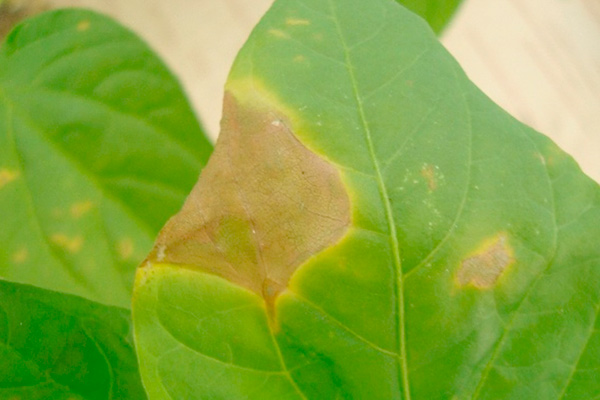
Pepper (Capsicum annuum) is one of the leading vegetable crops worldwide, with high economic and nutritional significance. Its production is often limited by bacterial diseases, among which bacterial spot, caused by members of the genus Xanthomonas (Osdaghi et al., 2021). The disease is particularly destructive in regions with warm and humid climates, where conditions favor the rapid development and spread of the pathogen (Potnis et al., 2015).
The taxonomy of the causal agents has undergone numerous changes – from the initial description as Bacterium vesicatorium to the modern classification, including X. euvesicatoria pv. euvesicatoria, X. euvesicatoria pv. perforans, X. hortorum pv. gardneri, and X. vesicatoria (Osdaghi et al., 2021).
The primary host is Capsicum annuum, but occurrences have also been described in other species such as C. frutescens, C. chinense, and C. pubescens. Different races of the pathogen exhibit specificity – some strains infect only tomato, others only pepper, and still others both hosts (Kebede et al., 2014).
Members of the genus Xanthomonas are typical phytopathogenic bacteria, widely distributed across various climatic regions worldwide. They cause diseases with diverse symptoms, including necrosis, wilting, spotting, tracheobacteriosis, and parenchymal damage on leaves, stems, and fruits. The host range of these bacteria encompasses 268 dicotyledonous and 124 monocotyledonous plant species, including agricultural and ornamental crops, forest species, and weeds. Significant economic losses are observed in diseases of tomato, pepper, bean, soybean, rice, wheat, cotton, and other crops (Scortichini, 1995).
Central to the pathogenicity of Xanthomonas is the type III secretion system (T3SS) – a key molecular mechanism through which bacteria directly deliver effector proteins into the cytoplasm of plant cells. These effectors manipulate host cellular processes, suppress immune responses, and create a favorable environment for infection development. The T3SS is encoded by a 28 kb chromosomal hrp (hypersensitive response and pathogenicity) gene cluster, organized into six loci. Mutations in hrp genes lead to loss of pathogenicity in susceptible plants and absence of a hypersensitive response (HR) in resistant plants, underscoring the fundamental role of this system in plant-pathogen interactions (Liu et al., 2005).
Diagnosis traditionally includes visual observation, isolation, and PCR analyses. Modern methods such as hyperspectral spectroscopy and predictive modeling allow early detection of infection before the appearance of visible symptoms (Reis Pereira et al., 2023), which is particularly valuable in pepper, where visual diagnosis is often hampered by similar symptoms caused by other stress factors.
Disease management traditionally relies on copper-based products and antibiotics, but resistance to them is already widespread. New approaches include biological control (bacteriophages, antagonistic microorganisms), inducers of systemic resistance, and selection of resistant varieties. The biogeography of phytopathogenic bacteria is a key element of their ecology, with many species characterized by limited distribution determined by climatic conditions, the availability of suitable hosts, and specific ecological niches. In contrast, the causal agents of bacterial spot demonstrate exceptionally wide geographic distribution. They are established in various parts of the world but are most commonly found in tropical and subtropical regions, where high humidity and temperatures create optimal conditions for their development and spread. One of the main factors contributing to their global dissemination is the movement of infected seeds, which allows the pathogen to be transported over long distances and introduced into new production areas (Kebede et al., 2014).
The bacteria survive epiphytically on the plant surface and can be transported over considerable distances through rain splash, wind, or a combination of both factors (Vidaver and Lambrecht, 2004). Epiphytic populations, including those from latent infections, represent an important reservoir of inoculum that, under favorable conditions, can lead to rapid and massive disease development.
Bacterial spot of pepper remains a serious challenge for growers, with modern molecular and spectral technologies opening new perspectives for early diagnosis and sustainable disease management.
Materials and Methods
Research on bacterial spot of pepper traditionally relies on multi-stage experimental approaches that combine collection and characterization of pathogenic isolates, molecular identification, and phenotypic evaluation of resistance in different Capsicum annuum genotypes.
In practice, both Bulgarian and introduced varieties and lines are used, along with reference and newly isolated strains of Xanthomonas vesicatoria and X. euvesicatoria. Inoculations are performed under controlled conditions in climate chambers or greenhouses, allowing reliable assessment of pathogenicity (Vasileva and Bogatzevska, 2021).
To ensure methodological reliability, controls, reference strains, and susceptible genotypes are used, as well as internal PCR standards in molecular analyses.
Results
The pathogens of the genus Xanthomonas are biotrophic and necrogenic organisms – two characteristics that reflect different stages of their interaction with the host plant. The biotrophic stage is associated with early bacterial multiplication before the appearance of visible symptoms, when the pathogen uses living plant cells as a nutrient source. The necrogenic stage occurs later and is characterized by the induction of cell death and necrosis, leading to the typical disease symptoms. This two-phase strategy is supported by a rich arsenal of pathogenicity and virulence factors that allow the bacteria to overcome plant defense mechanisms, evade recognition by the immune system, ensure access to nutrients, and increase their reproductive success (Abramovich and Martin, 2004).
The climatic conditions in Bulgaria during the period May–September create an exceptionally favorable environment for the emergence and development of bacterial spot on pepper, caused by X. euvesicatoria and X. vesicatoria. The high temperatures, which consistently remain in the range of 24–30°C, coincide with the optimum for epiphytic development, multiplication, and infectious potential of the bacteria. Under these conditions, the bacteria form large populations on the leaf surface, and the tissues of young plants remain physiologically vulnerable to penetration through stomata and hydathodes. Rainfall peaks, in individual years, further amplify the risk of epidemic development, as rain splash is the primary mechanism for inoculum dissemination between plants.
High atmospheric and surface humidity following rainfall creates a water film on leaves, which facilitates bacterial penetration and leads to mass infection, especially during June–July, when temperatures and humidity coincide. Under these conditions, initial water-soaked lesions develop rapidly, darken, and become surrounded by a chlorotic halo, and with subsequent rainfall, secondary infection and coalescence of lesions are observed, leading to defoliation and ring-like necrosis of the petioles (Figure 1).
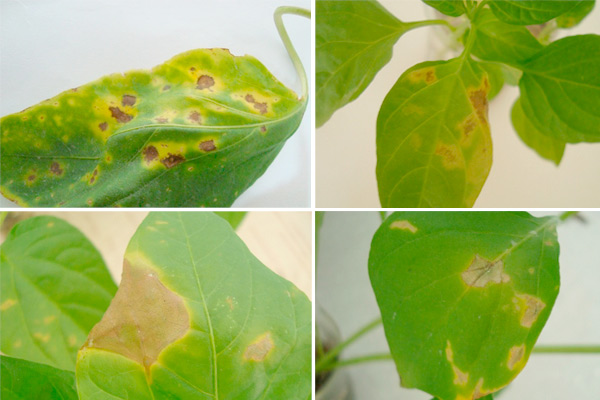
Figure 1. Symptoms of bacterial spot on pepper leaves
Periods with higher rainfall during the active growing season show a pronounced tendency toward stronger epidemics, while drier seasons limit disease development but do not prevent the occurrence of local infections. The combination of high temperatures and periods of increased humidity determines the persistent presence of bacterial spot and creates conditions for annual epidemic peaks in susceptible varieties, especially when infected seed material is used or epiphytic populations from previous years are present.
In addition to natural factors, the spread of pathogens can also occur through human activity. Agricultural workers, machinery, and tools used in crop cultivation can serve as mechanical vectors. Irrigation water, especially under excessive watering, is one of the most effective routes for transferring bacteria from plant to plant. Insects can also act as vectors, aiding pathogen dissemination and even selectively eliminating competing microorganisms in the plant microenvironment. Volunteer plants and weeds further complicate the epidemiology of the disease by serving as alternative hosts and reservoirs of infection.
Seeds represent one of the most important routes for the dissemination of phytopathogenic bacteria. Besides moving through the vegetative organs of the plant, pathogens also penetrate fruits and seeds, leading to external or internal contamination of the seed material. Contaminated seeds are a particularly significant source of inoculum in seedling production facilities, where high temperature and humidity create ideal conditions for rapid disease development and spread. In such environments, even a minimal amount of pathogen can lead to mass infection.
Air is another important factor for the transmission of phytopathogenic bacteria. It contains soil particles and fragments of dry plant debris, on which viable bacteria can be found. Many phytopathogenic species produce extracellular exopolysaccharides that form filamentous structures on the plant surface. Upon drying, these filaments break into fragments and become airborne, where they are carried over various distances by air currents. This mechanism allows discreet but effective dissemination of the pathogen under field conditions.
Human activity further amplifies the spread of phytopathogenic bacteria. Humans are extremely effective at moving plant and animal pathogens from regions where they are well known to new regions where information about their presence is lacking. The transport of planting material, seed exchange, movement of agricultural machinery, and even the daily activities of field workers can lead to inadvertent pathogen transmission. In a globalized world, this mechanism is becoming a key factor in the emergence of new outbreaks and the expansion of the range of phytopathogenic bacteria.
Bulgarian research on Xanthomonas euvesicatoria and X. vesicatoria shows clearly expressed species, pathotype, and race diversity, with dominance of the PT pathotype and races P4T2 and P6. Natural populations are highly heterogeneous in symptomatology, phenotype, and genotype, with race P6 being most widespread in X. euvesicatoria and race P2 in X. vesicatoria. In parallel, over 270 pepper genotypes were evaluated and classified for resistance using ms and Di%, allowing differentiation from immune to highly susceptible forms. Five genotypes with a complete immune response were identified, and the integrated assessment of fruit characteristics supports selection for complex resistance and agronomic value. National mapping confirms geographic specificity and genetic heterogeneity, including through the effector genes AvrBs3/AvrBs4. Additional tests show variable sensitivity of Xanthomonas strains to copper-based products, with tomato isolates being more sensitive than those from pepper, and the effect increasing with higher concentration. (Vasileva and Bogatzevska, 2021; Vasileva and Bogatzevska, 2022; Vasileva, 2023; Vasileva and Todorova, 2024).
Regulating the spread and control of plant diseases represents one of the main links in plant protection. The production of food with good quantitative and qualitative indicators is in continuous dependence on plants with lasting resistance to various pathogenic organisms. The harmful effect of pesticides on the environment, food production, and human health imposes increasingly strict restrictions on their use.
Chemical agents continue to be a main element in the practice of controlling bacterial plant diseases, with copper-based products, including copper sulfate solution, traditionally used to limit pathogen development. Despite their widespread application, numerous studies show that members of the genus Xanthomonas exhibit significant variability in sensitivity to copper cations. Cases of reduced sensitivity and even stable resistance have been documented, calling into question the effectiveness of copper formulations against certain pathogen populations. This resistance has important practical significance, as it can lead to the failure of standard control measures and necessitate the use of alternative or combined approaches to disease management.
More on the topic:
Bacterial spot of pepper in Bulgaria
References
- Abramovitch R. B. and Martin G. B. (2004) Strategies used by bacterial pathogens to suppress plant defenses. Curr. Opin. Plant Biol. 7, 356–364
- Kebede M., Timilsina S., Ayalew A., Admassu B., Potnis N., Minsavage G. V., et al. (2014) Molecular characterization of Xanthomonas strains responsible for bacterial spot of tomato in Ethiopia. Eur. J. of Plant Pathol., 1-12.
- Osdaghi, E., Jones, J. B., Sharma, A., Goss, E. M., Abrahamian, P., Newberry, E. A., ... & Vallad, G. E. (2021). A centenary for bacterial spot of tomato and pepper. *Molecular Plant Pathology, 22*(11), 1500–1519.
- Potnis, N., Timilsina, S., Strayer, A., Shantharaj, D., Barak, J. D., Paret, M. L., ... & Jones, J. B. (2015). Bacterial spot of tomato and pepper: insights into pathogen biology, host resistance, and management. *Plant Disease, 99*(11), 1464–1476.
- Reis Pereira, M., Santos, F. N., Tavares, F., & Cunha, M. (2023). Enhancing host-pathogen phenotyping dynamics: early detection of tomato bacterial diseases using hyperspectral point measurement and predictive modeling. *Frontiers in Plant Science, 14*, 1242201.
- Scortichini M. (1995) Le malattie batteriche delle colture agrarie e delle specie forestali. Edagricole- Edizioni Agricole, Bologna
- Vasileva, K. & Todorova, V. (2024). Evaluation of pepper breeding lines and accessions to Xanthomonas euvesicatoria and X. vesicatoria and fruit traits. Bulgarian Journal of Agricultural Science, 30(1), 141-150. https://www.webofscience.com/wos/woscc/full-record/WOS:001181663500002
- Vasileva, K. (2023). Reaction of species X. vesicatoria and X. euvesicatoria to copper products. New knowledge Journal of science, 12(1), 61-65. https://science.uard.bg/index.php/newknowledge/article/view/952/pdf_380
- Vasileva, K., & Bogatzevska, N. (2019). Races of bacterial spot pathogen infecting genus Capsicum in Bulgaria. Agricultural Science and Technology, 11(2), 113-117. https://www.webofscience.com/wos/alldb/full-record/CABI:20193332554
- Vasileva, K., & Bogatzevska, N. (2021). Statistical analysis of resistance variability of pepper accessions to Xanthomonas euvesicatoria and Xanthomonas vesicatoria. Agricultural Science and Technology, 13(4), 339-343. https://www.webofscience.com/wos/alldb/full-record/CABI:20220013883
- Vasileva, K., & Bogatzevska, N. (2022). Resistance of pepper types to Xanthomonas euvesicatoria and Xanthomonas vesicatoria-impact of the species, races and hosts specialization. Agricultural Science and Technology, 14(2), 44–53. https://www.webofscience.com/wos/alldb/full-record/CABI:20220383481
- Vidaver A.K. and Lambrecht P.A. (2004) Bacteria as plant pathogens. The Pl. Health Instr. DOI: 10.1094/PHI-I-2004-0809-01