

![MultipartFile resource [file_data]](/assets/img/articles/прогноза-юли-2026.jpg)
In August, the agrometeorological conditions will be determined by temperatures above the climatic norms and precipitation around the norms for the month.
At the beginning of August, the development of agricultural crops will proceed under hot weather, and in some places in the Danube Plain and in part of the southern regions – also under a deficit of soil moisture. July precipitation was unevenly distributed. At the end of July, above-normal precipitation and good soil moisture reserves in the 50 and 100 cm layer were registered in Northeastern Bulgaria and in part of the Upper Thracian Lowland (Shumen - 123 l/m², Silistra - 89 l/m², Dobrich - 69 l/m², Varna - 90 l/m², Plovdiv - 73 l/m²).
During the first days of the month, the forecast extremely high maximum temperatures, up to and above 38-39°C, will disrupt the normal course of physiological processes in agricultural crops and will negatively affect flowering and fertilization in late vegetable crops and late corn hybrids.
Depending on sowing dates and early maturity, corn will also show phases of transition from milk to wax ripeness in early hybrids, as well as grain filling in mid-late ones. Sunflower, sown within the agrotechnical period, will be in the phase of seed filling.
The high temperatures and the forecast lack of precipitation will limit the occurrence of fungal diseases in field crops, with the exception of those grown under irrigation conditions.
In orchards and vineyards, it is advisable to monitor for the presence of mites, fruit worms, and moths.
A short-term decrease in temperatures, showers, and an improvement in conditions for the vegetation of second crops and late corn hybrids is expected at the end of the first ten-day period. During the ten-day period, earlier corn hybrids will undergo the milk ripeness phase and transition to wax ripeness, while mid-early ones will undergo grain filling. In sunflower, in some places in the Danube Plain and in the southern regions of the country, the beginning of the ripening phase will be observed.
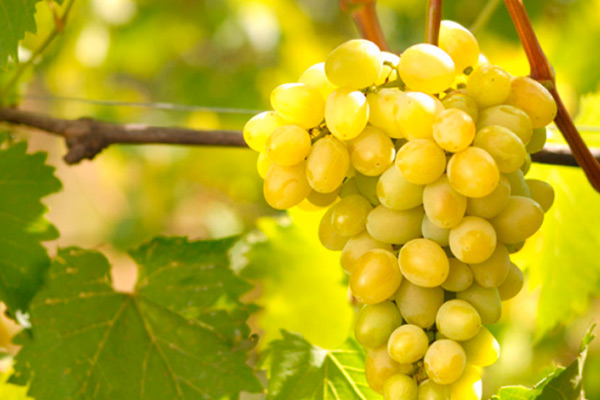
The harvest of the early Bulgarian dessert grape variety Super Ran Bolgar began at the beginning of August 2026. The first mass grape harvest campaigns started in the village of Tatarevo, Plovdiv region. The variety was created in 1961 through a cross between the varieties Italia and Yantar at the Institute of Viticulture and Winemaking in Pleven. The grapes of this variety ripen early (in the first days of August) and uniformly, which allows the harvest to be carried out at once. At full maturity, Super Ran Bolgar accumulates between 15% and 20% sugars, combined with a moderate balance of acids (5-6 g/l).
During this period, the early dessert grape varieties (Amira, Super Ran Bolgar, Pleven, Mechta, Misket Ran, Cherna Perla, etc.) will enter consumer ripeness.
During the second and third ten-day periods, the forecast temperatures, around and above the climatic norms, will accelerate the final phases of development of late agricultural crops. At the end of the second ten-day period, mass technical ripeness will be observed in sunflower in the plains, and at the end of the third, mid-late corn hybrids will complete their development.
During the third ten-day period of August, an increased probability of precipitation is forecast, improving the moisture content of the upper soil layers and the conditions for conducting deep plowing and pre-sowing treatments of areas intended for sowing with winter oilseed rape. During the ten-day period, the agrotechnical period for sowing oilseed rape begins.
The meteorological conditions in August will limit the development of fungal diseases, with the exception of powdery mildews on vegetable crops, fruit trees, and vines. During the month, the harmful activity of the second generation of fruit worms continues. An increase in the mite population is expected.
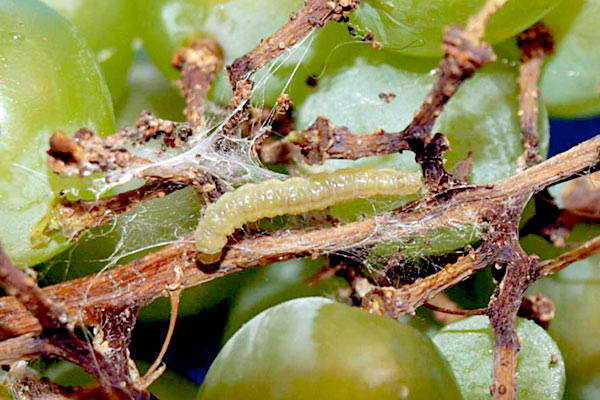
In vineyards, it is necessary to monitor the appearance and density of caterpillars from the third generation of the European grapevine moth
If necessary, plant protection sprays should be carried out during the cooler hours of the day, at temperatures below 25 °C, with products with an appropriate pre-harvest interval consistent with the ripening period of the crops.
More on the topic: