

![MultipartFile resource [file_data]](/assets/img/articles/заглавна-агро-юли-2026.jpg)
In July, sunny and hot weather will prevail, interrupted by short periods of instability with thunderstorms. Precipitation will be unevenly distributed – in many places it will be absent for extended periods, while in other areas local storms may bring significant amounts of rain in a short time. Current atmospheric signals indicate that July has the potential to have temperatures slightly above the climatic norm, especially during the second half of the month.
During the first ten days of the month, a period of unstable and slightly cooler weather is expected in the first days of July, caused by a cold atmospheric front passing through the country. Thunderstorms, precipitation, and hail will develop over most of Bulgaria, and the northwest wind will strengthen. After July 5-7, the atmosphere will stabilize, more sunny hours will prevail, and temperatures will gradually rise. Minimum temperatures will be between 15 and 20 °C, and daytime temperatures will reach 30 °C – 35 °C, with values around 36 °C not excluded in the warmest areas of the Danube Plain and the Upper Thracian Lowland.
In the middle of the month, the probability of establishing a longer hot period increases. Maximum values will be between 33 °C and 38 °C, and in some areas of Northern Bulgaria and the Thracian Lowland, they may temporarily reach 39 °C.
Despite the dominant sunny weather, towards the end of the period, the passage of a weak atmospheric disturbance is not excluded, which could cause brief thunderstorms in the western regions and the mountains. They will be local, but in some places they may be intense and accompanied by strong wind gusts and hail.
The last ten days of the month will retain their typical summer character. Extended sunny periods are expected, with the probability of precipitation being lowest in Eastern Bulgaria and along the Black Sea coast. In the western and mountainous regions, there will be conditions for afternoon cumulonimbus clouds, but precipitation will be mostly local. Minimum temperatures will be between 17 °C and 22 °C, and maximum temperatures will reach 32 °C – 37 °C, with temperatures around 39 °C – 40 °C not excluded on some days in the hottest areas of the country.
In fruit nurseries
Seedbeds are watered and cultivated regularly to ensure the highest possible percentage of standard rootstock material. Mother plantations are irrigated and, if necessary, hilled up.
To ensure conditions for good development of budded plants, in the second-year nursery, suckering is carried out when necessary. Pears, in particular, are regularly cultivated and irrigated.
In the first-year nursery, the grafting of rootstocks begins. Rootstocks with buds that have not taken are re-budded. About two weeks after budding, the ties are inspected. Those that have cut in are loosened.
In fruit plantations
Work on bending the scaffold branches during palmette formation continues.
Through irrigation, soil moisture is maintained above 70% of field capacity (FC).
With a disc harrow, cultivator, rotary tiller, and rotary tiller with an offset section, the soil surface in the interrows and rows is kept in a cultivated state and free of weeds, if the area between the plants is not grassed.
Work on harvesting sweet cherries and sour cherries continues.
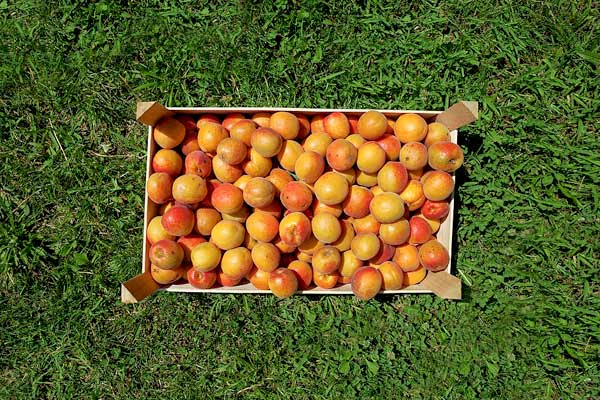
The mass harvesting of apricots and peaches begins.
In strawberry plantations
Care for irrigating newly established strawberry plantations continues, especially for those planted in June.
In lower and warmer areas where fruit harvesting has finished, the straw is collected, removed, and burned.
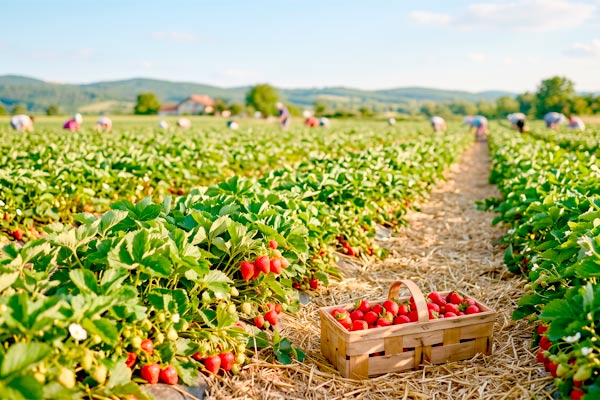
Fruit harvesting continues in higher and cooler locations.
After removing the straw, the plantations are irrigated and cultivated, having previously been fertilized with 10-12 kg of ammonium nitrate or another nitrogen fertilizer at the same concentration per decare.
Mother plantations from which planting material will be produced are irrigated, fertilized with 15-20 kg of ammonium nitrate per decare, and hoed. Runners in plantations from which planting material is not taken are cut out.
New areas for strawberry plantations are determined and prepared for autumn planting in the open field. Before deep cultivation, the area is fertilized with 2-4 tons of farmyard manure, 60-80 kg of superphosphate, and 20-30 kg of potassium sulfate per decare.
In raspberry plantations
Care for irrigating and cultivating new plantations continues.
Fruiting plantations are irrigated and cultivated. The irrigation rate is 50-60 dm3 per decare.
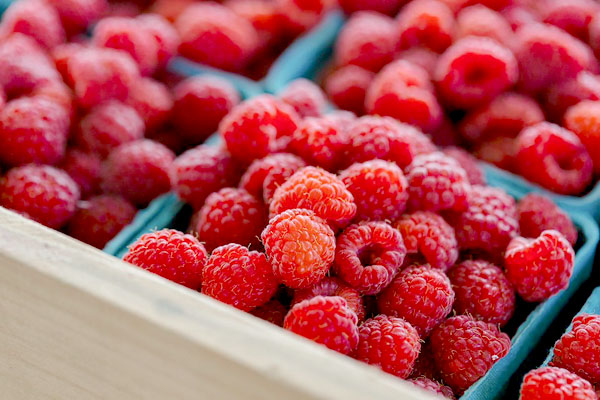
Mass harvesting of the fruit is carried out.
Care is provided for mother raspberry plantations – irrigation and cultivation, to ensure the maximum amount of planting material – suckers.
The plantations are inspected, admixtures of other varieties are cleaned out, and old fruited canes are cut out, collected, and burned.
In blackcurrant plantations
Care for the rooting beds continues. The soil is irrigated and cultivated. In young and fruiting plantations, weed infestation is not allowed. The plantations are fertilized with nitrogen fertilizer (1/3 of the annual rate).
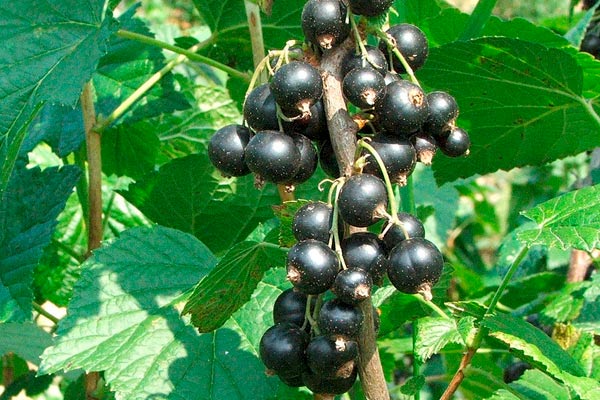
Mass harvesting of the fruit is carried out. During harvesting, admixtures of other varieties are marked for later uprooting, as well as diseased and weak plants. After harvesting, broken, underdeveloped, and excess shoots are removed.
In plantations with other crops
Desired fig varieties and forms are marked for obtaining cuttings.
Cuttings are obtained from kiwifruit, bay laurel, chokeberry, sea buckthorn, and pomegranate for rooting in a greenhouse with artificial mist.
The cuttings are formed and treated with a solution of indolebutyric acid for 5 seconds. In greenhouses with artificial mist, they are treated in a substrate of two parts perlite and one part peat.
The grafting of Caucasian persimmon rootstocks with persimmon and kiwifruit seedlings with cultivated varieties begins.
The tying of kiwifruit vines to the wire trellis continues. Summer pruning of kiwifruit is carried out.
Jujube and pistachio are budded, and fig fruits are harvested.
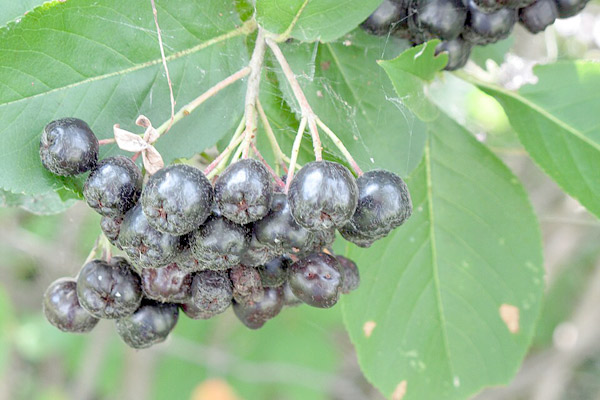
Towards the end of the month, the harvesting of sea buckthorn and chokeberry fruits begins.
In vineyards
In July, the temperature increases significantly, and the grapevine's need for water increases due to intensified transpiration and intensive berry growth.
This necessitates special attention to the timely and high-quality execution of soil cultivation and irrigation, where there is a need for it. Irrigation timing is determined by the soil moisture in the root zone, which should not fall below 70–75% of field capacity (FC).
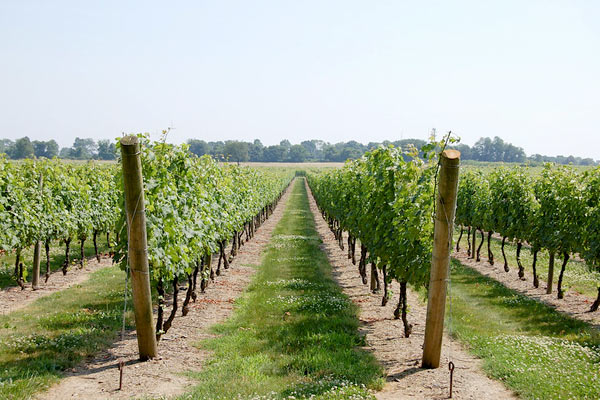
Irrigation timing can also be determined by some external signs on the vines, such as cessation of growth and straightening of shoot tips, premature yellowing of the lowest leaves, and scorching of their margins. The irrigation rate for vineyards is from 50 to 100 liters per square meter.
The most important green operations to be carried out in July in fruiting vineyards are lateral shoot removal (coltucene) and shoot topping (karshene).
Lateral shoot removal consists of completely or partially removing the lateral shoots that have grown from the summer buds at the nodes of the main shoot. This operation is mandatory for table grape varieties and vigorously growing vineyards, where conditions for heavy shading and the development of diseases and pests are created. It is most correct to perform lateral shoot removal leaving 4–5 leaves from the base of the lateral shoot. In vigorously growing varieties, especially in pergola training systems, in some cases it is useful to remove some of the lateral shoots entirely, to avoid shading of the grape clusters.
Shoot topping involves removing the growing tip of the shoot, along with 5–8 underdeveloped leaves. For wine and table grape varieties, it is carried out after the growth of the shoots has slowed. High-trunk trained vineyards and weakly and moderately growing pergola vines are not topped. This practice is essential for vigorously growing vineyards trained to medium trunks or close to the ground. After topping, it is mandatory that at least 12–15 leaves remain on the shoots of table grape varieties above the cluster, and 10–12 for wine varieties.
The next lateral shoot removal and tying of green shoots in the mother vine plantations is also carried out. In rooting beds, the soil is cultivated and weed control is carried out. Irrigation and fertilization are applied.