

![MultipartFile resource [file_data]](/assets/img/articles/прогноза-ноември-2025.jpg)
Agrometeorological conditions in November will be determined by temperatures close to and above climatic norms and precipitation around and below the norm for the month.
By the end of the first and beginning of the second ten-day period of November, agrometeorological conditions will be determined by unstable weather. The precipitation at the end of the past seven-day period and the expected during the next one will further delay, beyond the agrotechnical deadlines, the sowing of wheat. So far, about half of the planned areas have been sown.
The precipitation in October, which exceeded climatic norms two to three times (Sofia, Pleven, Lovech, V. Tarnovo, Razgrad, Ruse, Pazardzhik, Stara Zagora, Burgas), maintained a high moisture content in the upper soil layers, which delayed the pre-sowing cultivation and the sowing of winter cereals. Due to this objective reason, in most parts of the country, with the exception of some areas in the Danube Plain and in the eastern regions, the agrotechnical deadlines for wheat sowing in October were missed. A significant part of the areas planned for winter cereals will be sown in November. There is a high probability that the November crops will not be able to enter the tillering phase, the suitable phase for wintering, by the end of their autumn vegetation.
During most days of November, above-normal average daily temperatures are forecast, which will maintain active vegetation processes in autumn crops. At the end of the month, different phases will be observed in wheat and barley, depending on the sowing dates. For crops sown in November, germination and leaf formation (1-2-3 leaf) will occur. In a small part of the wheat crops in some areas of the Danube Plain and in the eastern regions (Dobrich, General Toshevo, Tervel, Provadia, Karnobat), which were sown in early autumn, the beginning of the tillering phase will be observed.
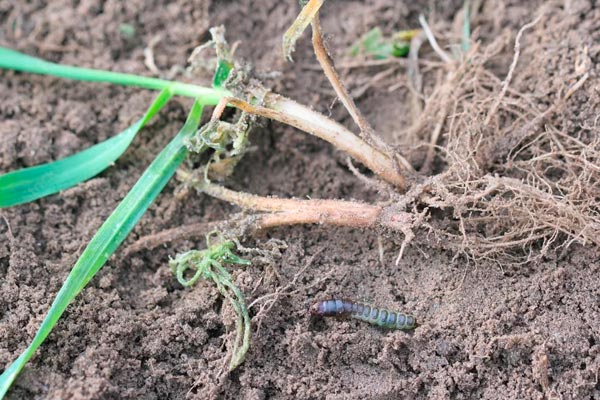
The most dangerous pest of cereal crops is the common cereal ground beetle (Zabrus tenebrioides), which attacks wheat, barley, corn, oats, and a number of cereal grasses.
In the initial phases of wheat and barley vegetation, crops should be surveyed for pests. Damage is caused by the common vole, the larvae of the cereal ground beetle, and cereal flies, and if the density is above the EIL (Economic Injury Level), timely plant protection is necessary.
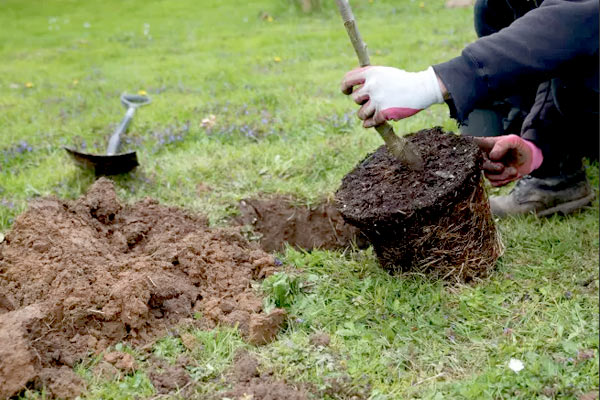
In November, more suitable conditions for planting fruit trees and for carrying out phytosanitary activities on fruit crops will be created during the second ten-day period. For pome fruit species (apple, pear) affected by scab disease, treatment with a 5% urea solution is recommended. For stone fruit species, it is advisable to spray with a 2% Bordeaux mixture against the causative agents of shot-hole disease, early brown rot, and peach leaf curl.