

![MultipartFile resource [file_data]](/assets/img/articles/ябълка-прогноза-октомври-2025.jpg)
During the first ten days of October, agrometeorological conditions will be determined by unstable weather and average daily temperatures around and below climatic norms. During this ten-day period, critical minimum temperatures for late-production vegetable crops are not forecasted in the field areas, which is a prerequisite for harvesting additional produce from frost-sensitive crops (tomatoes, peppers, zucchini, gherkins, etc.).
During this period, economically significant rainfall is forecasted, improving the condition of the upper soil layers and the conditions for conducting seasonal soil cultivation. The drought at the end of summer and beginning of autumn in many parts of the country hindered the pre-sowing cultivation of areas intended for autumn crops.
The heavy rainfall during the first ten days of October, which in many places in the country exceeded twice, and in Northern Bulgaria – three times the climatic norms: Lovech - 152 l/m² (296%), Pleven - 167l/m² (342%), V. Tarnovo - 187l/m² (351%), Razgrad - 171 l/m² (302%), Ruse - 254 l/m² (450%), oversaturated the upper soil layers and increased the moisture reserves in the 50 and 100cm layers.
Start of Autumn Sowing
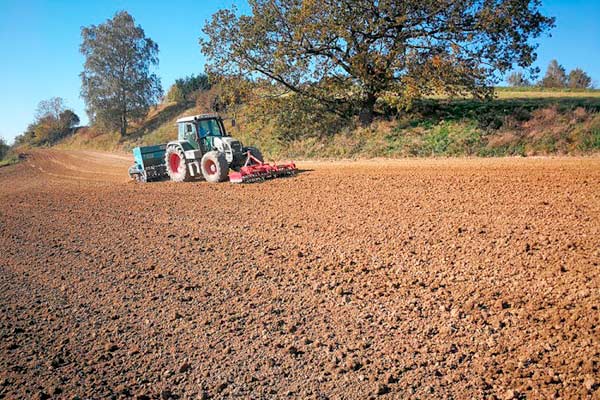
Unfavorable agrometeorological conditions – the drought and subsequent excessive rainfall during the first ten days of October hindered the seasonal soil cultivation, and in some regions of the country, such as Western Bulgaria, the sowing of winter grain crops is being delayed, although the official start of autumn sowing has already been given.
The first ten days of October is the agrotechnical deadline for wheat sowing in Northern Bulgaria, from 15 to 25.X - in Southern Bulgaria, and at the end of the month - in the Black Sea coastal regions. According to data from the Ministry of Agriculture and Food, wheat sowing is lagging by over 52%, with fewer sown areas in the country compared to the same period last year. A delay is also observed for barley and rye, but to a lesser extent.
Possibilities for the Use and Application of Triticale
According to data from the Ministry of Agriculture and Food, a significant increase in triticale areas is observed in this year's autumn sowing campaign – almost 54% more compared to a year earlier. In 2024, the areas with this crop were 102 xa at this point of the year, while currently, the triticale-sown fields are 167 xa.
Interest in this crop, which is an intergeneric hybrid of wheat and rye, has grown in recent years due to its combination of wheat's high yield potential and rye's disease resistance.
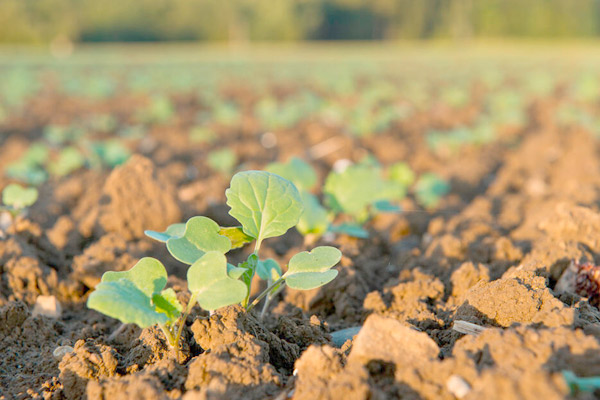
A known trend of increasing rapeseed areas has been observed over the past few seasons. This year, the growth in the crop during autumn sowing is 39% compared to last year's campaign data. As of today, the rapeseed-sown fields exceed 73.3 thousand hectares.
For most days of the second and third ten-day periods, agrometeorological conditions will be determined by relatively dry weather and temperatures close to normal. There is a high probability that the initial phases of vegetation for sown winter grain crops at the end of October will proceed with moisture deficit. At the end of the month, for wheat and barley, depending on the sowing dates, the phases of emergence and formation of 1-2 leaves will be observed.
During this period, conditions will be suitable for completing the grape harvest, for harvesting autumn varieties of fruit trees, and at the end of October – also for conducting phytosanitary activities. For apple and pear orchards affected by scab, to reduce the infection, it is advisable to treat with a 5% urea solution at the beginning of leaf fall, after harvesting the fruits.
For stone fruit species, after mass leaf fall, spraying with a 2% Bordeaux mixture is recommended against the causative agents of shot-hole disease, early brown rot, peach leaf curl, etc.