

![MultipartFile resource [file_data]](/assets/img/articles/заглавна-садово-2025.jpg)
Bulgarian selection of cereals, alternative crops, and crops suitable for organic farming were presented at the traditional Farmer's Day in Sadovo on May 30, 2025. The event is held annually at the Institute of Plant Genetic Resources "Konstantin Malkov" (IPGR) and successfully gathers farmers, partners, scientists, lecturers from Bulgaria and abroad, PhD students, and journalists in one place.
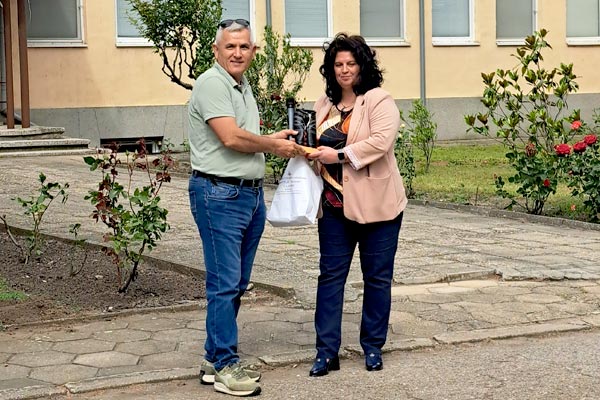
Prof. Dr. Yalcin Kaya, leading sunflower breeder from the Plant Breeding Research Center at Thracian University in Edirne, welcomed the hosts and guests of Farmer's Day 2025 on behalf of the Balkan Seed Association.
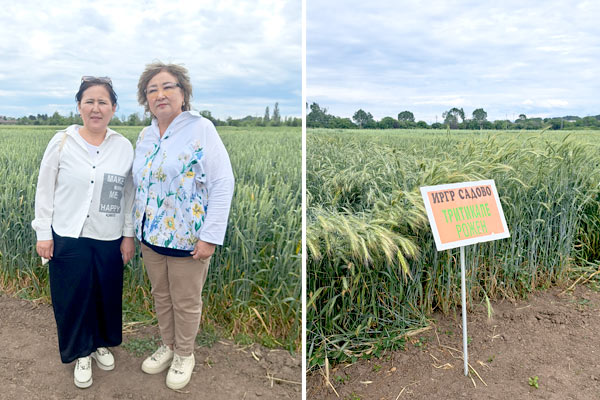
Lecturers from Kazakhstan, undergoing an internship at IPGR under the Bolashak 500 Scientists program, were also present.
After the official opening of the event by Assoc. Prof. Dr. Katya Uzundzhalieva, director of IPGR-Sadovo, guests visited the demonstration field and familiarized themselves with the characteristics of wheat, barley, triticale, rye, oats, and winter pea varieties developed at the Institute.
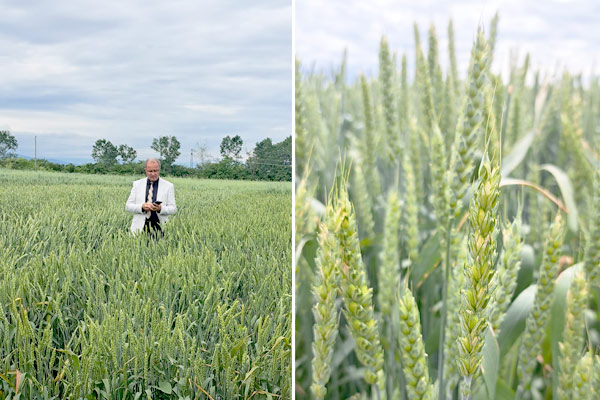
This year, about 90% of the crops in the country are in very good condition with expectations for high yields, we learn from Chief Assistant Ivan Alexiev, who in recent weeks has managed to visit various fields in both Southern Bulgaria and Dobrudzha.
The Institute of Plant Genetic Resources in Sadovo has experience with all field crops. The National Seed Genebank is located here, where more than 70,000 accessions of over 600 plant species are maintained, which requires researchers from Sadovo to be familiar with many unpopular crops.
Nowadays, there is a growing interest in alternative crops, which can not only be a valuable source of nutrients for humans and animals but also be included in new variety programs suitable for changing climatic conditions.
Alternative Crops of the Institute of Plant Genetic Resources "Konstantin Malkov"
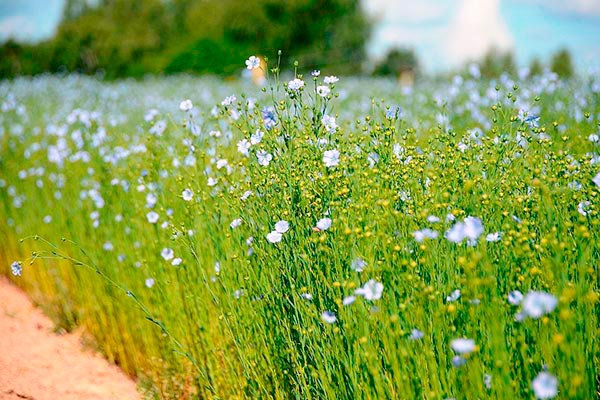
This year, one of the crops that attracted the guests' attention with its beautifully bloomed flowers is flax. It is a spring crop, originating from Central Asia and the Mediterranean, which requires suitable preceding crops such as cereals, says Chief Assistant Alexiev.
Its weak resistance to Fusarium wilt requires it to return to the same field in the crop rotation after 5-6 years, as this leads to the so-called soil “fatigue” and a significant reduction in yield.
Flax is sown in March, as it germinates at 6-8 °С. Sowing is done in narrow rows at a depth of 2-4 cm with a seeding rate of 8-12 kg/da.
Oil flax is harvested in a single pass with a combine, while fiber flax is harvested with a special flax pulling machine that bundles the plants.
From Chief Assistant Alexiev, we learn that flax is oilseed, fiber, and intermediate, so it can be used for both oil and fiber.
Linseed oil, uniquely among vegetable oils, contains Omega-3 fatty acids, and when we add potassium, magnesium, lecithin, zinc, proteins, as well as B-group vitamins, it becomes clear why it is so beneficial and sought after.
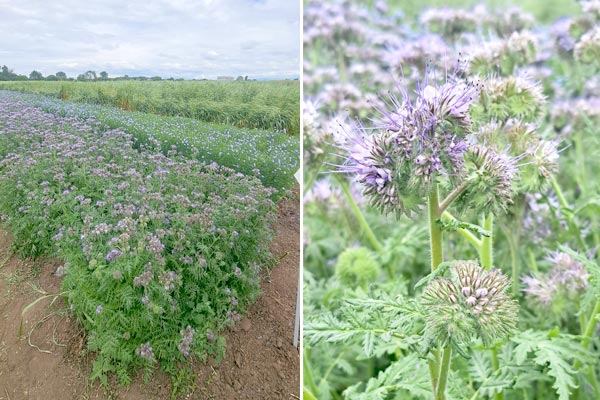
Another crop unknown to our farmers, a favorite food for bees, is phacelia. It is very melliferous, but can also have decorative functions. It has been found to possess a characteristic aroma that strongly attracts bees, produces a lot of nectar, and up to 35 kg of honey can be obtained from one decare. The flowering period is long, up to 40-45 days.
This crop is also extremely suitable as an intermediate crop for green manuring. It is characterized by a rapid initial growth rate, a high degree of soil surface coverage and shading, thereby strongly suppressing weed development. Since the plants fully freeze when they are in advanced development, phacelia is very suitable as a cover crop, after which direct sowing can even be practiced.
Phacelia is not closely related to economically important crops and therefore is not a carrier of important diseases and pests, which makes it an excellent component of any crop rotation.
As a melliferous crop, or for seeds, phacelia is sown at the end of March and April, and as an intermediate crop at the end of July and August. Sowing is in narrow rows, at a depth of 2-3 cm, and the seeding rate is between 800 and 1200 g/da. It ripens unevenly, so it is recommended to start harvesting when the first ripe seeds begin to fall.

At the end of May, on the experimental fields of IPGR – Sadovo, we saw another alternative crop – bitter vetch or chickling vetch. This is an annual crop from the Fabaceae family and is grown in the Mediterranean region, West and Central Asia, North Africa, and America.
Besides being a source of protein and a preferred food for animals, a medicinal and supportive agent for humans, this plant enriches the soil with nitrogen and is an excellent choice as a preceding crop for winter cereal plantings. Bitter vetch frees up areas early, allowing them to be prepared early for winter crops.
It is no coincidence that seeds of this crop are also stored in the underground vault of the Svalbard archipelago, where samples of the most valuable plant species are preserved.
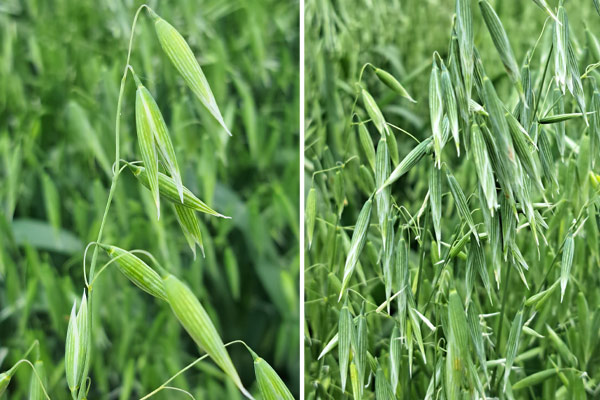
IPGR Sadovo also offers a wide variety of oat varieties for different uses. Mina variety is a spring naked oat variety. This quality suggests its use with very good results mainly as a dietary food for humans, and in recent years naked grain has been sought after by pigeon breeders. Kaloyan variety is a winter hulled oat variety suitable for use as excellent fodder grain, for green mass, and is extremely suitable for organic farming. IPGR Marina variety is the first Bulgarian winter naked oat, combining the advantages of the already mentioned varieties. The possibility to be sown in autumn gives it great advantages in spring drought and excellent nutritional indicators.
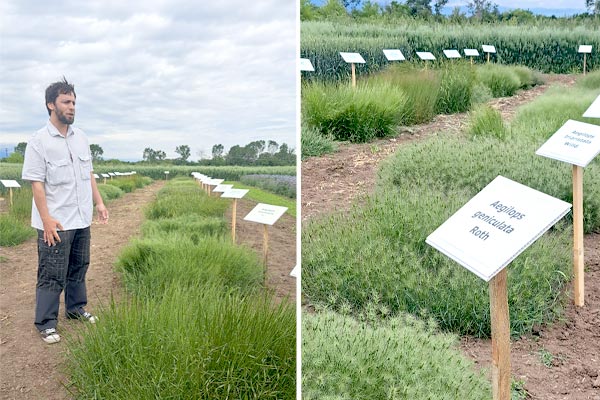
Part of the open day was also the presentation of the goals and results achieved under the project "Study of the Genetic Diversity of Aegilops Species in the Flora of Bulgaria", funded by the "Scientific Research" Fund. Aegilops species, which are wild relatives of wheat, are resistant to various stress factors such as drought and salinity. They can be suitable candidates for cross-breeding with bread wheats, as well as for forming new breeding lines possessing high levels of drought tolerance. Genotypes of the species can provide possible sources of physicochemical qualities for use in future breeding research.
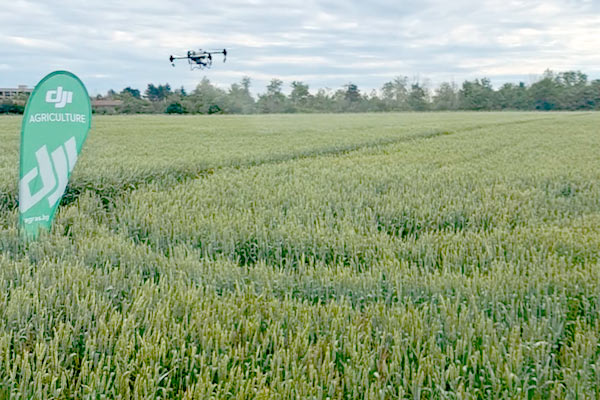
During the open day, a demonstration spraying of crops with a drone from DJI Agriculture was also conducted, with the possibility of autonomous control through artificial intelligence. The use of this technology is part of intelligent farming, a project being implemented in Sadovo.
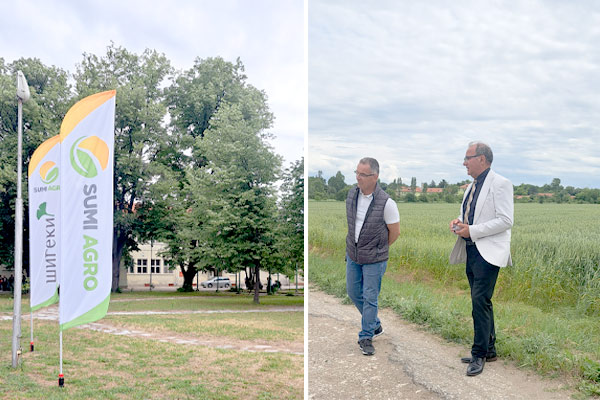
Summit Agro Romania, Bulgaria branch, a long-standing partner of IPGR and main sponsor of the event, familiarized guests with its product portfolio and innovative solutions for sustainable agriculture. The company works in close cooperation with science not only in Bulgaria but also globally.
„We are a loyal friend to every farmer because we are with them from sowing to harvest. We can offer technology for every stage in the field”, emphasized Stefan Topalov, Sales and Key Account Manager for Southern Bulgaria.
In their portfolio, alongside conventional plant protection, in the last 4-5 years, they have also focused on organic farming, which includes a wide range of organic products and intermediate and cover crops.
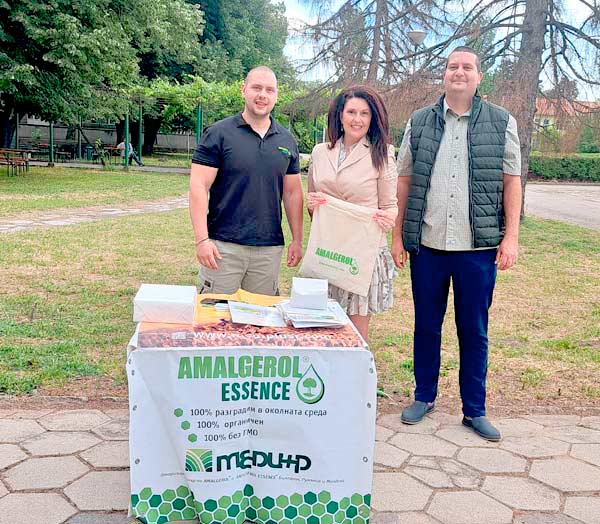
MeDi+R Ltd. presented organic products and nitrogen-fixing bacteria.