

![MultipartFile resource [file_data]](/assets/img/articles/ягоди-юни-2025.jpg)
For most days in June, agrometeorological conditions will be determined by temperatures above climatic norms and precipitation around and below the monthly norm. The average monthly temperature for most of the country will be between 25 and 26 °C, with temperatures traditionally slightly higher in the Struma river valley - around 27 °C, and in the areas of Ruse and Vidin – 26-27 °C. The lowest temperatures during the month will be between 12 °C and 15 °C, and the highest - between 32 °C and 35 °C, with values up to 37 °C possible in individual regions.
Regarding precipitation, this year the month is expected to be similar to May. Normal precipitation amounts in the lowlands range from 40 to 90 l/sq.m., in the Pre-Balkan and mountains - from 95 to 100 l. Towards the end of the month, drought is often observed, but this year the dry period will be in the first ten-day period of the month.
At the beginning of June, a significant increase in temperatures and an acceleration in the development rates of agricultural crops are predicted. The expected precipitation in the second half of the first ten-day period will maintain a good level of moisture reserves in 50 cm and 100 cm soil layers. The significant rainfall at the end of May improved soil moisture reserves, and in most field areas, they reached levels up to and above 85% of FC.
Sunny weather will prevail over the country, but until noon; afternoons will see precipitation and thunderstorms, locally, primarily over the mountains. In many places in Western Bulgaria and mountainous regions, short-term rainfall accompanied by thunderstorm activity is possible in the afternoon hours. The probability of precipitation is lower over the eastern regions and in the plains. Temperatures in the country will be between 28-32 °C. A relatively warmer air mass will be transported, and by the middle of the first ten-day period, temperatures will exceed 32 °C. We expect a significant increase in temperatures around June 5-9. At that time, the atmosphere will be unstable, and precipitation, although localized, is expected. The expected temperatures will be between 32-35 °C. High temperatures are also a prerequisite for extreme phenomena, especially over Western and Northwestern Bulgaria, with these phenomena likely accompanied by large hail. A new decrease in temperatures, albeit slight, will occur towards the end of the first ten-day period.
Above-normal thermal conditions are also predicted for the second ten-day period of June. The second ten-day period will begin with more sunny hours. The weather overall will be predominantly sunny and hot. Conditions for more significant precipitation will exist around June 13 and 17. Days will start with more sunny hours. In the afternoon hours, mainly in the mountains, cumulus clouds will develop, and it will rain and thunder in more places. The probability of precipitation is lower in the Danubian Plain and Eastern Bulgaria. Daytime temperatures will be between 32-36 °C, and over Eastern Bulgaria slightly lower – up to 25-30 °C. Towards the middle of the second ten-day period of June, the atmosphere will destabilize, and precipitation will occur in more places.
During the third ten-day period of June, the development of agricultural crops will occur at temperatures close to climatic norms. In the first days of the third ten-day period, the weather will be unstable but will remain warm for the period. In many places, cumulonimbus clouds will develop, and short-term rains with thunderstorms will fall in the afternoon. In the last days of the month, stabilization of the air mass and an increase in temperatures are expected. By the end of the period, precipitation will decrease, and temperatures will rise. A period of drought is also expected, with precipitation observed in fewer places. Daytime values will be between 32-37 °C.
In fruit nurseries
Seedbeds are fertilized with 6-8 kg of ammonium nitrate or the same amount of another nitrogen fertilizer per decare and cultivated. If necessary, irrigation is performed.
Mother plantations are fertilized with 10-15 kg of ammonium nitrate or the same amount of another nitrogen fertilizer per decare and earthed up. If necessary, they are irrigated before earthing up.
Suckering is carried out in nurseries to facilitate the normal growth of grafts. Rootstocks and nurseries are prepared for budding.
In fruit orchards
Care is taken to ensure that the ties on the branches of re-grafted fruit trees and wild forms do not cut in; if necessary, they are loosened promptly. Competing shoots that have grown from the mother plant should be removed in a timely manner. Newly planted trees are regularly cultivated. If necessary, they are watered.
After the second ten-day period, young fruit plantations are fertilized with 15-20 kg of ammonium nitrate per decare or the same amount of another nitrogen fertilizer, and shallow soil cultivation is performed.
When forming a palmette, skeletal branches are bent when they reach a total length of 2 – 2.5 m for the first tier, 1.5-2 m for the second, and 1 m for the third. For weakly growing trees, they are placed at an angle of 45-50o, and for strongly growing ones – at 45-45o relative to the horizontal. When there are skeletal branches of different lengths in one tier, only the strong one is bent, while the weak one is left to grow and is bent later.
Mechanical thinning of peach fruits continues.
In areas with ensured irrigation, sowing of green manure crops is carried out.
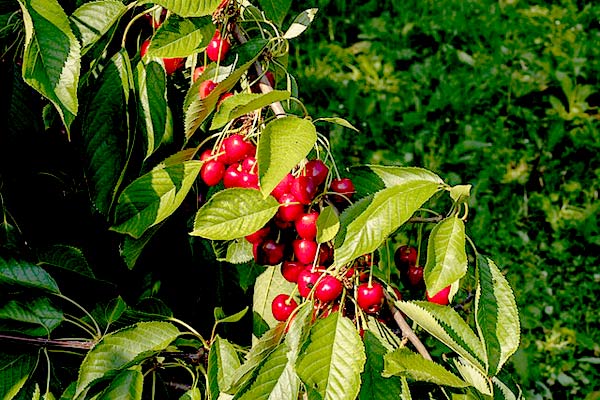
Mass harvesting of cherries and sour cherries begins
In strawberry plantations
The last strawberry seedlings stored in a refrigerator are planted. Care for weeding young and newly planted crops continues. If necessary, irrigation is performed.
Harvesting continues. Do not pick during the hot hours of the day or when dew has formed. For fresh consumption, they are picked together with the fruit calyx.
In warmer growing areas, after the last fruits are harvested, the straw is immediately collected and removed. The plantations are fertilized with 8-10 kg of ammonium nitrate or the same amount of another nitrogen fertilizer per decare, and the first post-harvest cultivation is performed. If irrigation is necessary, it is done before fertilization.
In raspberry plantations
Regular soil cultivation is carried out, and irrigation is performed if necessary. In fruiting plantations, the cleaning of rows from very weak and excess suckers continues. The wire structure is kept strong.
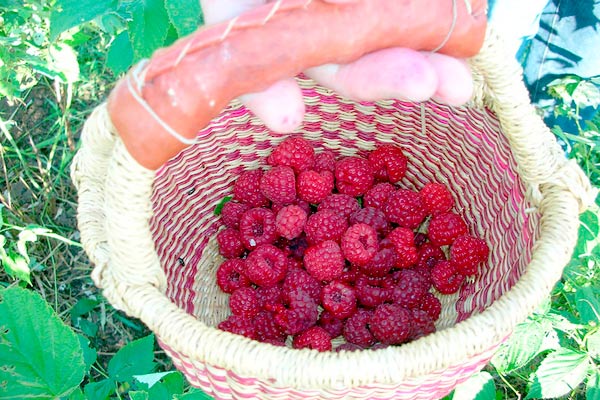
In some regions, harvesting of early varieties of fruits begins around mid-June.
When ripening begins, bee colonies are moved to other plantations, but at a distance of not less than 5 km.
In blackcurrant plantations
The soil in rooting beds is cultivated 2-3 times depending on irrigation, rainfall, and the presence of weeds. Regular cultivation is carried out for both young and fruiting plantations. Around the middle of the month, harvesting of fruits begins in some warmer growing areas.
In plantations with other crops
Grafting of lemon rootstocks onto active buds continues.
Care for rooting cuttings of pomegranate, fig, and sea buckthorn in open ground continues, with the nursery being regularly cultivated and watered. Necessary treatments against weeds are carried out.
Towards the end of the month, the un-grafted rootstocks from last year are budded with active buds from persimmon.
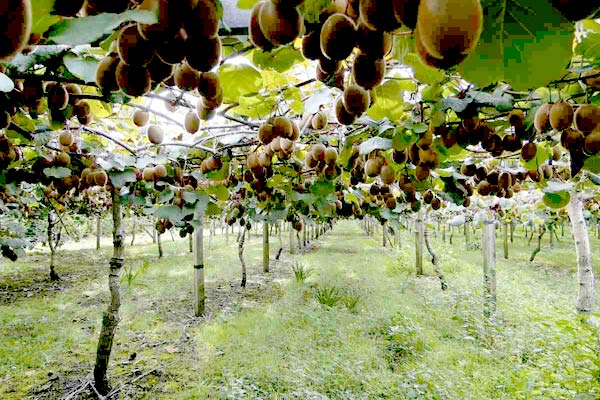
The tying of kiwi vines to auxiliary stakes continues. Fertilization is carried out with the last 1/3 of the annual nitrogen norm specified for kiwifruit. Side shoots on the main stem of the kiwifruit are removed to stimulate its development and overall shaping. It is shaped like the letter T.