

![MultipartFile resource [file_data]](/assets/img/articles/мануела-стоянова.jpg)
Interview with Manuela Stoyanova, biologist at the Center of Plant Systems Biology and Biotechnology (CPSBB)
What is the main objective of the BELIS project?
From a research perspective, the main objective of this international project is to improve the resilience and nutritional qualities of legume crops in Europe, and from an economic perspective – to develop tools and methodologies that optimise the cultivation of these economically important crops. As Europe is still highly dependent on imports of plant proteins, the aim is to increase the competitiveness of the industry related to the cultivation of legume crops in the EU and associated countries by developing tools and methodologies optimised for this purpose.
The research consortium involves 34 institutions from a total of 18 European countries and it is a privilege for us that CPSBB represents Bulgaria with scientific expertise and contribution to the project. The project aims to study 14 legume crops, 7 grain and 7 forage. The grain legumes are pea, lentil, common bean, chickpea, soybean, faba bean and lupin. The forage crops under investigation are alfalfa, red and white clover, sainfoin vetchling, birdsfoot trefoil (Lotus) and sainfoin.
What is Bulgaria’s role in this project?
In partnership with research institutes from the Czech Republic, Lithuania, France and Germany, at CPSBB we focused on the study of pea. We are examining over 150 pea lines with a main focus on traits that are a priority for seed producers, breeders and farmers – nutritional qualities, yield, stress tolerance, etc.
The project has a duration of 5 years, and each year we grow plants, record biometric traits and collect material that will subsequently be used to identify genetic markers associated with the above-mentioned plant characteristics. These genetic markers will be used to develop a comprehensive open-access database, which will be of exceptional importance for breeders in creating varieties with desirable traits such as high yield, valuable nutritional qualities and stress tolerance.
How is the project expected to support legume producers in Europe?
Alongside the scientific activities, CPSBB is committed to organising meetings with farmers, breeders and seed producers in order to identify the main challenges existing along the chain from production to the end consumer. The feedback we receive from producers and consumers will be used by the project partners to develop cost-effective programmes for the cultivation of legume crops and the production of improved varieties, which can potentially be transferred from science to industry, livestock producers and manufacturers of seeds, food and feed.
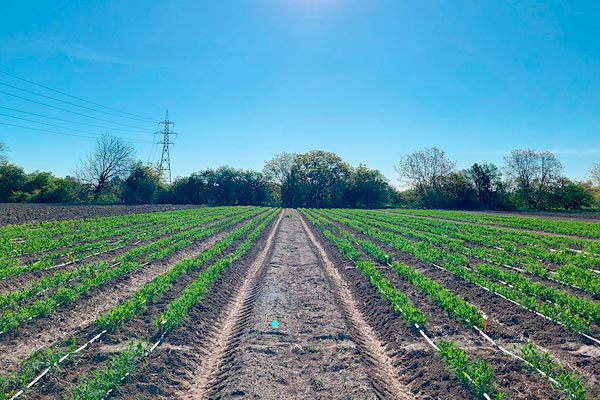
Over 150 pea lines were grown by CPSBB in experimental fields during the past year. The researchers recorded biometric traits and material is to be collected for the identification of genetic markers associated with plant characteristics such as nutritional qualities, yield, stress tolerance, etc.