

![MultipartFile resource [file_data]](/assets/img/articles/заглавна-май-агро-2025.jpg)
In May, the agrometeorological conditions will be determined by unstable weather, with temperatures and precipitation close to the climatic norms for the month. During the month, in the fruit crops not affected by the spring frosts, the formation and enlargement of the fruit set will take place.
The average temperature in May will be around and above the norm, which is between 24 and 25 oC in most areas, 20-23 oC along the Black Sea coast and between 5 and 15 oC in the mountains.
The monthly precipitation total will be average for the country and will be around and below the norm, which for the plains is between 50 and 70 l/sq. m, and in the mountainous areas - between 80 and 100 l/sq. m.
Over Western Bulgaria and Central Bulgaria, amounts close to the climatic norm of 60-90 l/sq. m are expected. The probability of precipitation is considerably lower in Eastern Bulgaria, where the weather will be more often sunny and somewhat drier. The expected precipitation there will be below the climatic norms – up to 35-40 l/sq. m.
By the end of the first ten-day period, daytime values will reach 28-33 oC, and in some places up to 35 oC, which will accelerate the vegetation processes in fruit crops. There will be many sunny hours and rainfall in the afternoon, mainly over the mountains.
During the first ten-day period of the month, significant amounts of precipitation will fall mainly in Western and Central Bulgaria. The probability of hail is also high. Daytime temperatures will be between 23-25°C, and over Eastern Bulgaria slightly lower – up to 20-22°C.
The second ten-day period will start with more sunny hours. Temperatures will remain close to the usual values. The probability of precipitation will be lower in Eastern Bulgaria. Daytime temperatures will be close to the normal for May and will range between 25-29°C, and over Eastern Bulgaria – 24-25°C.
Towards the end of the second ten-day period of May, a slight decrease and lower temperatures are expected. The atmosphere will again be unstable. Conditions will form for precipitation, hail and thunderstorms, and above 2000-2200 m a.s.l. also for snow.
In case of hail damage, it is advisable that the affected crops be treated at the first opportunity with copper-containing fungicides to ensure faster healing of the wounds and to reduce the risk of secondary infections by pathogens.
During the first days of the third ten-day period, the weather will be unstable and will remain cold for the period. In many places in the afternoon there will be short-term showers with thunderstorms. By the end of the period, precipitation will decrease and temperatures will rise, which will lead to accelerated development of fruit crops. A period of drought is also expected, with precipitation occurring in fewer places. Daytime values will range between 25-27 °C up to 23-24 May and 35-37 °C towards the end of the month.
In fruit nurseries
In the nurseries, the proper development of the grafted buds is monitored. If necessary, new disbudding of the shoots emerging from the rootstock is carried out. When there is a risk of cutting in, the bindings of the rootstocks re-grafted in spring are loosened. The seedbeds, mother plantations and nurseries are cultivated. If necessary, the plants in the seedbeds are thinned.
In fruit orchards
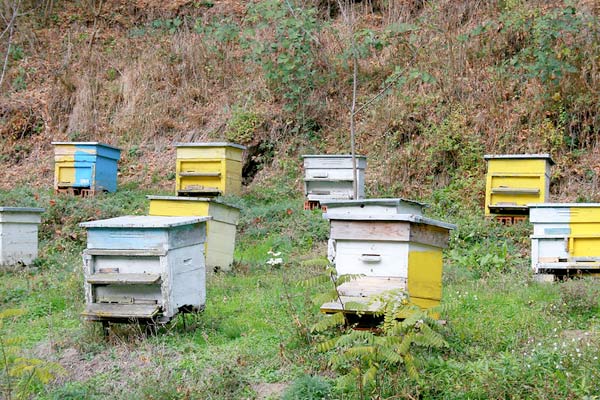
At the end of flowering, the beehives are moved to another location – at a distance of not less than 5 km.
In newly planted peach orchards with vase-shaped or improved vase-shaped crowns, formative pruning is carried out.
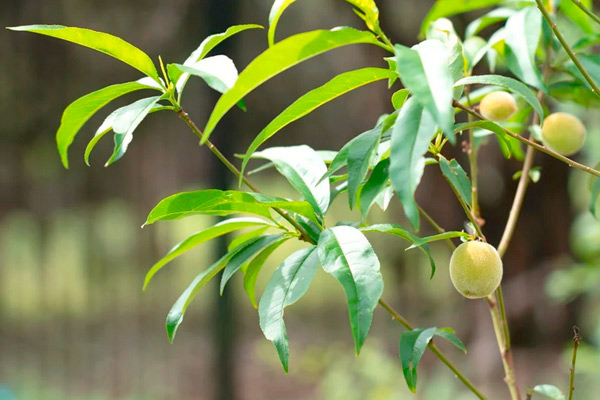
Care is taken to ensure proper establishment and development of the trees in the newly planted orchards – hoeing, disbudding, irrigation when necessary. The trees in young dense plantations are tied to the wire trellis. Vigorous two- and three-year-old branches are bent and tied to the wires in order to reduce their vegetative vigour. In young – 2- and 3-year-old plantations, part of the fruit set on the leader – the central branch – is removed. Thinning of peach fruits continues.
After the final completion of fruit drop, the orchards are irrigated. The organic mass from green manure crops is ploughed in.
The soil is kept free of weeds and loosened through regular shallow cultivations with a cultivator or harrow.
At the end of the month, fruit-bearing trees are top-dressed with 15-20 kg/da ammonium nitrate or the same quantity of another nitrogen fertilizer, followed by shallow soil cultivation. In case of drought, irrigation is carried out.

Harvesting of early cherry cultivars continues.
In strawberry plantations
Spring-summer planting of refrigerated strawberry runners continues. After planting, sprinkler irrigation is applied. The areas planted in April are weeded. In higher regions, straw is spread under the flower stalks by the end of the month.
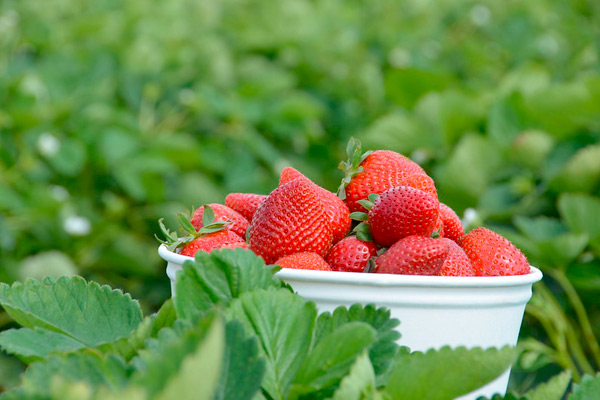
Harvesting continues. When the fruits are transported over longer distances, they may be picked slightly earlier.
In case of drought during fruit ripening, sprinkler or surface (gravity) irrigation is necessary.
In raspberry plantations
Regular soil cultivation is carried out. The canes of some cultivars are tied to the supporting structure, and for the remaining cultivars care is taken that they do not bend down into the inter-rows. During flowering it is advisable to provide two bee colonies per 10 da.
In blackcurrant plantations

Care for the rooting beds – cultivation and irrigation – continues. Weak and surplus basal shoots are removed. In case of drought, abundant irrigation is carried out. Work begins on organizing the harvest of blackcurrant fruits.
In plantations with other crops
Lemon rootstocks are budded with a growing bud. Grafting of persimmon continues.
The soil surface is kept free of weeds and regularly loosened by shallow tillage. Up to the second ten-day period, frequent and regular irrigations are provided.
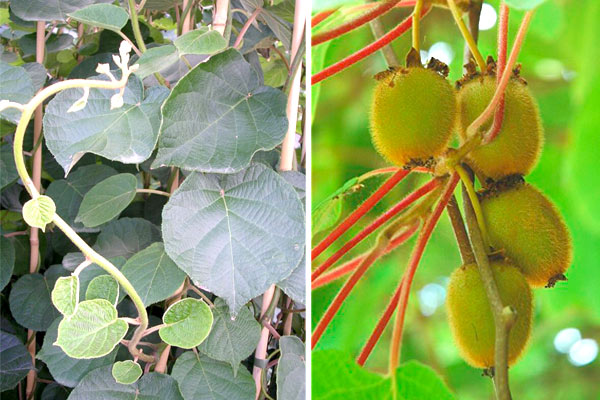
Planting of Actinidia chinensis in the open continues. After planting, irrigation is carried out. The kiwifruit vines are regularly tied to the auxiliary supporting branches. The stem should not be twisted around the support branch and the lateral shoots on it are removed. Three bee colonies per 10 da of kiwifruit are provided.