

![MultipartFile resource [file_data]](/assets/img/articles/овощна-градина-пролет.jpg)
In April, agrometeorological conditions will be characterized by increased dynamics. During most days of the month, they will be determined by unstable weather. The expected precipitation, around and above the climatic norms, will maintain good soil moisture reserves in the 50 cm layer and the conditions for the vegetation of winter cereals and the sown spring crops. This is stated in the monthly forecast by the agrometeorologists from NIMH.
During the first half of April, the vegetation of agricultural crops will proceed at mean daily temperatures around and below the climatic norms. In the first ten-day period, wheat in the field areas will enter the stem elongation stage.
During the second ten-day period, negative minimum temperatures down to minus 2-3°C are forecast, with an increased risk of damage to blossoms and young fruit sets of fruit trees. The last spring frosts are expected at the end of the ten-day period, which should be taken into account when hardening vegetable seedlings.
Septoria diseases in winter wheat
An increase in mean daily temperatures and acceleration of the development rates of agricultural crops is forecast at the end of the second and during the third ten-day period. During this period, wheat will undergo a transition from stem elongation to heading and the heading stage. The interphase period stem elongation – heading is critical for infection of winter cereals with Septoria leaf blotch.
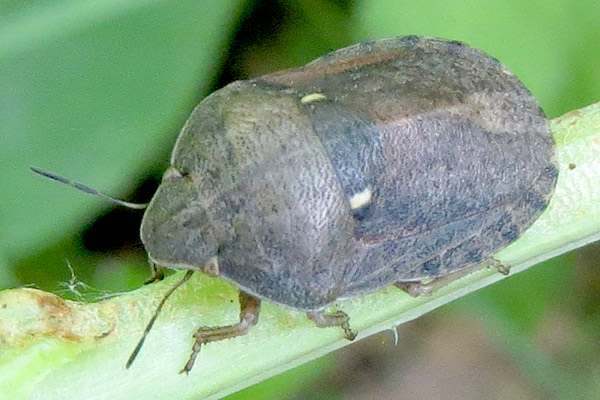
Wheat stands should also be monitored for the presence of pests – the cereal leaf beetle, the sunn pest, and, at densities above the economic threshold of harmfulness, timely treatment is necessary.
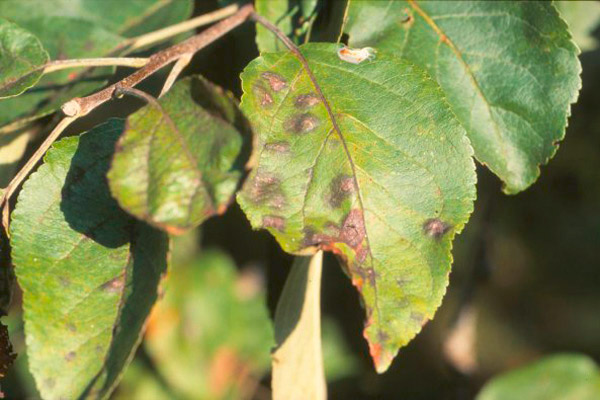
Apple scab
Frequent precipitation during the month will create conditions for an increase in the infection background of a number of fungal diseases in fruit crops – blossom blight (early brown rot), scab, shot-hole disease, peach leaf curl, etc. During the first half of the third ten-day period, an increased probability of hailstorms is forecast. Fruit trees affected by hail should be treated with copper-containing fungicides at the first opportunity in order to limit the risk of secondary infections by pathogens.
In April, more suitable conditions for conducting plant protection sprayings will occur at the beginning and end of the second ten-day period and during the second half of the third ten-day period.
At the beginning of the third ten-day period, the soil temperature in the 10 cm layer will reach suitable values for sowing maize, and at the end of April – also for thermophilic spring crops (cotton, beans, peanuts, watermelons, melons, etc.).