

![MultipartFile resource [file_data]](/assets/img/articles/заглавна-изк-поле.jpg)
Summary
Pepper is a traditional and economically important vegetable crop for Bulgaria. Various types of peppers have been grown on our lands for centuries. Through the rich diversity created in our country and abroad, and through the cultivation methods applied, Bulgarian gardeners have made a distinct and recognized contribution to the dissemination and enrichment of peppers in a number of European and other countries worldwide.
The Maritsa Vegetable Crops Research Institute (VCRI „Maritsa”) is the heir and continuer of their work and this year celebrates the 95th anniversary of its establishment. During this period, it has made an enormous contribution to the development of this crop by applying scientific approaches and methods to solve numerous related problems.
Its role in the collection, study and preservation of valuable genetic resources of pepper is indisputable, as is its contribution to the popularization of the crop through the created and introduced varieties both in Bulgaria and abroad. VCRI "Maritsa" develops and offers to producers high-yielding and high-quality varieties with diverse directions of fruit use, some of which are resistant to significant viral and fungal diseases.
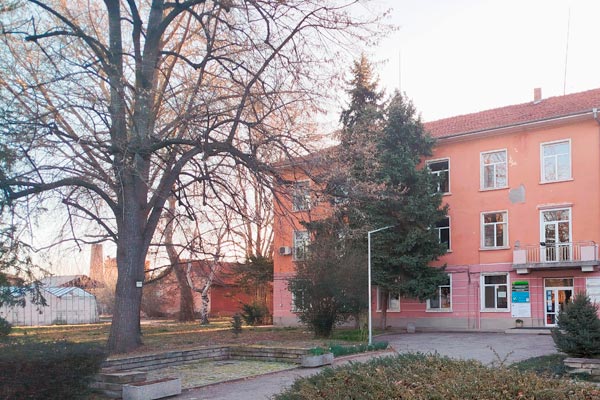
Establishment and development
The Maritsa Vegetable Crops Research Institute was established on 1.04.1930 by order of the Ministry of Agriculture as the Plovdiv State Agricultural Station on land purchased by the state from the then private farm of Milyo S. Baltov, with an area of 3634 da. At the beginning, research work was carried out on the improvement of vegetable crops, rice, forage and fibre crops, as well as on irrigation issues. In 1941, the experimental station grew into an institute and, since it is located in the valley of the Maritsa River and its climatic and soil conditions are characteristic of the entire region, it was given the name „Maritsa”.
Since 1956, the Maritsa Institute has focused its main activities on issues related to vegetable crops and rice, and since 1973 it has carried out scientific, applied research and service activities only in the field of breeding of vegetable crops and potatoes and the technologies for their cultivation.
The beginning is associated with the emerging boom in vegetable production – the domestic and export markets, as well as the nascent canning industry, placed new demands on vegetable quality. In this respect, expeditions were conducted to collect and study diverse local pepper forms.
Gradually and sustainably, genetic and breeding research on pepper was deepened, including studies on the application of the heterosis method, male sterility, etc. Studies on individual technological elements in pepper production were expanded. The influence of various types of irrigation systems, soil composition, the role of crop rotations, and others were examined. In parallel, machines that mechanize sowing, transplanting, harvesting and other processes were tested and introduced. Diseases and pests of pepper were identified and suitable control measures were studied.
Practical results of the pepper breeding activities at VCRI „Maritsa“
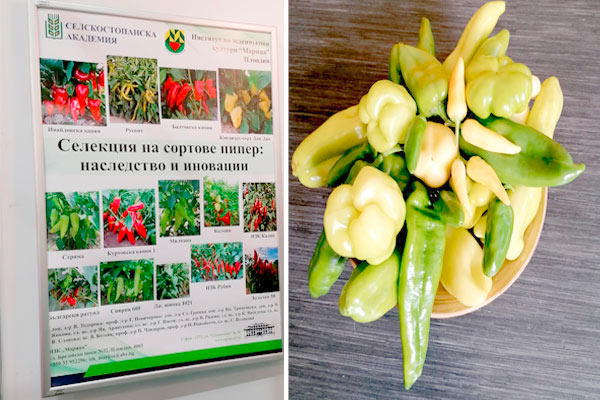
In the initial stage after its establishment, a number of population varieties were selected, stabilized and disseminated in the country and abroad (Byal Kalinkov, Balgarski ratund, Shumenski ratund, Kalinkov zelen, Sivria, Gorogled, Djulyunska shipka, Byala shipka, etc.). Academician Pavel Popov developed a classification of pepper that is still used today in Bulgaria and neighbouring countries. Later, a significant number of varieties were created, many of which for a long period were the main ones in pepper production. Some of them are still sought after and cultivated, such as Kurtovska kapiya 1619, Sivria 600, Gorogled 6, Djulyunska shipka 1021, etc. [2].
As a result of targeted research and the application of more complex breeding methods, such as inter-varietal and interspecific hybridization and the use of the heterosis effect, high-yielding and high-quality varieties with diverse directions of production and consumption have been created – Hebar, Kapiya 1300, Kapiya UV (Vertus), Buketen 50, Maritsa, Stryama, etc., and later the varieties Kurtovska kapiya 1, VCRI Rubin, Kaloyan, the F1 hybrids Yasen and Milkana, and Ivaylovska kapiya. The latter was created jointly with the Agricultural Experimental Station, Pazardzhik (OCPZ, Pazardzhik).
The newest varieties of VCRI „Maritsa” – Ruevit, Baltovska kapiya and Dan-Dan, and the candidate variety Zlatina were created jointly with the Center of Plant Systems Biology and Biotechnology (CPSBB) as a result of the implementation of the international project PlantaSYST.
VCRI „Maritsa“ at present
Technological elements are being studied and complete technologies are being developed, in line with innovations – mulching covers, planters, automated fertilization and irrigation systems, etc. Rational means, approaches and solutions are sought for integrated control of pests and soil fertility under greenhouse and open-field production conditions.
On the certified organic field at VCRI „Maritsa”, the response of pepper varieties is tested and systems for combined cultivation of pepper with spice and other vegetable crops are studied [3].
The response of pepper varieties to abiotic factors – high temperature and drought – is evaluated [4]. Sources of resistance to abiotic and biotic stress are identified [4], [5], [6], and studies aimed at obtaining high-quality produce rich in vitamins, minerals, pigments, etc. are ongoing [7], [8 ].
A number of new and significant diseases and pests of pepper are studied and traditional and alternative methods for their control are sought [9], [10]. In this respect, the newest pepper varieties bred at VCRI „Maritsa“ possess resistance to Verticillium wilt or to infection by tobamoviruses – tobacco mosaic virus and pepper mild mottle virus [11].
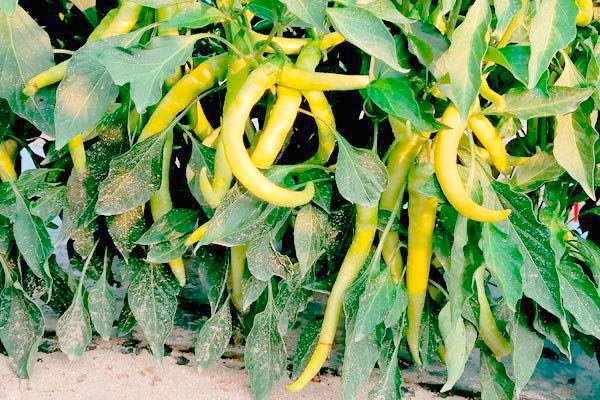
Ruevit – Indeterminate pepper variety of the Horn-shaped type, suitable for greenhouse and open-field cultivation. The fruits are pendent, single-pointed, green/red, pungent, 16-18 cm long, about 2-2.5 cm wide, with a pericarp thickness of 2-2.5 mm and an average fruit weight of 25-30 g. They are intended for fresh consumption and processing (pickles, etc.). The variety is high-yielding and resistant to Verticillium wilt (Verticillium dahliae Kleb.).
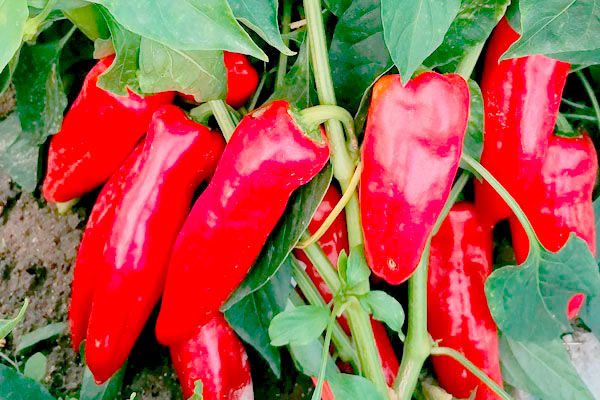
Baltovska kapiya – Indeterminate pepper variety of the Kapiya type, suitable for greenhouse and open-field cultivation. The fruits are pendent, single-pointed, green/red, sweet, 13-15 cm long, 4-5 cm wide, with a pericarp thickness of about 4 mm and an average fruit weight of 75-85 g. They are intended for fresh consumption and processing (roasting, peeling, purees, lyutenitsa, etc.). The variety is high-yielding (0.8 kg/plant) and resistant to tobacco mosaic virus (TMV).
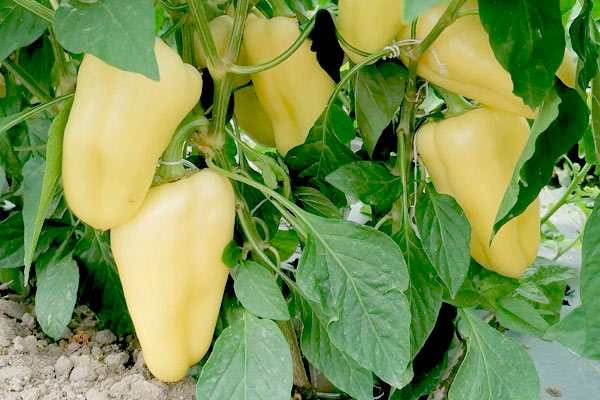
Dan-Dan – Indeterminate variety from the group of Broad peppers, suitable for cultivation in protected structures and for open-field production. The fruits are pendent, sweet, 10-12 cm long, 7-8 cm wide, with a fruit weight of 100-120 g and a pericarp thickness of 5-6 mm. At technical maturity, the fruits are greenish-white to waxy white, and at botanical maturity – red. The produce is intended for fresh consumption and processing (stuffing, etc.). The Dan-Dan variety is high-yielding (1.10 kg/plant) and resistant to pepper mild mottle virus (PMMoV).
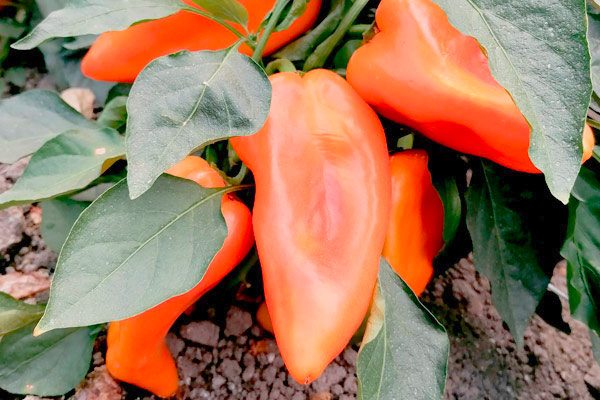
Zlatina – New high-yielding candidate pepper variety of the Kapiya type, suitable for open-field and greenhouse cultivation. The fruits are pendent and very uniform up to the top of the plant. At technical maturity they are green to dark green, and at botanical maturity – orange. They are 12 to 14 cm long, with a width at the base of 5.5-6.5 cm, a pericarp thickness of 4-5 mm and an average fruit weight of 100-120 g. The fruits are sweet, with very good taste qualities both fresh and processed. They have increased content of vitamin C and beta-carotene and, after roasting, have excellent peelability and a very good organoleptic evaluation.
Research projects with PEPPER as an object of study
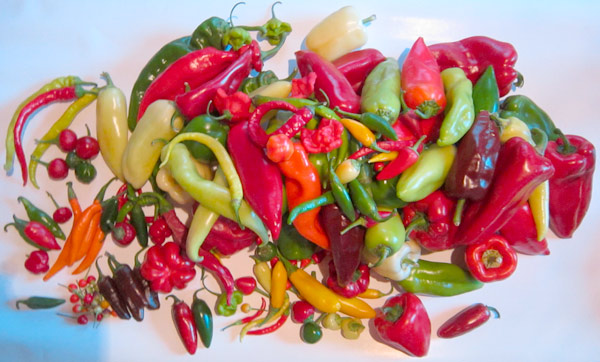
The national research projects under the Agricultural Academy and the Research Fund are related to:
- study, maintenance and enrichment of genetic resources in pepper;
- development of initial material, lines and pepper varieties with improved economic traits, increased quality and resistance to biotic factors;
- phenotyping and genotyping of pepper accessions (Capsicum annuum L.) of Balkan origin for the creation of a core collection;
- application of a complex approach in the study of Bulgarian pepper varieties for drought tolerance.
The projects under the European Union are focused on:
- genotyping and phenotyping of crops from the family Solanaceae, including pepper;
- development and comprehensive characterization of a core collection of pepper genotypes representative of the general collection;
- establishment of a center of plant systems biology and biotechnology for the transfer of fundamental research into sustainable bio-based technologies in Bulgaria;
- development of new pepper lines and varieties combining an optimal complex of qualities and traits;
- demonstration of automated systems for fertilization, irrigation and pest and disease control in open-field and greenhouse production.
The objectives of the projects are to study and preserve the genetic diversity of pepper (Capsicum annuum L.) existing in Bulgaria and the Balkans and to reveal its full potential for breeding „varieties of the future” that meet the requirements of producers, processors and consumers.
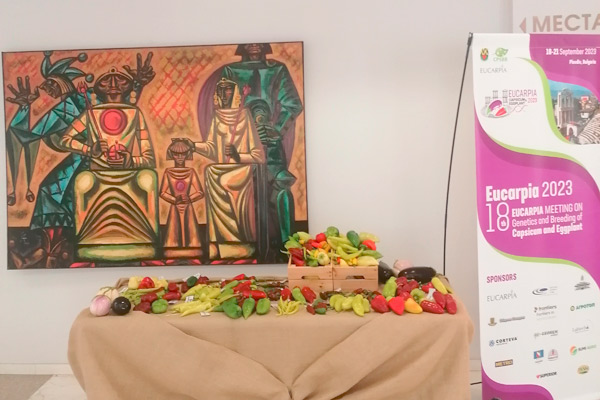
VCRI „Maritsa“ has twice hosted and organized (1983 and 2023) the prestigious specialized international scientific symposium Eucarpia on breeding and genetics of pepper and eggplant, which is another recognition of the institute’s leading role.
Educational projects, seminars and lectures
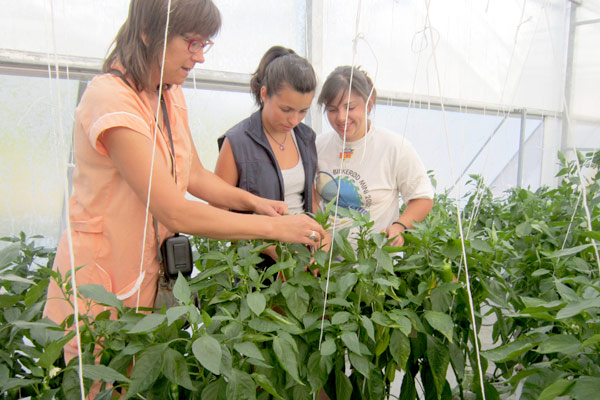
Through a number of educational projects, students – bachelors, masters and graduates – are given the opportunity to study and gain practical experience in a real environment.
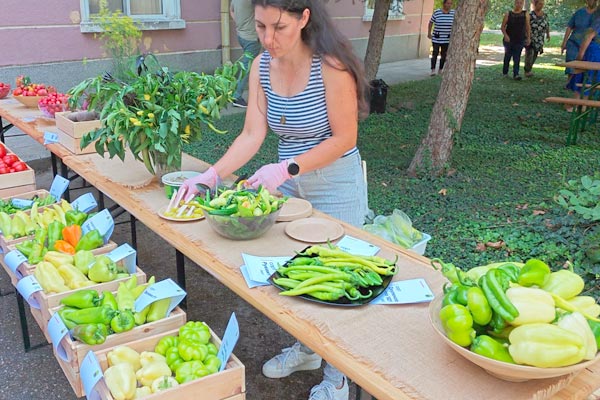
Under projects related to the European Researchers’ Night, AgroHub, etc., lectures are delivered at VCRI „Maritsa”, and tastings and exhibitions of new and traditional pepper varieties are held.
Seminars for training specialists and farmers in different regions of the country are held jointly with the Agricultural Advisory Services.
VCRI „Maritsa“ and the branch organizations – Bulgarian Pepper Association, Bulgarian Association of Greenhouse Producers and others
Numerous discussions, consultations, joint visits and participation in seminars, workshops, etc. have been held. New and traditional pepper varieties are presented. Producers are supplied with authentic seeds of the pepper varieties developed at VCRI „Maritsa“.
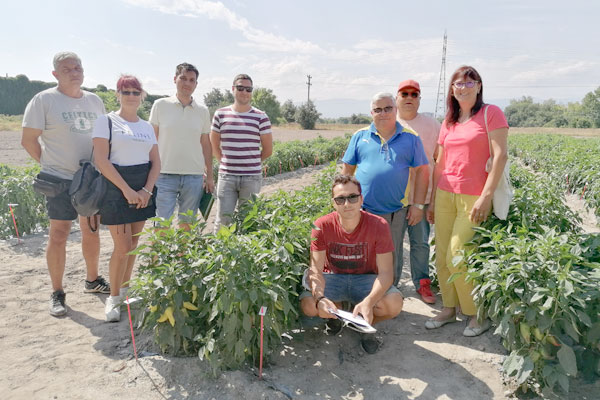
Together with the Bulgarian Pepper Association, we stand behind pepper producers and processors and defend their interests before the responsible institutions. In this regard, in 2018 VCRI „Maritsa“ and the Bulgarian Pepper Association jointly developed a technological chart for pepper production and succeeded in convincing the Ministry of Agriculture and Food of the need for pepper to be placed in the first group for Coupled Support.
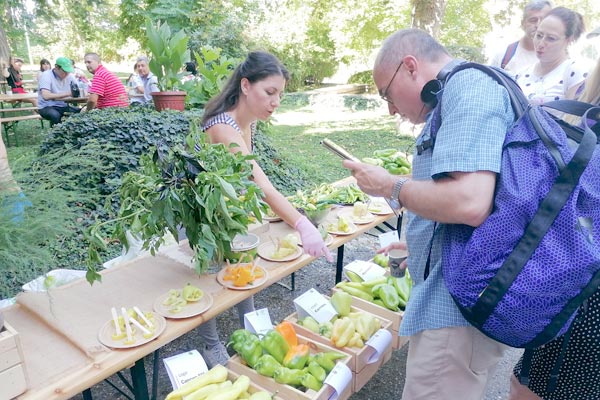
A number of open days and meetings have been initiated involving research institutes and educational institutions; producers, importers and traders of pepper and other vegetable seeds and seedlings; importers and traders of pepper and other vegetables; producers, importers and traders of various irrigation systems with state institutions such as the Ministry of Agriculture and Food, the State Fund „Agriculture“, etc.
VCRI „Maritsa“ in support of pepper production in Bulgaria
The Institute performs:
- agrochemical analyses of soils, water, substrates and plants;
- diagnostics of plant and soil samples for the presence of diseases and pests,
- services supporting crop cultivation, seed production and seed cleaning.
It develops technological elements that increase yield and quality of the produce obtained.
It offers high-quality seeds of new and traditional Bulgarian varieties with diverse directions of production and consumption.
The respective specialists provide consultations and recommendations.
Photos © Assoc. Prof. Velichka Todorova, PhD
The photos are copyrighted, not subject to distribution and are protected.
References
[1] Mihov, At. (1962), 30 years of research work at the „Maritsa” Institute – Plovdiv. In the collection „30 years of the Maritsa Vegetable Crops Research Institute – Plovdiv“. Eds. At. Mihov, K. Katsarov, St. Hristov, T. Matev. 5-26.
[2] Todorov, Y., Todorova, V. (2002), Results and perspectives in the breeding and research work with pepper /C. annuum L./. First symposium on horticulturae 16 - 20.10.2002. Ohrid. Republic of Macedonia. Faculty of Agricultura Skopje University st Cyril and Methodius – Skopje, 214 – 218
[3] Todorova, V. Filyova P. (2014), Evaluation of pepper genotypes in different organic production systems. Balkan Agriculture Congress, 8-10 September Edirne, Turkey, Turkish Journal of agricultural and natural science, special issue 1, 629-635.
[4] Topalova, E., Arnaoudova, Y. & Todorova, V. (2024). Impacts of heat stress on the photosynthetic apparatus and polen viability in green pepper cultivars (Capsicum annuum L.). Bulg. J. Agric. Sci., 30(4), 628–635. https://www.agrojournal.org/30/04-10.html
[5] Nankar, AN., Todorova, V., Tringovska, I., Pasev, G., Radeva, V., Ivanova, V., Kostova D. (2020), A step towards Balkan Capsicum annuum L. core collection: Phenotypic and biochemical characterization of 180 accessions for agronomic, fruit quality, and virus resistance traits. PLoS ONE 15(8): e0237741. https://doi.org/10.1371/journal. pone.0237741
[6] Todorova, V.; Nankar A. N.; Yankova V.; Tringovska, I.; Markova D., Assessment of Balkan pepper (Capsicum annuum L.) accessions for agronomic, fruit quality and pest resistance traits.Horticulturae 10 (4), article No 389. https://doi.org/10.3390/horticulturae10040389
[9] Yankova,V., Markova, D. Todorova, V.and Velichkov, G. (2009). Biological Activity of Certain Oils in Control of Green Peach Aphid (Myzus persicae Sulz.) on Pepper. IV Balkan Symposium of Vegetables and Potatoes, Plovdiv, Bulgaria, 9-12 September 2008. Acta horticulturae № 830, v.2, 619–625. https://www.ishs.org/ishs-article/830_90
[10] Vasileva, K., Todorova, V. (2022), Assessment of pepper genetic resources for Verticillium wilt resistance. Genetika, Serbia, v. 54(2), 829-840 https://doi.org/10.2298/GENSR2202829