

![MultipartFile resource [file_data]](/assets/img/articles/пшеница-рапица.jpg)
By the end of 2024, the sown areas with main agricultural crops for the 2025 harvest show an increase compared to the previous year. According to data from the Operational Analysis of Main Agricultural Crops of the Ministry of Agriculture and Food (Bulletin No. 1/2025), the areas under wheat, barley, rye and rapeseed have increased significantly, while a slight decrease is reported for triticale.
The sown areas with wheat for the next harvest are 3.9% above the level of one year earlier; this autumn 1,142,915 hectares in the country have been sown with wheat.
The areas with barley (+12.9%), oilseed rapeseed (+2.7%) and rye (+5.9%) are also larger. Barley has been sown on 163,412 ha, and rapeseed – on 101,094 hectares. A slight
year-on-year decrease is registered only for triticale – by 2.4%.
Production results for 2024
According to final operational data, in 2024 wheat production is 2.6% above the 2023 level, supported by higher yield per decare. With significantly larger sown areas and a slightly higher average yield, the barley harvest records an increase of 39.9% on an annual basis.
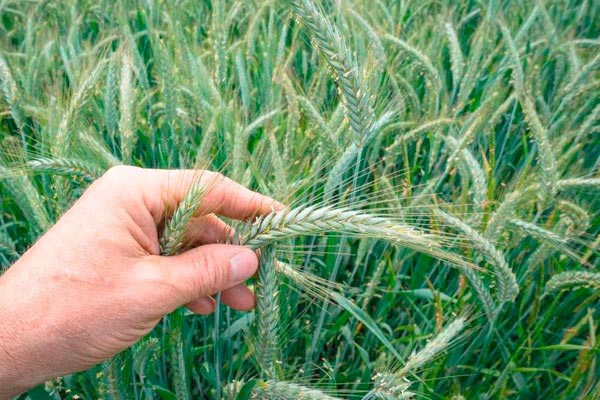
Triticale is a cereal crop, an artificially created hybrid between rye and wheat. It is suitable for soils where wheat produces poor results. It has a very good fodder nutritional value of the grain, is suitable for winter mixtures with peas for green use, and there are varieties with high biomass suitable for bioethanol production.
The quantities produced of oilseed rapeseed (by 26.2%), rye (by 25.1%) and triticale (by 6.2%) are lower, mainly as a result of reduced harvested areas.
The latest operational data for 2024 indicate a decrease in the production of sunflower and maize for grain by 11.5% and 38%, respectively, compared to the previous year 2023. The main reason for the weaker 2024 harvest of spring crops is the unfavourable climatic conditions, which led to a decline in average yields per unit area, while in the case of sunflower this negative effect was partially offset by the larger size of the harvested areas, as stated in Bulletin 1/15 January 2025 of the Ministry of Agriculture and Food.
The increase in the sown areas with wheat, barley and rapeseed for the 2025 harvest gives hope for better production results despite climate change. The difficulties in cultivating spring crops highlight the need for adaptation and resilience in agriculture.