

![MultipartFile resource [file_data]](/assets/img/articles/заглавна-овощна-октомври.jpg)
At the beginning of October, frosts are forecast.
In October, in apple and pear orchards affected by scab, in order to reduce the infection it is advisable, at the onset of leaf fall and after harvesting the fruits, to carry out a treatment with a 5% urea solution.
For stone fruit species, after mass leaf fall, spraying with a 2% Bordeaux mixture is recommended against the causal agents of shot-hole disease, early brown rot, and peach leaf curl.
In orchards
Nest boxes and feeders are placed in the fruit trees to attract beneficial birds.
Corrugated cardboard band traps with the present caterpillars of codling moth, plum moth and walnut moth are collected and placed in hanging cages in the orchards – woodpeckers and other birds destroy the caterpillars in the bands.
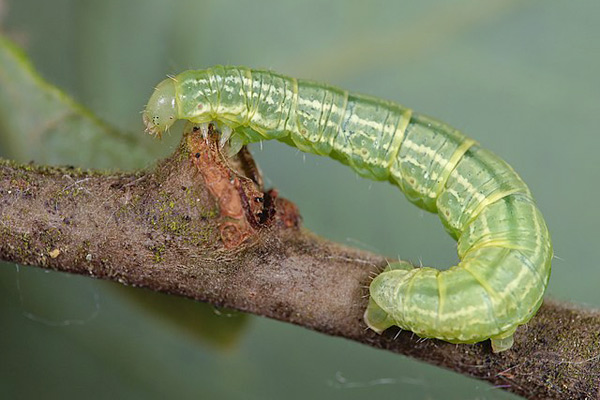
On the trunk of each tree in orchards infested by winter moths, one sticky band is placed at a height of 20–100 cm. The bands are made of paper 20 cm wide, with the upper and lower edges tied. A slow-drying adhesive is used for coating. To prevent insects from hiding before reaching the band, the cracked bark from the band down to the soil surface is scraped off in advance.
Apple and pear fruits are inspected at the grading and handling points for the presence of California red scale and mulberry scale in non-infested areas.
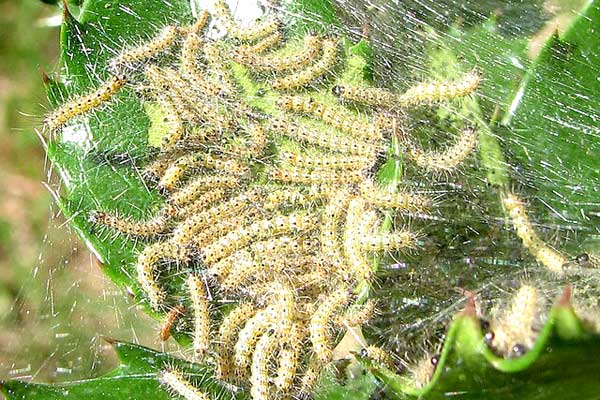
The caterpillar nests of the fall webworm are counted in order to determine the population density of the pest.
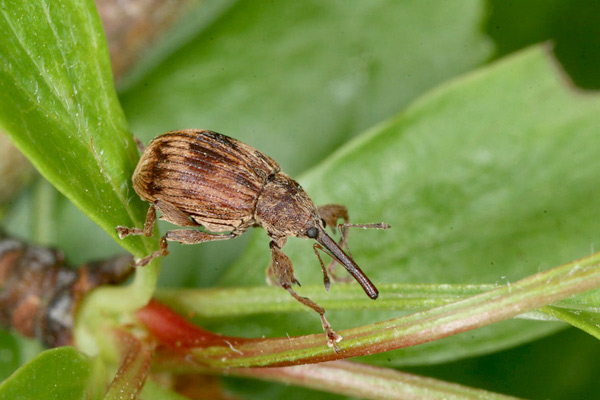
The shaking of trees, started at the end of September, continues in order to determine the population density of the pear bud weevil. When the density exceeds the economic threshold, before egg laying, the trees are sprayed with a contact insecticide from any group – Decis 100 EC (12.25 ml/da) or another product based on deltamethrin, Sumi Alpha 5 EC (0.03%), Karate Zeon 5 SC (15 ml/da), Lamdex extra (100–120 g/da) and others.
Pear orchards are sprayed against the pear psylla with one of the insecticides – Bermectin (40–120 ml/da) or another product based on abamectin, Voliam Targo 063 SC (75 ml/da), Imidan 50 WG (150 g/da), Delegate 250 WG (30 g/da), Deka EC (50 ml/da) or another product based on deltamethrin, Movento 100 SC (0.12–0.15%), Naturalis (100–200 ml/da), Sineis 480 SC (30–44 ml/da), Flipper (1–2 l/da).
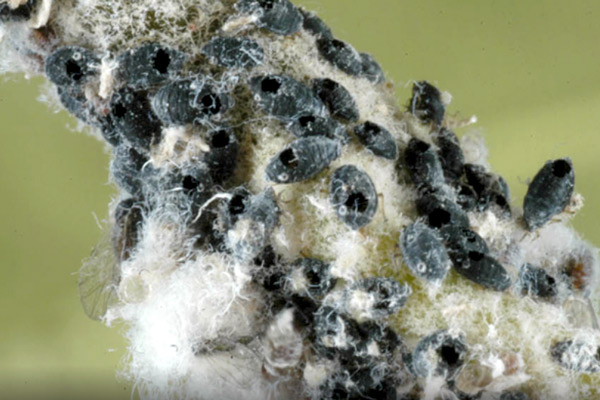
Shoots with woolly apple aphids parasitized by the parasitoid wasp Aphelinus mali are cut and stored in a cool place and in the shade under a shelter. Woolly apple aphids containing this wasp are black in colour and have no exit hole. In the spring of the following year, they are used for biological control.