October – precipitation of agronomic importance and good conditions for the development of winter oilseed rape
Author(s): Растителна защита
Date: 06.10.2024
2810
![MultipartFile resource [file_data]](/assets/img/articles/октомври-прогноза-2024.jpg)
In October, agrometeorological conditions will be determined by temperatures around and above the climatic norms and precipitation close to the monthly averages. After the summer drought, the economically significant rainfall in September, in certain areas of Eastern and in places in Western Bulgaria, improved the moisture content of the upper soil layers and the conditions for carrying out seasonal soil tillage.
The rainfall at the end of September was unevenly distributed. In many places in Central and Northeastern Bulgaria, precipitation of up to and above 30-35 l/m² was recorded (Veliko Tarnovo - 40 l/m², Ruse - 43 l/m², Razgrad - 36 l/m², Silistra - 45 l/m², Varna - 45 l/m², Dobrich - 53 l/m²), which led to a substantial improvement in the moisture reserves in the upper soil layers and in the conditions for conducting seasonal soil tillage. Unlike the central and eastern regions, in parts of Western and Southern Bulgaria the rainfall at the beginning of autumn was of no economic significance. In these parts of the country, the dry and compacted soil seriously hinders deep ploughing and pre-sowing tillage of the areas designated for sowing with winter crops.
During most days of the first ten-day period of October, significant precipitation is not forecast and conditions will allow for the preparation of fields and their sowing with winter cereal crops. The summer drought has impeded the timely sowing of winter oilseed rape and, in places in the arable regions of Central Bulgaria, the areas will be sown outside the agrotechnical time frame. It is highly likely that the late-sown stands will not enter the rosette stage during their autumn vegetation, which guarantees the successful overwintering of the crop without damage.
In October, the optimal agrotechnical periods for sowing winter cereal crops take place. The time frame for Northern Bulgaria is during the first half of the month, for Southern Bulgaria during the second half of the month, and for the Black Sea regions during the third ten-day period. The expected rainfall at the end of the first and the beginning of the second ten-day period, as well as during the second half of the third ten-day period of the month, will be of significant importance for the normal progress of the initial stages of the vegetation of wheat and barley. In October, depending on the sowing dates, the following stages will be observed in wheat – emergence, first and third leaf.
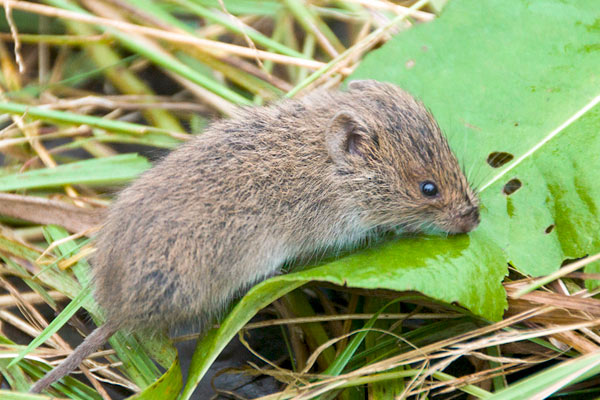
The forecast warm weather in the second half of the month will be a prerequisite for an increase in the population of the common vole. Fields with autumn-sown crops must be monitored, and when the economic injury threshold is reached – EIT: 2 active colonies/da – they should be treated.
Conditions for field work will exist in the middle of the second and during the first half of the third ten-day period, when relatively dry weather is forecast.
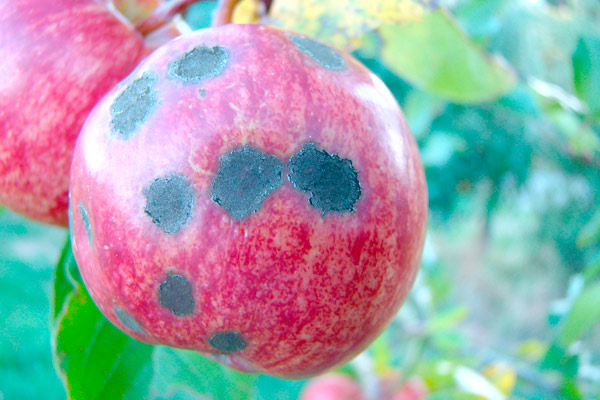
In October, in apple and pear orchards affected by scab, in order to reduce the infection, it is advisable at the beginning of leaf fall, after harvesting the fruit, to carry out a treatment with a 5% urea solution.
For stone fruit species, after mass leaf fall, spraying with a 2% Bordeaux mixture is recommended against the causal agents of shot-hole disease, early brown rot, and peach leaf curl.
At the beginning of October, ground frosts are forecast, which will limit the possibilities for additional production from late vegetable crops susceptible to frost damage.
Source: NIMH