

![MultipartFile resource [file_data]](/assets/img/articles/програма-лоза-1.jpg)
The cultivation of vines in Bulgaria dates back to ancient times. As a result of favourable agrometeorological, soil and demographic conditions, long-standing experience has been accumulated and developed in the cultivation of grapevine plants. Both the yield and the production of high-quality output are ensured, for table as well as for wine grape varieties. The high contemporary requirements are shifting the focus of grape production not only in terms of yield, but also in terms of the quality of the harvested produce, including appearance, organoleptic and technological properties, and efforts are directed towards the cultivation of healthy plants and the production of output free from residual amounts of pesticides. The emergence, spread and multiplication of new pests as a result of the intensified movement of people and goods confront vine-growers with many difficulties and uncertainties. One of the major problems faced by vine-growers is the protection of the crop from diseases and pests. Depending on the agrometeorological conditions, economically important pests such as downy mildew of grapevine (Plasmopara viticola); powdery mildew of grapevine (Oidium tuckeri); grey mould (Botrytis cinerea); excoriosis of grapevine (Phomopsis viticola); European grapevine moth (Lobesia botrana); grapevine scale (Pulvinaria vitis); yellow grapevine mite (Eotetranychus pruni (Schizotetranychus viticola)) reproduce annually in vineyards and cause losses. Under suitable conditions, many other pests may also appear and multiply on vines which, as a result of their life processes, may contribute to yield reduction and deterioration of product quality. The aim of the new requirements of the European policy regarding the sustainable use of pesticides is an ambitious programme for a significant reduction in their use. A priority of the “Green Deal” and “Farm to Fork” strategies is to protect nature, ensure healthy food and support farmers.
The preparation of a National Programme of measures for preventing the spread and control of pests in grapevine (genus Vitis) aims to limit the spread of certain diseases and pests and to maintain healthy vineyards. The Programme covers the entire period of grapevine cultivation – from the phenological stage “dormancy”, throughout the whole vegetation period up to the “beginning of leaf fall”. The Programme mainly considers pests for which the timing of the first control actions is of exceptional importance, so as not to allow damage to plants, losses and deterioration of product quality. The implementation of specific chemical control measures is envisaged for certain pests, as follows:
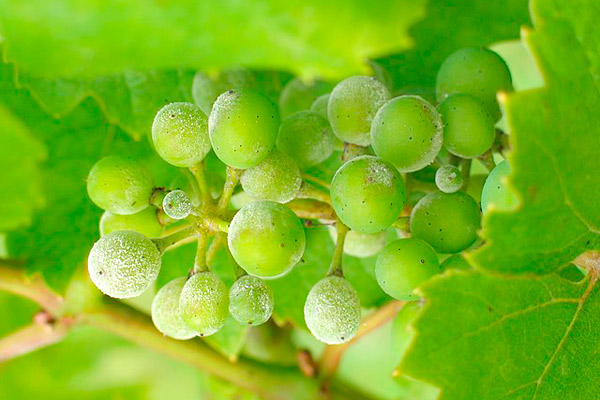
Powdery mildew of grapevine – Oidium tuckeri
Against the causal agent of powdery mildew – before the onset of winter dormancy, prior to autumn frosts and leaf fall, treatment with a plant protection product containing the active substance sulphur shall be carried out. The objective is to reduce the overwintering inoculum of the pathogen (the causal agent of the disease) on the grapevine, which will ensure normal development of the plants at the beginning of the vegetation period and will reduce the number of in-season treatments. This is a plant protection measure that is not popular among vine-growers in Bulgaria, but is applied by leading European vine-growing countries. The proposal was made by scientists from the Agricultural University – Plovdiv, as a result of conducted research.
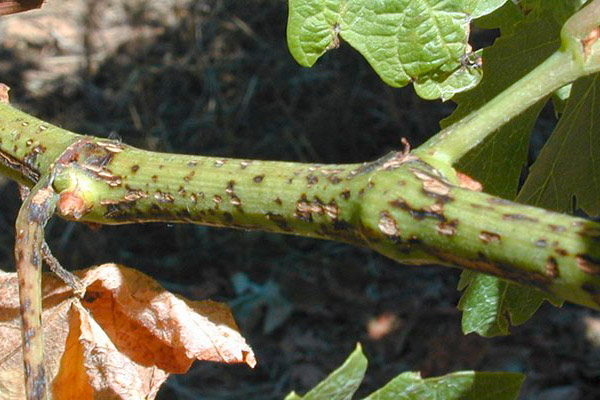
Excoriosis of grapevine – Phomopsis viticola
The treatment of plants against the causal agent of excoriosis of grapevine (Phomopsis viticola) at the very beginning of the vegetation period (from the phenological stage “beginning of bud swelling” to the phenological stage “third leaf unfolded”) is another key moment that is often missed by vine-growers, whereas the disease is particularly harmful to young shoots. It leads to the death of primary buds, elongation of arms and their dieback.
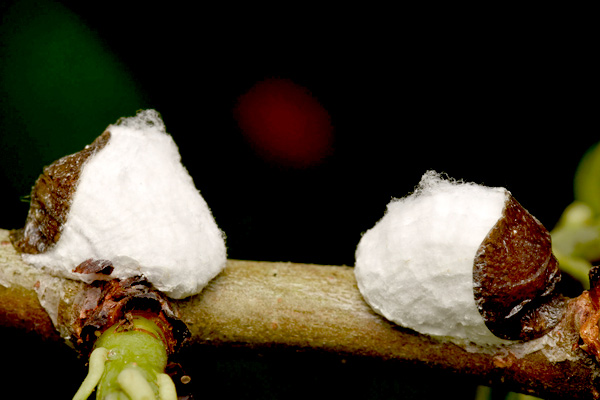
Grapevine scale – Pulvinaria vitis
Particular attention in the Programme is devoted to “vectors” – organisms that transmit and spread causal agents of plant diseases (viral, phytoplasma). Grapevine scale (Pulvinaria vitis) is a vector of a number of viral diseases of grapevine. The Programme envisages reducing the overwintering population of the pest by applying a plant protection product with the active substance paraffin oil.
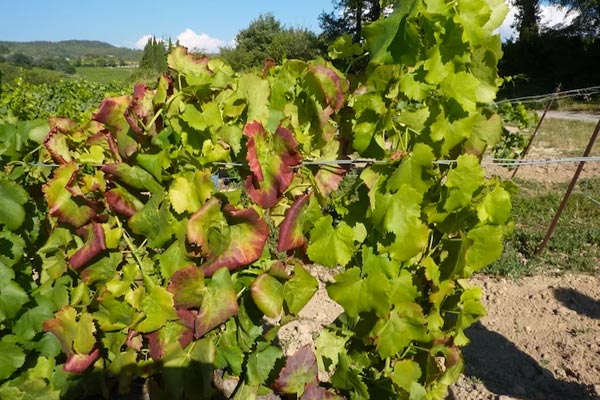
Flavescence dorée of grapevine
The Programme provides for control of the vector, the American grapevine leafhopper (Scaphoideus titanus), a carrier of the phytoplasma Flavescence dorée phytoplasma-PHYP64, the causal agent of Flavescence dorée of grapevine. The phytoplasma is included in Annex II to Implementing Regulation (EU) 2019/2072, in the “List of Union quarantine pests and their corresponding codes”; Part B – “Pests known to occur in the territory of the Union”. The American grapevine leafhopper, the carrier of the phytoplasma, has been detected on the territory of Bulgaria. Some European countries (France) already implement programmes for compulsory insecticidal treatment or for sanitary grubbing up of vines, with the aim of limiting the spread of Flavescence dorée of grapevine (Flavescence dorée phytoplasma).
This National Programme is intended for agronomy specialists and farmers.
The Programme has been developed on the basis of Article 2 of the Plant Protection Act and Order No RD 09-629/27.06.2023 of the Minister of Agriculture and Food, by a working group comprising officials from the Ministry of Agriculture and Food; the Bulgarian Food Safety Agency; Regional Food Safety Directorates – Burgas; Varna; Pazardzhik; Plovdiv; Stara Zagora; the Risk Assessment Centre on Food Chain (RACFC) – Sofia; the Agricultural University – Plovdiv; the “Faculty of Agronomy” at the University of Forestry – Sofia; the “Institute of Viticulture and Enology” (IVE) – Pleven.
See the National Programme of measures for preventing the spread and control of pests in grapevine (genus Vitis) HERE