

![MultipartFile resource [file_data]](/assets/img/articles/ябълки-заглавна-август-1.jpg)
With the exception of powdery mildew on apple and peach, the risk of fungal diseases has almost passed. Damage caused by harmful insects and mites is also largely reduced, because the old leaves are not suitable for their development. In addition, some of them pass onto their intermediate hosts.
Plant protection activities in August are aimed mainly at protecting the fruit harvest from worm infestation and the leaves from leaf-mining moths, bugs and other pests that develop several generations.
Treatments must comply with the pre-harvest intervals of the pesticides and the harvest time. They should be carried out during the cooler hours of the day.
In orchards
At handling points, peach fruits are inspected for the presence of the oriental fruit moth in non-infested areas.
All plantations are monitored for the presence of the fall webworm. When the economic injury threshold is exceeded, the crops are treated with Dipel 2 X (100 g/ha).
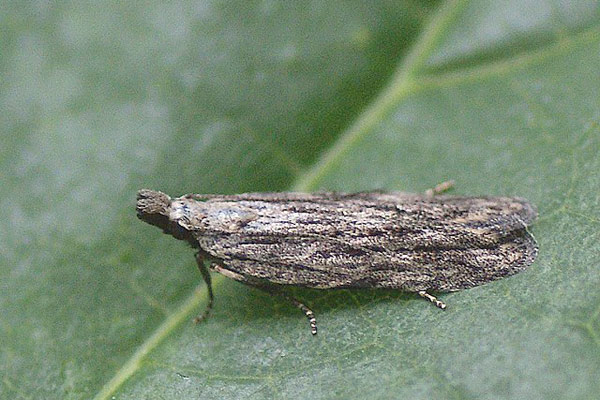
Fruit bark beetle
Orchards infested by fruit bark beetle are sprayed with one of the products – Delegate 250 WG (30 g/ha), Rapax 100-200 (ml/ha), Dipel DF 50-150 (g/ha), Avant 150 EC (33.3 ml/ha), Decis 100 EC (8.75-12.25 ml/ha), Coragen 20 SC (16-30 ml/ha). For mating disruption you may also use combined pheromone dispensers – Isomate – CLR (100 pcs/ha).
The trunks and thick branches of fruit trees infested by bark beetles are treated with one of the products – Decis 100 EC (12.25 ml/ha), Coragen 20 SC (30 ml/ha), Sumi Alpha 5 EC (0.03%), Karate Zeon 5 SC (15 ml/ha).
Peach orchards are sprayed with one of the products – Sulfur WG (600 g/ha), Solfo 80 WG (750 g/ha), Systhane 20 EW (0.03%), Luna Experience (50-75 ml/ha), Flint Max 75 WG (0.02%) against powdery mildew; with a product based on deltamethrin – Decis 100 EC (12.5 ml/ha), Meteor (90 ml/ha), Deka EC (50 ml/ha) against the oriental fruit moth, Anarsia (second generation), mulberry scale, San Jose scale (in the areas of distribution); and with Apollo 50 SC (40 g/ha), Valmek (60-96 ml/ha) or another product based on abamectin, Voliam Targo 063 SC (75 ml/ha), Naturalis (100-150 ml/ha) against mites.
Fallen wormy hazelnut fruits are collected and destroyed.
Apple orchards are treated with a pyrethroid insecticide – Decis 100 EC (7.5-12.5 ml/ha), Sumicidin 5 EC (0.02%), Afikar 100 EC (15 ml/ha), Efcymerin 10 EC (15 ml/ha) and one of the products – Apollo 50 SC (40 g/ha), Valmek (60-96 ml/ha) or another product based on abamectin, Voliam Targo 063 SC (75 ml/ha), Naturalis (100-150 ml/ha) respectively against the serpentine leafminer moth and mites.
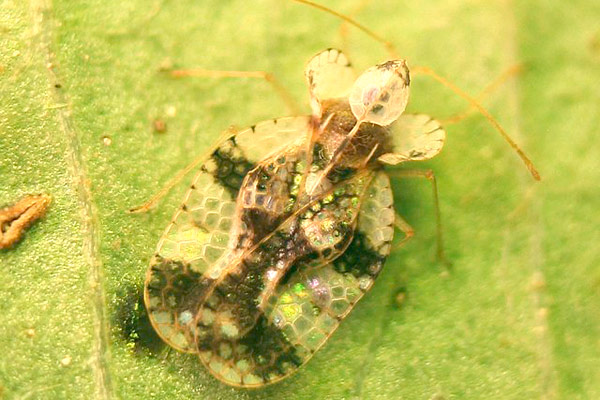
Pear bug
Pear orchards heavily infested by pear psylla and pear bug are sprayed with an insecticide based on deltamethrin – Decis 100 EC (12.5 ml/ha), Meteor (90 ml/ha), Deka EC (50 ml/ha). This spraying is also effective against the codling moth in pear.
Chestnut trees are sprayed against the chestnut weevil with Coragen 20 SC (18-30 ml/ha).
In strawberry plantations
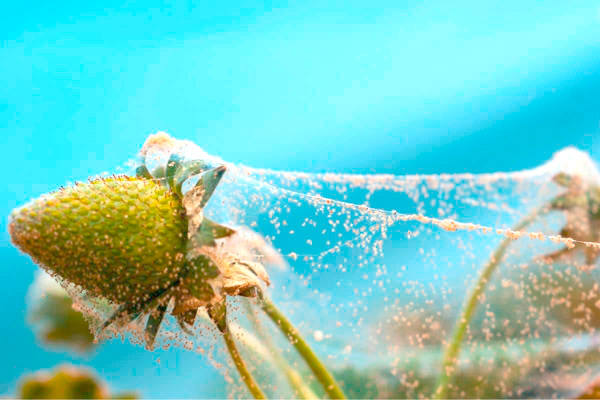
Strawberry mite
Strawberry plantations infested by strawberry mite are treated with one of the products – Voliam Targo 063 SC (80 ml/ha), Laota, Bermektin, Valmek (15-100 ml/ha), Sulfur WG (500-700 g/ha), Heliosulfur C (150-750 ml/ha).
Strawberry planting material intended for planting in August is inspected. When strawberry mite and other pests are detected, it is disinfected.
In blackcurrant plantations
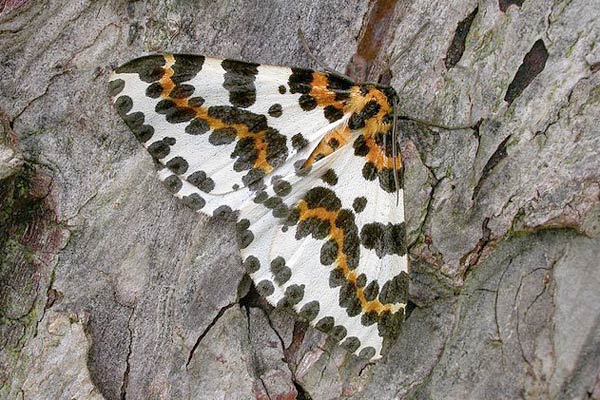
Blackcurrant looper
Plantations infested by blackcurrant looper are sprayed with contact insecticides from all groups. You may use one of the products – Decis 100 EC (12.25 ml/ha), Coragen 20 SC (30 ml/ha), Sumi Alpha 5 EC (0.03%), Karate Zeon 5 SC (15 ml/ha).