

![MultipartFile resource [file_data]](/assets/img/articles/заглавна-агро-юли-1.jpg)
On most days of the second and third ten-day periods of July, relatively dry and very hot weather is expected, with maximum temperatures between 35-40oC. The forecast high temperatures in July and the relatively dry weather will limit the development of fungal diseases in perennial plantations, with the exception of powdery mildews. The expected precipitation around and below the monthly norm will require the implementation of an increased irrigation regime.
In fruit nurseries
Seedbeds are irrigated and cultivated regularly in order to ensure the highest possible percentage of standard rootstock material. Mother plantations are irrigated and, if necessary, hilled up.
To ensure conditions for good development of the budded plants, in second-year nursery blocks disbudding is carried out when necessary. Regular cultivation and irrigation are carried out, especially in pear nurseries.
In first-year nursery blocks, the budding of the rootstocks begins, and in those where the buds have not taken, re-budding is carried out. About two weeks after budding, the bindings are inspected. Those that have cut into the bark are loosened.
In fruit orchards
Work continues on bending the scaffold branches when forming palmette trees.
By means of irrigation, soil moisture is maintained above 70% of field capacity.
Using a disc harrow, cultivator, rotary tiller and rotary tiller with an offset section, the soil surface in the inter-rows and within the rows is kept tilled and free of weeds.

Harvesting of sweet and sour cherries continues, and the mass harvesting of apricots and peaches also begins.
In strawberry plantations
Care for the irrigation of newly established strawberry plantations continues, especially for those planted in June. In the lower and warmer regions, where fruit harvesting has finished, the straw is collected, removed and burned.
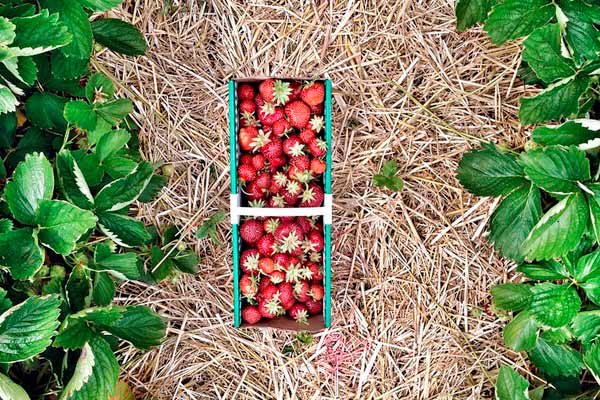
Harvesting of fruits continues in higher and cooler sites.
After the straw has been removed, the plantations are irrigated and cultivated, having first been fertilized with 10-12 kg of ammonium nitrate per decare.
Mother plantations intended for the production of planting material are irrigated, fertilized with 15-20 kg of ammonium nitrate per decare and hoed. Runners in plantations from which no planting material is taken are cut out.
New areas for strawberry plantations are designated and prepared for autumn planting in the open field. Before deep tillage, the area is fertilized with 2-4 t of farmyard manure, 60-80 kg of superphosphate and 20-30 kg of potassium sulfate per decare.
In raspberry plantations
Care for irrigation and cultivation of the new plantations continues. Fruiting plantations are irrigated and cultivated. The irrigation rate is 50-60 dm3 per decare.
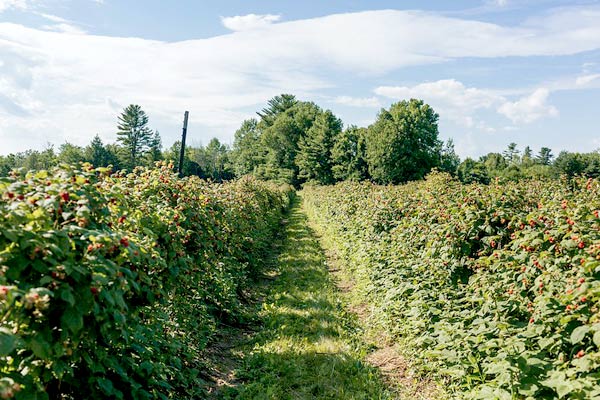
Mass harvesting of the fruits is carried out.
Care is taken of the mother raspberry plantations – irrigation and cultivation, in order to ensure the maximum quantity of planting material – suckers.
The plantations are inspected, off-types of other cultivars are removed, and old, fruited canes are cut, collected and burned.
In blackcurrant plantations
Care for the rooting beds continues. The soil is irrigated and cultivated, and in young and fruiting plantations weed infestation is not allowed.
The plantations are fertilized with nitrogen (1/3 of the annual rate).
Mass harvesting of the fruits is carried out. During harvesting, off-types of other cultivars are marked for later grubbing, as well as diseased and weak plants. After harvesting, broken, underdeveloped and surplus shoots are removed.
In plantations with other crops
The desired cultivars and forms of fig trees for obtaining cuttings are marked. Cuttings are taken from actinidia, bay laurel, chokeberry, sea buckthorn and pomegranate for rooting in a greenhouse with artificial mist. The cuttings are prepared and treated with a solution of indolebutyric acid for 5 seconds. They are rooted in greenhouses with artificial mist in a substrate of two parts perlite and one part peat.
The budding of Caucasian persimmon rootstocks with persimmon cultivars and of actinidia seedlings with cultivated varieties begins.
Tying of actinidia vines to the wire trellis continues. Summer pruning of actinidia is carried out. The wire trellis is installed already at planting, and the wires are raised to 1-1.20 m and 1.80-2 m above the soil surface.
Jujube and pistachio are budded.
Fig fruits are harvested, and towards the end of the month the harvesting of sea buckthorn and chokeberry fruits begins.