

![MultipartFile resource [file_data]](/assets/img/articles/винопроизводство-1.jpg)
The world of wine is facing an unusual and alarming situation, unseen for nearly six decades. According to the International Organisation of Vine and Wine (OIV), around 2.4 million hectolitres of wine were produced in 2023, which is equivalent to 7% less than the previous year; in reality, this is the lowest production level since 1961.
The reasons for this dramatic decline in wine production are diverse, ranging from extreme climatic conditions to challenges related to rising prices of basic consumer goods, fuels and energy over the past two years, and the contraction of households’ purchasing power as a result of the COVID pandemic and the war in Ukraine.
Extreme climatic phenomena, such as unpredictable heatwaves, droughts and forest fires, have led to an extremely poor harvest in many wine-growing regions worldwide. However, the decline in wine production is not evenly distributed across the different wine regions. Due to climatic anomalies in 2023, wine regions in Italy, France and Spain report a drastic decrease in wine production, while at the same time countries such as Germany, Portugal and Romania report medium to high production volumes.
For the EU as a whole, the production volume is 8% lower than the average quantities for the last five years.
France – once again first in Europe
France managed to secure the leading position as a wine producer in Europe, primarily due to the poor harvest in Italy (a decrease of 14% compared to the previous year). In fact, this is the lowest production level in Italy since the time of the exceptionally poor harvest in 2017, notes the Reuters agency.
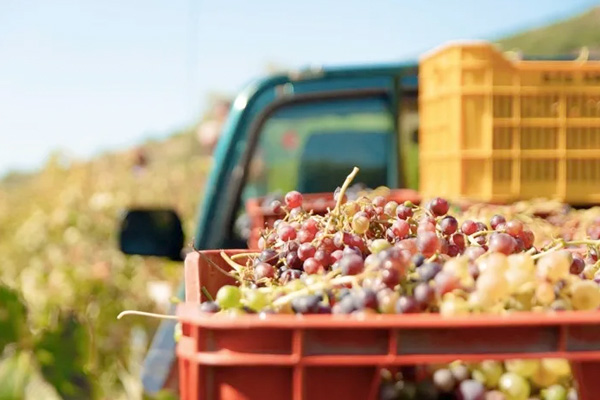
Spain ranks third, although its production has also fallen by 14% to its lowest level in the last 20 years. Spanish and Italian wine producers suffered the most over the past year from climatic anomalies – both from prolonged droughts and from heavy rainfall, which led to increased humidity and the spread of fungal pathogens in the vineyards.
General trends leading to a decrease in wine production and consumption
Changes in the global climate, accompanied by periods of drought and torrential rains, atypical heat, as well as very early and very late frosts, are increasingly affecting both European and global wine production.
On the other hand, the global economic situation over the past two years has dictated certain changes in the structure of the wine market.
The rising cost of resources (labour, fuels, fertilizers, plant protection products) is leading to a significant decline in wine production. At the same time, the increase in prices of basic consumer goods and the contraction of purchasing power are leading to a reduction in wine consumption. The projected overall decline in 2023/2024 will be 1.5% compared to the level of one year earlier.
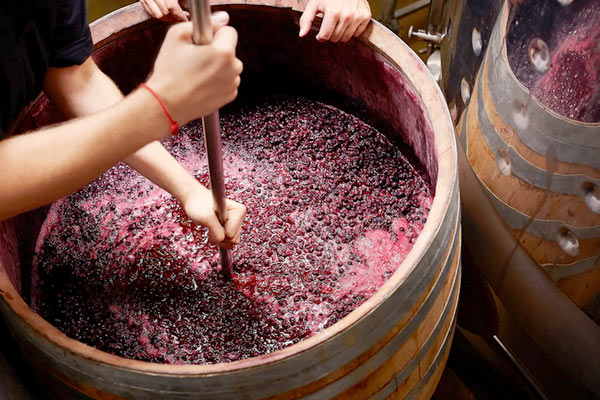
The decrease in consumption is expected to affect mainly red wines and, to a lesser extent, rosé wines. The negative trend is also influenced by changes in consumer tastes and preferences, primarily towards increased beer consumption, as well as the adoption of a healthy lifestyle that excludes the consumption of stronger alcoholic beverages, including wine.
The wine market in Bulgaria
The cold and rainy spring in Bulgaria delayed the ripening of grapes and, accordingly, the grape harvest campaign in 2023 started later in the different regions of the country. According to the operational information of the Ministry of Agriculture and Food, in the past year there was a decrease in the harvested area under wine grapes; a year earlier it amounted to 31,579 ha compared to 29,722 ha in the current year (-5.9% on an annual basis).
In addition to the reduction in area, lower average yields also have a negative impact – 492 kg/da compared to 564 kg/da at the end of September 2022. The decrease in the quantity of table grapes is 46%, with the production volume at the end of September 2023 amounting to 7.1 thousand tonnes compared to 13.3 thousand tonnes in the same period of the previous year. The main reason for the reported decline is the decrease in average yields from vineyards with table varieties in 2023 – 468 kg/da (-22.9%), which in many cases is due to damage from the spread of fungal diseases when plant protection measures were not carried out in a timely manner, as noted in its first information bulletin by the Institute of Viticulture and Enology – Pleven.
The poorer harvest is also determining an increase in the prices of wine grapes. According to studies by the Institute of Viticulture and Enology – Pleven, in some regions of Northern Bulgaria grapes from the red wine varieties “Cabernet Sauvignon” and “Merlot” are sold by producers at prices between BGN 1.30–1.40/kg. The variation in price levels in the southern regions of the country is greater – between BGN 1.00/kg and BGN 1.50/kg, depending on the quantities offered and the grape variety. Despite the increase in the cost of resources (labour, fuels, fertilizers, plant protection products), in 2022 producer prices remained at a relatively low level – BGN 0.66/kg excluding VAT, according to NSI data. A possible way out of the difficult situation for grape growers is cooperation for the purpose of processing and achieving higher added value.
Information Bulletin of the Institute of Viticulture and Enology – Pleven
At the end of 2023, the Institute of Viticulture and Enology – Pleven began publishing an Information Bulletin. The Institute’s management aims to provide up-to-date and useful information on development trends in the viticulture and wine sector in Bulgaria and worldwide. Distribution of the publication is free of charge. Attention is paid to funding opportunities, changes in national and European sectoral policies, important events, as well as ensuring access to the results of scientific research carried out by the team of the Institute of Viticulture and Enology – Pleven. Anyone interested can contact the Institute to receive the bulletin and to provide comments and recommendations regarding future topics that would be of interest.