

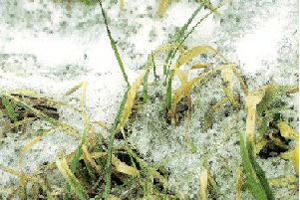
Plants belong to organisms that cannot efficiently control their internal temperature, and it heavily depends on the ambient temperature. Temperatures between 15 and 30 °C are most favorable for growth and development, but due to temperature fluctuations during the growing season, they often experience the influence of lower or higher temperatures. Plant tolerance to low temperatures depends on the severity of the temperature stress and its duration. Under extreme impacts, plants are unable to implement their protective mechanisms and perish, whereas with a gradual decrease in temperature, they adapt through various mechanisms.
Elucidating the causes that induce plant damage from low temperatures, as well as the possibilities for increasing their tolerance, has been the subject of scientific interest for many years. Research on the influence of low negative temperatures has a history of more than 200 years. Senebier (1800) believed that low temperatures cause ice formation in plants and suggested that it ruptures the vessels of the conductive system and cell walls. This view was soon refuted by Heppert (1830), who did not observe the described damage in microscopic examinations of plants killed by low temperatures. Even then, it became clear that the cause of death is not the mechanical influence of ice, but the low temperatures themselves, as it is well known that seeds of many crops can withstand extremely low temperatures, and many of them can be stored for extended periods in liquid nitrogen at -196 °C.
Plant tolerance to low temperatures is a genetically determined trait, but the mechanisms for its realization strongly depend on environmental conditions and the applied agricultural practices. This publication briefly outlines contemporary views on the physiological damage that low temperatures and accompanying adverse conditions cause in plants, the mechanisms of tolerance, and some possibilities for protecting agricultural plants through the use of growth regulators, foliar fertilizers, plant protection products, and others.