

![MultipartFile resource [file_data]](/assets/img/articles/зеленчук-юни-1.jpg)
Plant protection activities in vegetable crops during the month of June continue both in greenhouses and in the field. The weather is warming, temperatures are rising and atmospheric humidity is decreasing. Activation of thrips and mites is expected. Rainy periods favour the increase of aphid populations and the occurrence of certain pathogens, which in turn is a signal for vigilance during these intervals.
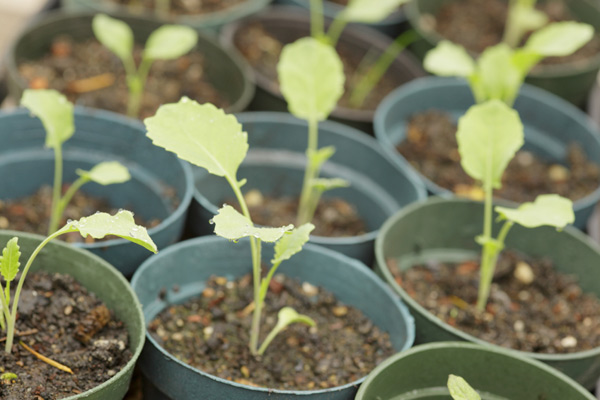
Seedling production
Seedlings for late tomatoes, head cabbage and cauliflower, broccoli and leek are still being grown in open seedbeds. In cabbage seedlings, due to frequent irrigations during this period, there is a risk of downy mildew and Alternaria blight. Depending on weather conditions, in the presence of showers and temperature depressions, tomatoes may be attacked by bacterial leaf spots, early blight (Alternaria) and late blight, and leek – by rust. Conditions for an increase in aphid populations still exist, but attacks by thrips and caterpillars are also possible. In brassicas, damage is mainly caused by caterpillars, flea beetles and stink bugs.
The plant protection products (PPP) used for treatment are listed under greenhouse and field production.
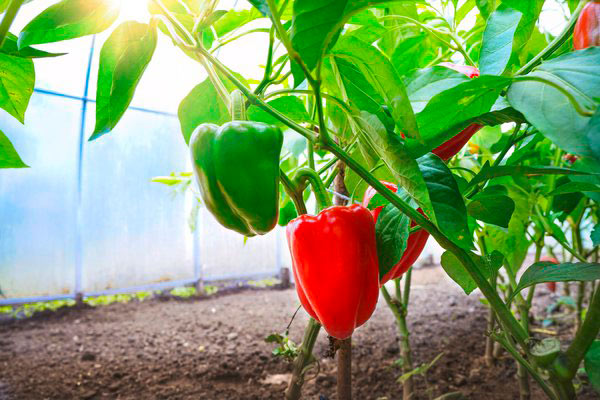
Greenhouse production
By the end of the month, harvesting of tomatoes and early cucumbers is completed. In these crops, treatments with PPP are carried out only in case of absolute necessity. Pesticides with short pre-harvest intervals are used. Cultivation of late cucumbers and peppers continues.
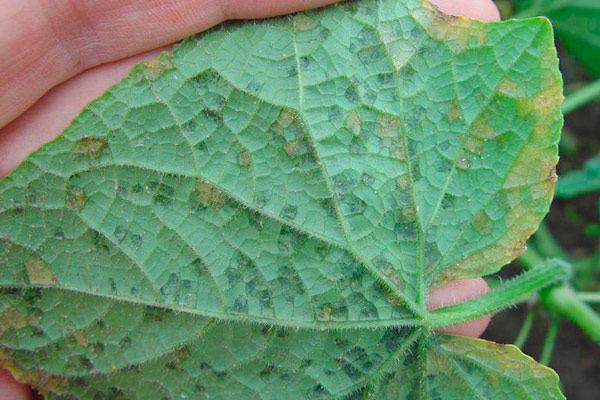
In cucumbers, attacks by downy mildew (cucurbit downy mildew) and powdery mildew can be expected. Against downy mildew, treatments are carried out every 7-10 days with authorised PPP: Golbex WP 250 g/da; Enervin SC 120 g/da; Zoxis 250 SC 70-80 ml/da; Infinito SC 120-160 ml/da; Korseit 60 WG 20-30 g/da; Prev-Gold 160-600 ml/da; Taegro 18.5-37.0 g/da. Spray mainly the lower leaf surface. PPP registered against powdery mildew are: Vivando 20 ml/da (0.02%); Dagonis 60 ml/da; Domark 10 EC 50 ml/da; Zoxis 250 EC 70 ml/da; Collis SC 40-50 ml/da; Legado 80 ml/da; Ortiva Top SC 100 ml/da; Sivar 80 ml/da; Sonata SC 500-1000 ml/da; Taegro 18.5-37.0 g/da; Topaz 100 EC – 35-50 ml/da; Trunfo 80 ml/da; Fytosev 200 ml/da; Fontelis SC 240 ml/da. In peppers during this period, powdery mildew is the main serious problem. At the appearance of the first spots, treat with registered PPP: Vivando 30 ml/da; Dagonis 60 ml/da; Kozavet DF 500 g/da; Ortiva Top SC 100 ml/da; Sonata SC 500-1000 ml/da; Taegro 18.5-37.0 g/da; Teyzer 250 SC 80-100 ml/da; Topaz 100 EC – 35-50 ml/da; Fytosev 200 ml/da.
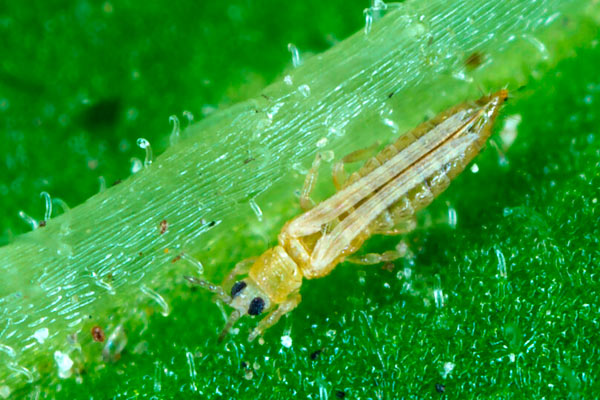
Due to the climatic conditions this year, there is a massive infestation of thrips and aphids in vegetable gardens
Among pests during this period, the most common are: thrips, greenhouse whitefly, aphids, leaf-mining flies, caterpillars, tomato leaf miner, mites.
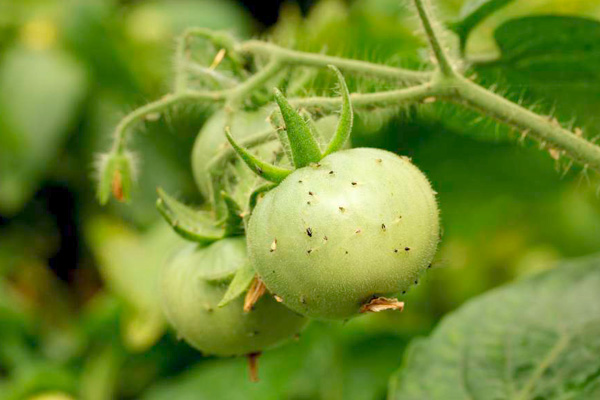
For monitoring and reducing population density, sticky traps are placed – yellow (for whitefly and aphids), light blue (for thrips), black (for tomato leaf miner) and yellow-orange (for leaf-mining flies). Where necessary, treatments with authorised PPP are carried out.
The harvesting period in greenhouses begins.
We again remind you to use only PPP with a short pre-harvest interval!
Field production
With frequent, light rainfall and high humidity, conditions are favourable for the occurrence of late blight in early tomatoes and potatoes, downy mildews in onion and brassica crops, Phytophthora fruit rot in tomatoes; with intensive rainfall – brown leaf spots (Alternaria blight); when rainfall is accompanied by strong wind – bacterial leaf spots and scorch on tomatoes and peppers.
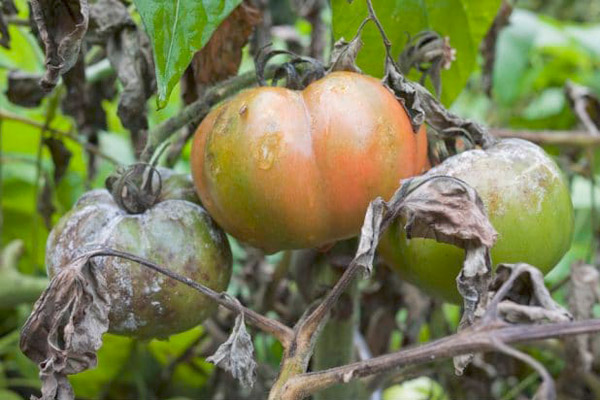
For the development of late blight in tomatoes and potatoes, conditions are particularly favourable in structures with plastic covering, where abundant dew forms in the early morning hours. The incubation period, depending on conditions, is 3-10 days. The fungus develops under a specific combination of meteorological conditions – “critical periods”, which are:
- Light, continuous rainfall lasting two or more days.
- Relative air humidity during the period above 75%.
- Cloudiness above 8 oktas.
- Mean daily temperature – around 160C (min 10-120C; max 18-250C).
Retention of water droplets for more than 4 hours on the plant surface is also a precondition for new infections.
In the presence of critical periods, tomato crops are treated with registered PPP: Azaka 80 ml/da; Acticluster 300-400 ml/da; Enervin SC 120 g/da; Zoxis 250 SC 70-80 ml/da; Cuproxat FL 0.3%; Orvego 70 ml/da; Revus 250 SC 50 ml/da; Cymbal flow 50 ml/da; Taegro 18.5-37.0 g/da; Teyzer 250 SC 80-100 ml/da; Folou 80 WG 200 g/da; Funguran OH 50 WP 0.15%.
In potatoes, PPP registered against late blight are: Banjo 30-40 ml/da; Vitra 50 WP 150 g/da; Dimix 500 SC 30-36 ml/da; Diflunova 100 ml/da; Enervin SC 120 g/da; Zorvec endavia 40 ml/da; Carial flex 60 g/da; Cuproxat FL 300 ml/da; Lemay 50 ml/da; Revus 250 SC 50 ml/da; Cymbal Flow 50 ml/da; Taegro 18.5-37.0 g/da; Fluazinova 40 ml/da; Funguran OH 50 WP 150 g/da. For control of downy mildew in onion, the following are registered: Zoxis 250 SC 80-100 ml/da; Korseit 60 WG 30-40 g/da; Orvego 70 ml/da; Signum 150 g/da and Teyzer 250 SC 80-100 ml/da.

Against downy mildew in cabbage, only Infinito SC 160 ml/da is registered, but other products registered against downy mildews may also be applied.
Against downy mildew in onion, treatments are carried out with: Zoxis 250 SC 80-100 ml/da; Korseit 60 WG 30-40 g/da; Orvego 70 ml/da; Signum 150 g/da; Teyzer 250 SC 80-100 ml/da.
Attention: An adjuvant should be added to the spray solutions used for treatments of brassica and onion crops.
Against early blight (black leaf spots) in tomatoes and peppers, spray with: Azaka 80 ml/da; Dagonis 100 ml/da; Zoxis 250 SC 70-80 ml/da; Kopforce Extra 200 g/da; Ortiva Top SC 100 ml/da; Prev-Gold 200-600 ml/da; Sinstar 70-80 ml/da; Taegro 18.5-37.0 g/da; Teyzer 250 SC 80-100 ml/da. Against black leaf spots in potatoes, Taegro 18.5-37.0 g/da is registered, but PPP registered for tomatoes may also be applied.
Against Alternaria blight in cabbage seedlings, the following may be applied: Azaka 100 ml/da; Dagonis 100 ml/da; Zoxis 250 SC 80-100 ml/da; Ortiva Top SC 100 ml/da and Teyzer 250 SC 100 ml/da.
Against bacterial diseases in tomatoes and peppers, treat with: Cuproxat FL 0.3%; Taegro 18.5-37.0 g/da; Funguran OH 50 WP 0.3%.
At the appearance of the first rust spots in leek, onion and garlic, treat with Zoxis 250 SC 80-100 ml/da or Ortiva Top SC 100 ml/da.
In cabbage seedlings and early cabbage, monitor for attacks by the large white butterfly, diamondback moth and cabbage flea beetles. Against the large white butterfly, treat with: Altacor 35 WG 8-10 g/da; Exalt 200 ml/da; Meteor 60-70 ml/da; Citrin Max/Cyperkill 500 EC/Cipert 500 EC/Poli 500 EC 5 ml/da; Dipel 2X 100 g/da. For control of the diamondback moth, Altacor 35 WG 8-10 g/da and Exalt 200 ml/da are registered, and against cabbage flea beetles – Meteor 60-70 ml/da.
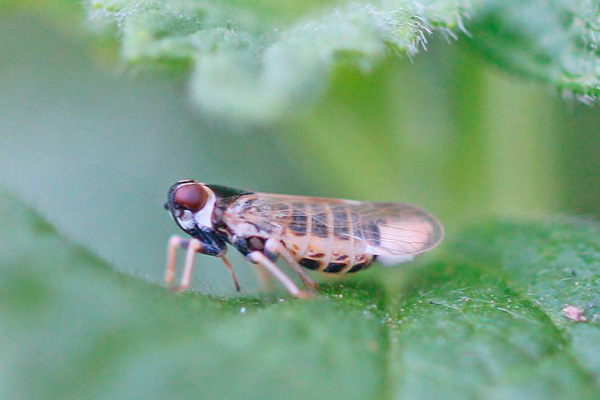
The leafhopper Hyalesthes obsoletus transmits stolbur in pepper, tomato, eggplant, celery, etc.
During the first ten days of June, the leafhopper Hyalesthes obsoletus appears, which transmits stolbur in pepper, tomato, eggplant, celery, etc. It is important to determine precisely the timing of the first treatment. Thereafter, at least two more treatments are carried out at 10-12 day intervals with: Mospilan 20 SP 25 g/da; Meteor 60-70 ml/da. Against the vectors of tomato spotted wilt virus – thrips on tomato, pepper, eggplant and others, the following are applied: Azatin EC 100-150 ml/da; Dicarzol 10 SP 556 g/da; Exalt 200-240 ml/da; Limocid 400-800 ml/da; Minecto Alpha 100-125 ml/da; Niimik Ten 390 ml/da; Oikos 100-150 ml/da; Requiem Prime 500-1000 ml/da; Sineis 480 SC – 10-37.5 ml/da; Naturalis 100-150 ml/da. Against aphids, the following products may be used: Azatin EC 100-150 ml/da; Ampligo 150 ZC 40 ml/da; Delmur 50 ml/da; Deltagri 30-50 ml/da; Closer 120 SC 20 ml/da; Mavrik 2 F 20 ml/da; Niimik Ten 390 ml/da; Oikos 100-150 ml/da; SivantoPrime 45 ml/da; Tepeki/Afinto 10 g/da; Flipper 1-2 l/da; Shirudo 15 g/da. At the appearance of the two-spotted spider mite, treat with PPP. Authorised products: Apolo 50 SC 30-40 ml/da; Bermektin 50-100 ml/da; Butik 30-100 ml/da; Valmek 15-100 ml/da; Vertimec 018 EC 60 ml/da; Voliam Targo 063 SC 80 ml/da; Zoom 11 SC 12.55-50 ml/da; Requiem Prime 500-1000 ml/da; Laota 15-100 ml/da; Naturalis 100-200 ml/da; Nim Azal T/S 0.3%; Nissorun 10 WP 75 g/da; Flipper 1-2 l/da; Shirudo 15 g/da.
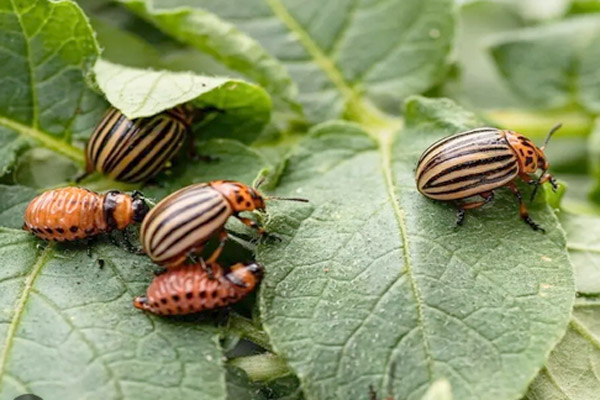
Against the Colorado potato beetle in potatoes, eggplant and tomatoes, the following PPP are registered: Azatin EC 100-150 ml/da; Ampligo 150 ZC 0.03 l/da; Aficar 100 EC 20 ml/da; Adalam 40-80 g/da; Ascot 40/80 g/da; Delmur 50 ml/da; Efcimetrin 10 EC 20 ml/da; Coragen 20 SC/ Voliam 5-6 ml/da; Masan 25 ml/da; Meteor 60-70 g/da; Niimik Ten 390 ml/da; Oikos 100-150 ml/da; Patrol 40-80 g/da; Sineis 480 SC 5 ml/da; Cyclon 10 EC 20 ml/da; Cyperfor 100 EC 20 ml/da; Citrin Max/ Cyperkill 500 EC/ Cipert 500 EC/ Poli 500 EC 5 ml/da; Sherpa 100 EC 100 20 ml/da; Sherpa 100 EW 20 ml/da.
The first hailstorms have already occurred. The risk of hail continues during this month as well. After hail, severely damaged plant parts are removed, and the damage is assessed after 2-3 days. After wound callusing on plants (after 4-5 days), the damaged crops are sprayed with Funguran OH 50 WP 0.15%, with mandatory addition of an adjuvant. Top dressing with 10-20 kg/da ammonium nitrate is carried out. A foliar fertiliser may also be added to the pesticide solutions.
Only registered PPP should be applied. All requirements for application, dosages, pre-harvest intervals, including transport and storage of chemical plant protection products, must be observed. Hygiene and safety standards for working with toxic substances must be respected. A treatment logbook must be kept in accordance with the requirements of the BFSA.