

![MultipartFile resource [file_data]](/assets/img/articles/заглавна-цвят.jpg)
In April, the fruit species in the different regions of the country are in various phenophases: “mouse ear”, “white bud” or “flowering”.
For apple, at the “mouse ear” stage, the first pre-bloom spraying against scab is carried out with one of the following fungicides: Champion 50 WP – 0.3%; Captan 80 WG – 150-180 g/da; Merpan 80 WG – 200 g/da; Cuproxat FL – 0.3%; Polyram DF – 0.2%; Chorus 50 WG – 30-50 g/da (0.03% – preventive and 0.05% – curative with 100 l/da spray solution); Syllit 544 SC – 125 ml/da; Carbicure – 500 g/da.
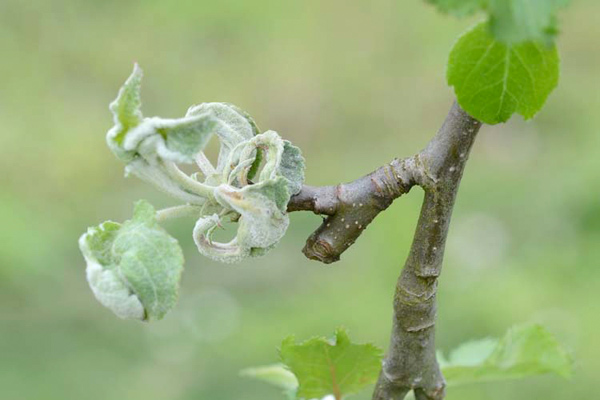
Apple powdery mildew
Against powdery mildew, the following are recommended: Sulgran – 750 g/da; Topaz 100 EC – 20-50 ml/100 l spray solution; Luna Care – 300 g/da; Bellis – 80 g/da.
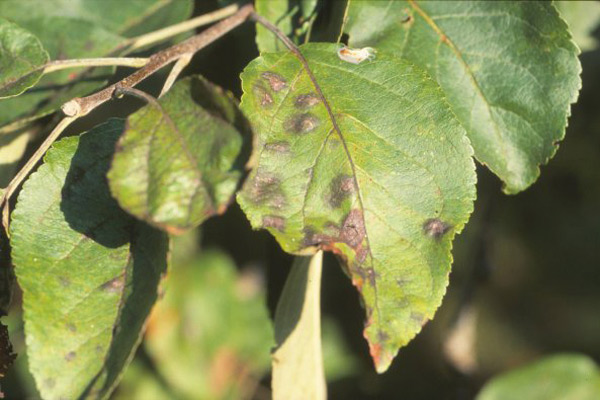
Apple scab
For simultaneous control of powdery mildew and scab, the following are suitable: Flint Max 75 WG – 0.02%; Fontelis SC – 75 ml/da; Microthiol Special Liquid – 730 ml/da; Score 250 EC – 0.02-0.03%; Reviona – 200 ml/da; Luna Experience – 20-75 ml/da; Thiovit Jet 80 WG – 600 g/da.
The cultivar “Golden Delicious” is susceptible to russeting on the fruits, and copper preparations increase it, which necessitates the use of other fungicides for this cultivar. Captan 80 WG and Merpan 80 WG are suitable and can be successfully used for pre-bloom sprayings on Golden Delicious, as well as on other cultivars that are susceptible to russeting on the fruits.
Cultivars resistant to scab – Prima, COOP-10, Florina, Liberty, Pioneer, McFree, Pilot, Topaz, Novamak, Sava, Rubinola, Jonafree, Jonathan, etc., are sprayed only against powdery mildew.
The second pre-bloom spraying of apple is carried out at the “pink bud” stage. The same fungicides are used as for the first spraying.
In April, blossom spraying is also carried out in apple, which is very important for protecting the flowers from scab. In years with frequent showers and high atmospheric humidity, mass infections occur in cultivars sensitive to scab, as a result of which the flowers drop and these damages often remain unnoticed and growers attribute them to other causes. This spraying is also aimed against powdery mildew and brown rot.
For blossom spraying, one of the following fungicides is used: Flint Max 75 WP – 0.02% or Chorus 50 WP – 0.03%.
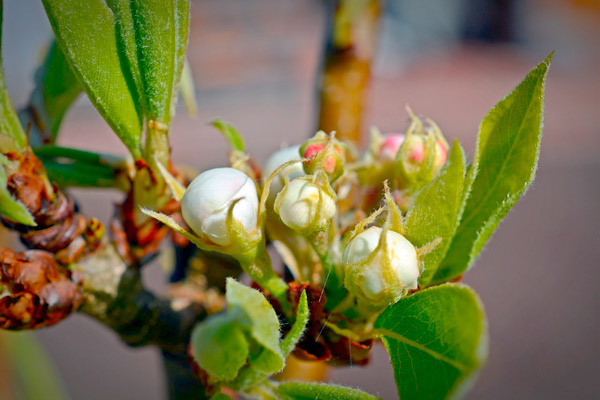
For pear, only one pre-bloom spraying is carried out. It is aimed against scab. One of the following fungicides is used: Funguran OH 50 WP – 0.3%, Champion WP – 0.3%, Captan 80 WG – 0.2%, Bordeaux Mix 20 WP – 375-500 g/da. Blossom spraying in pear is aimed against scab and brown rot, and the fungicides indicated for blossom spraying in apple are used.
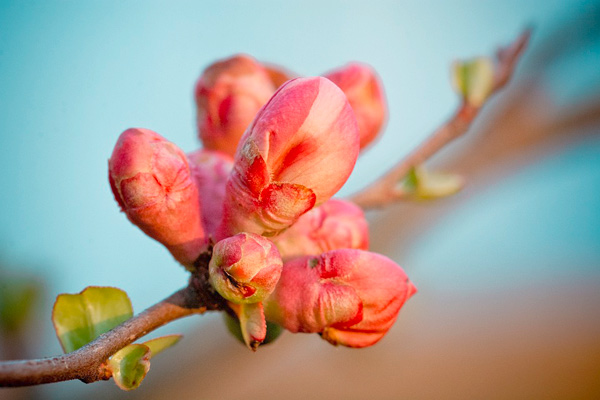
During this period, quince is sprayed against fruitlet blight. The first spraying against this fungal disease is carried out at the “pink bud” stage, and the second – during flowering. For the first spraying it is best to use Champion WP – 0.3%, and for the blossom spraying – Chorus 50 WP – 0.03%.
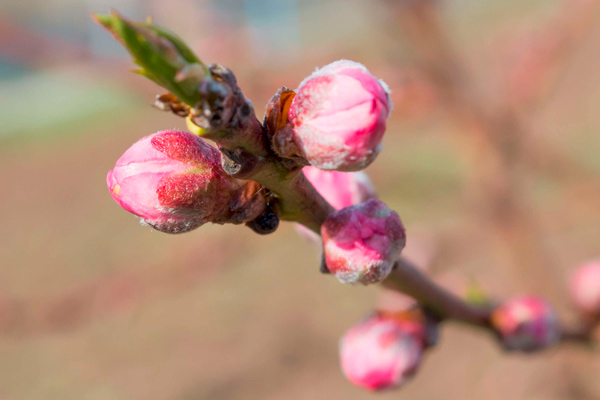
For all stone fruit species, blossom sprayings are usually carried out in April to control brown rot. Effective fungicides against this disease are: Chorus 50 WP – 0.045%, Signum WG – 30 g/da, Delan 700 WDG – 0.05%.
Most of the apricot and sour cherry cultivars grown in our country are susceptible to brown rot, and in a wet spring and prolonged flowering, two blossom sprayings must be carried out for them. The first – at the beginning of flowering, and the second – 8-10 days after the first.
Blossom sprayings should be carried out in the morning, when there is no bee flight. The fungicides used are not toxic to bees, but they must be protected from the spray jet during treatment.
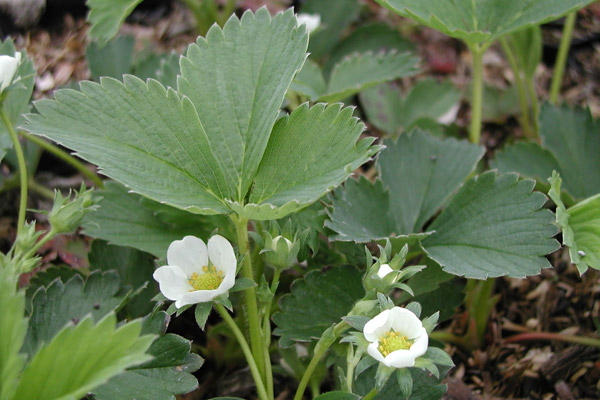
Strawberry plantations are sprayed with Champion WP – 0.3% before flowering to protect them from leaf spots (white and red).
For raspberry, when the young canes reach a height of 15-20 cm, spraying is carried out with Ortiva Top SC against powdery mildew and leaf spots, with Score 250 SC – 0.03-0.04% and with Signum – 150 g/da against didymella and cane blight (coniothyrium).