

![MultipartFile resource [file_data]](/assets/img/articles/moehren-karotten-ernte-3593862-blp-shutterstock.jpg)
Practices during the period
By the end of July, harvesting of tomatoes and cucumbers in protected cultivation facilities is completed. Afterwards, they are thoroughly cleaned of plant residues. The areas are prepared for the next vegetation. The remaining areas are prepared for disinfection. This period is most suitable for soil solarization, which is carried out as follows: The areas are cleaned, ploughed and cultivated to a garden condition. They are irrigated until reaching 70% of field capacity, tightly covered with dark or transparent film and left in this state for 50–60 days. This disinfection is effective against soil-borne pathogens, nematodes, pests and weeds. Care is taken for the seedlings of brassica crops and for the preceding crops of tomatoes and cucumbers intended for greenhouses. The bulk of the production from open-field vegetable crops is harvested. Attention is paid to the “critical periods” for the occurrence of late blight, leaf spots and bacterioses. The period is particularly favourable for the occurrence and development of powdery mildews, mass multiplication and severe harmful activity of spider mites.
Plant protection
There are no differences in the species composition of pests in open-field and greenhouse production.
To obtain healthy, well-hardened seedlings, the difference between day and night temperature should not exceed 6–8oC, so as not to provoke “false damping-off” of the seedlings. In the seedling compartment a moisture level of 50–60% of field capacity is maintained. Of great importance for the quality of the seedlings is the control of the nutritional regime – pH = 6.2–6.8, total salt concentration of the substrate – EC = 1.2–1.8 mS/cm depending on the seedlings (dense, pricked out) and the crop.
In seedlings there is a risk of occurrence of false and true damping-off. The first is a result of large amplitudes in air and soil temperature between day and night, as well as of an improper irrigation regime. The second is caused by pathogens. When an attack by damping-off pathogens is established, diseased plants are removed and the patches under them are “burned” by watering with a 3% solution of copper sulphate or ammonium nitrate. The remaining plants are treated with registered plant protection products – Beltanol 400 g/ha.
On tomatoes may be observed late blight (less frequently), early blight (Alternaria leaf spots), on cucumbers – powdery mildew, downy mildew; on pepper and eggplant – powdery mildew, pepper blight (Phytophthora capsici).
Control of the above-mentioned diseases is carried out by treatment with registered plant protection products:
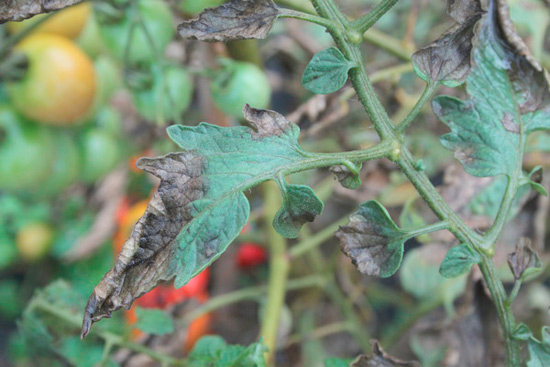
Late blight on tomatoes
Late blight on tomatoes – Azaka 80 ml/ha; Acticluster 300–400 ml/ha; Brionflo 100 SC 80 ml/ha; Keefol WP 250 g/ha; Daramun 80 ml/ha; Enervin SC 120 g/ha; Zoxis 250 SC 70–80 ml/ha; Equation Pro 0.04%; Captan 80 WG 150–190 g/ha; Copforce Extra 200 g/ha; Corsate 60 WG 20–30 g/ha; Orvego 70 ml/ha; Polyram DF 0.2%; Revus 250 SC 50 ml/ha; Cymbal Flow 50 ml/ha; Sphinx Extra 180 g/ha; Taegro 18.5–37.0 g/ha; Tazer 250 SC 80–100 ml/ha.
Early blight (Alternaria leaf spots) on tomatoes – Azaka 80 ml/ha; Dagonis 100 ml/ha; Zoxis 250 SC 70–80 ml/ha; Captan 80 WG 150–190 g/ha; Copforce Extra 200 g/ha; Ortiva Top SC 100 ml/ha; Polyram DF 0.2%; Prev-Gold 200–600 ml/ha; Reflect 125 EC 100 ml/ha; Sinstar 70–80 ml/ha; Taegro 18.5–37.0 g/ha; Tazer 250 SC 80–100 ml/ha.
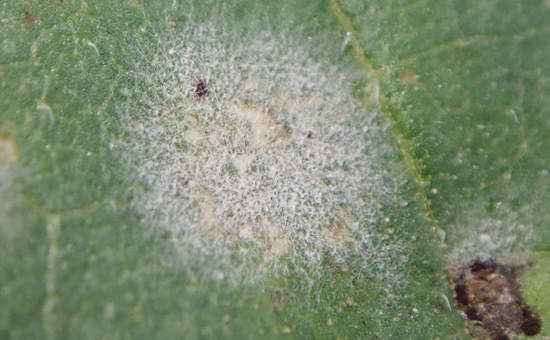
Powdery mildew on cucumbers
Powdery mildew on cucumbers – Vivando 20 ml/ha (0.02%); Dagonis 60 ml/ha; Domark 10 EC 50 ml/ha; Zoxis 250 EC 70 ml/ha; Collis SC 40–50 ml/ha; Legado 80 ml/ha; Limocide 800 ml/ha; Ortiva Top SC 100 ml/ha; Prev-Gold 160–600 ml/ha; Reflect 125 EC 100 ml/ha; Sivar 80 ml/ha; Sonata SC 500–1000 ml/ha; Topaz 100 EC 33.5–50 ml/ha; Trunfo 80 ml/ha; Phytosev 200 ml/ha; Fontelis SC 240 ml/ha; Cidely Top 100 ml/ha.
Downy mildew (in cucurbits) – Enervin SC 120 g/ha; Zoxis 250 SC 70–80 ml/ha; Equation Pro 40 g/ha; Infinito SC 120–160 ml/ha; Keefol WP 250 g/ha; Corsate 60 WG 20–30 g/ha; Prev-Gold 160–600 ml/ha; Revus 250 SC 60 ml/ha; Taegro 18.5–37.0 g/ha.
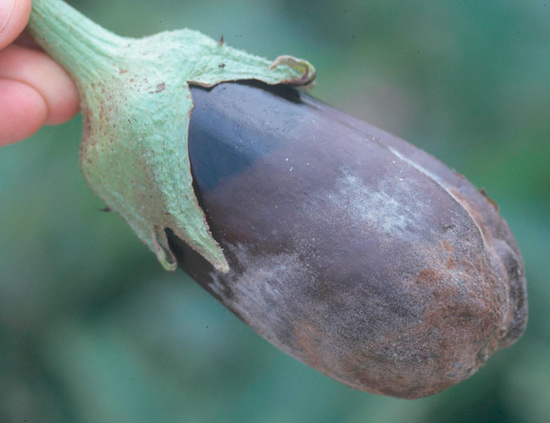
Powdery mildew on eggplant
Powdery mildew on pepper and eggplant – Vivando 30 ml/ha; Dagonis 60 ml/ha; Zoxis 250 EC 70 ml/ha; Ortiva Top SC 100 ml/ha; Prev-Gold 160–600 ml/ha; Reflect 125 EC 100 ml/ha; Systhane 20 EW 30–37.5 ml/ha; Systhane Ecozom EW 65–165 ml/ha; Sonata SC 500–1000 ml/ha; Taegro 18.5–37.0 g/ha; Tazer 250 SC 80–100 ml/ha; Thiovit Jet 80 WG 300 g/ha; Topaz 100 EC 35–50 ml/ha; Phytosev 200 ml/ha; Hercules 125 SC 50–75 ml/ha; Cidely Top 100 ml/ha.
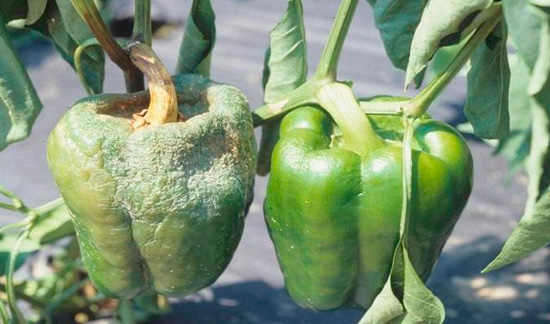
Pepper blight
Pepper blight – The areas intended for pepper should be well levelled so that water does not accumulate in individual spots. It is advisable to burn the patches with the first diseased plants together with the neighbouring healthy ones by watering with a 3% solution of copper sulphate or ammonium nitrate. They are then collected in bags and destroyed outside the crop. The remaining healthy plants are sprayed thoroughly, including the collar at the base of the stem. Registered plant protection products: Zoxis 250 SC 70–80 ml/ha; Taegro 18.5–37 g/ha; Tazer 250 SC 80–100 ml/ha. Corsate 60 WG 40 g/ha is not registered, but it can be successfully used against this disease.
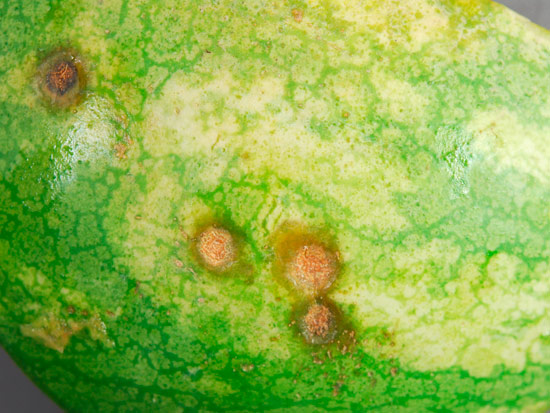
Anthracnose on watermelons
During this period anthracnose is often observed on watermelons and melons. Upon its appearance, treatment is carried out with: Bordeaux Mix 20 WP 375–500 g/ha; Kocide 2000 WG 100–155 g/ha; Cidely Top 100 ml/ha.
On carrots, celery and parsley, powdery mildew and leaf blight may be observed. Upon occurrence of powdery mildew, treatment is carried out with: Zoxis 250 SC 80–100 ml/ha; Kumulus 600 g/ha; Limocide 240 ml/ha; Ortiva Top SC 100 ml/ha; Reflect 125 EC 100 ml/ha; Signum 60 g/ha; Sonata SC 500–1000 ml/ha. Registered against leaf blight on carrots and celery is Bordeaux Mix 20 WP 375–500 g/ha.
On leek, rust appears, against which spraying is carried out with Zoxis 250 SC 80–100 ml/ha; Ortiva Top SC 100 ml/ha.
Under suitable conditions and “critical periods”, downy mildew develops on brassica crops. Control is carried out with Bordeaux Mix 20 WP 375–500 g/ha or Infinito SC 160 ml/ha.
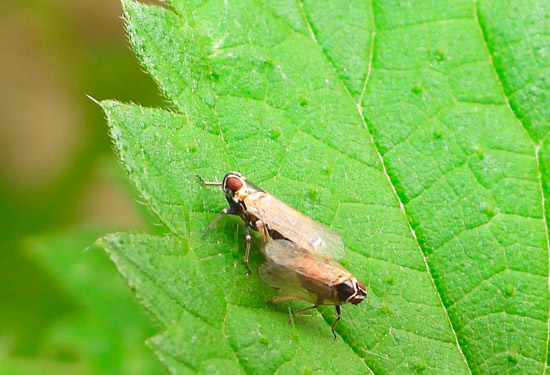
The leafhopper Hyalestes obsoletus
The flight of the leafhopper Hyalestes obsoletus continues, and with it the risk of new infections and expansion of the scale of diseased plants with stolbur in pepper, eggplant, tomatoes, celery and others. To control the vector, treatments are carried out with: Vaztak Nov 100 EC 10 ml/ha; Mageos 7 g/ha; Mospilan 20 SP 25 g/ha.

Spider mites
The pest complex is similar to that of the previous period, but the harmful activity of spider mites (on pepper, eggplant, tomatoes, cucurbits, leek, okra, celery, parsley and others) is stronger. Control of these pests is carried out by treatment with the following plant protection products: Apollo 50 SC 30–40 ml/ha; Bermectin 50–100 ml/ha; Akramite 480 SC 20–25 ml/ha; Vertimec 018 EC 60 ml/ha; Voliam Targo 063 SC 80 ml/ha; Zoom 11 SC 12.55–50 ml/ha; Requiem Prime 500–1000 ml/ha; Laota 15–100 ml/ha; Naturalis 100–200 ml/ha; Neem Azal T/S 0.3%; Nissorun 10 WP 75 g/ha; Danitron 5 SC 100–200 ml/ha; Flipper 1–2 l/ha; Floramite 240 SC 40 ml/ha; Shirudo 15 g/ha.
Registered plant protection products against aphids are: Azatin EC 100–150 ml/ha; Ampligo 150 ZC 40 ml/ha; Vaztak Nov 100 EC 30 ml/ha; Delmur 50 ml/ha; Closer 120 SC 20 ml/ha; Mavrik 2 F 20 ml/ha; Mospilan 20 SP 12.5 g/ha; Mospilan 20 SG 25 g/ha; Niimik Ten 390 ml/ha; Oikos 100–150 ml/ha; Sivanto Prime 45 ml/ha; Teppeki/Afinto 10 g/ha; Flipper 1–2 l/ha; Shirudo 15 g/ha.
Against thrips (vectors of tomato spotted wilt in tomatoes, pepper, eggplant, etc.) the following are applied: Azatin EC 100–150 ml/ha; Dicarzol 10 SP 556 g/ha; Exalt 200–240 ml/ha; Limocide 400–800 ml/ha; Niimik Ten 390 ml/ha; Oikos 100–150 ml/ha; Requiem Prime 500–1000 ml/ha; Sineis 480 SC 10–37.5 ml/ha; Naturalis 100–150 ml/ha; Flipper 1–2 l/ha.
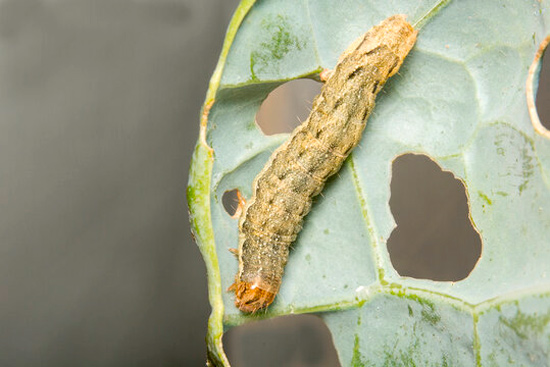
Cabbage moth
When growing tomatoes and pepper, the occurrence and damage caused by caterpillars of noctuid moths should be monitored. Against the caterpillars, treatments may be carried out with Avant 150 EC 25 ml/ha; Exalt 200–240 ml/ha; Voliam Targo 063 SC 80 ml/ha; Dipel 2X 100 g/ha; Rapax 100–200 ml/ha; Oikos 150 ml/ha; Niimik Ten 390 ml/ha.
Against the tomato leaf miner the following products can be used: Avant 150 EC 25 ml/ha; Alverde 240 SC 100 ml/ha; Altacor 35 WG 8–12 g/ha; Ampligo 150 ZC 40 ml/ha; Affirm 095 SG 150 g/ha; Voliam Targo 063 SC 80 ml/ha; Delmur 50 ml/ha; Exalt 200–240 ml/ha; Coragen 20 SC 14–20 ml/ha; Neem Azal T/S 0.3%; Niimik Ten 390 ml/ha; Oikos 150 ml/ha; Rapax 100–200 ml/ha; Sineis 480 SC 10–25 ml/ha. Often in the crops, simultaneous damage from several pests may be observed, in which case it is necessary to select an appropriate product with a broader spectrum of activity.
The harmful activity of the Colorado potato beetle on tomatoes and eggplant continues. Control is carried out with: Azatin EC 100–150 ml/ha; Altacor 35 WG 8–12 g/ha; Ampligo 150 ZC 0.03 l/ha; Vaztak Nov 100 EC 10 ml/ha; Mageos 8 g/ha; Meteor 60–70 g/ha; Niimik Ten 390 ml/ha; Oikos 100–150 ml/ha; Sineis 480 SC 5 ml/ha.
In brassica seedlings and already transplanted cabbage, monitoring is carried out for infestation by the large white butterfly, diamondback moth and flea beetles.
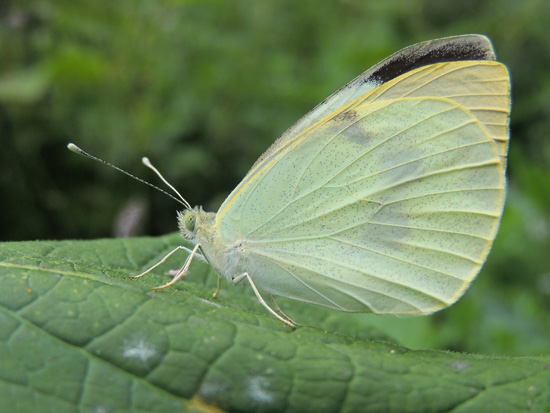
Large white butterfly
Against the large white butterfly, treatments are carried out with: Avant 150 EC 17 ml/ha; Altacor 35 WG 8–10 g/ha; Vaztak Nov 100 EC 10 ml/ha; Exalt 200 ml/ha; Mageos 7 g/ha; Meteor 60–70 ml/ha; Citrin Max/Cyperkill 500 EC/Cypert 500 EC/Poli 500 EC 5 ml/ha. Against the diamondback moth the following are registered: Avant 150 EC 17 ml/ha; Altacor 35 WG 8–10 g/ha; Vaztak Nov 100 EC 10 ml/ha; Exalt 200 ml/ha, and against flea beetles – Vaztak Nov 100 EC 7.5 ml/ha; Mageos 5 g/ha.
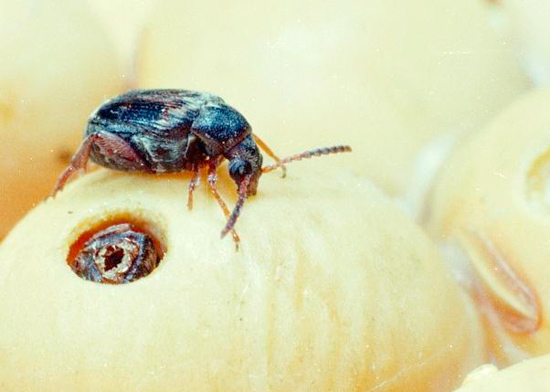
Bean weevil
When the pods start to yellow, the bean weevil begins to lay eggs on beans. Field control is effective when it is directed against the beetles, which requires treatments to be carried out at the correct time according to the maturity of the pods. Against the adults, three sprayings are carried out at 7-day intervals, using broad-spectrum contact insecticides such as Decis 100 EC 7.5–12.5 ml/ha, Vaztak Nov 100 EC 10 ml/ha.
Leaf miner fly on leek – control is effective when it is directed against the adult individuals. Three sprayings are carried out at 7–10 day intervals. Since there are no registered insecticides, pyrethroid products may be applied. When treating onion and brassica crops, an adjuvant is added to the pesticide solutions.
All requirements must be observed regarding application (registered plant protection products, quality of spraying, dosages, pre-harvest intervals), transport and storage of chemical plant protection products. Hygiene and sanitary standards for working with toxic substances must be observed. A treatment log must be kept in accordance with the requirements of the Bulgarian Food Safety Agency (BFSA).