

![MultipartFile resource [file_data]](/assets/img/articles/rettich-in-der-hand.jpg)
Seedling production
Care continues for the seedlings for medium-early field production of tomatoes, peppers, eggplants and cucumbers, which are to be transplanted at the beginning of the month. In case of prolonged and sustained warming, the facilities in which the seedlings are grown must be shaded. The premises must be ventilated regularly so that air humidity does not increase, as this predisposes to attacks by fungal diseases, aphids, etc. We again remind that the difference between day and night temperature in the seedling compartment must not exceed 6oC – 8oC, in order to avoid condensation on the plants and the creation of conditions for “false damping-off”. If during the period there are temperature depressions, it is possible for „true damping-off” to appear. The first diseased plants must be collected in a bag and destroyed outside the premises. The places under them are disinfected by watering with a 2% solution of copper sulphate or ammonium nitrate (3-4 l/m2). The remaining plants are treated with 0.12% Infinito SC at 25-50 ml/plant or propamocarb 722 at 5 ml/m2.
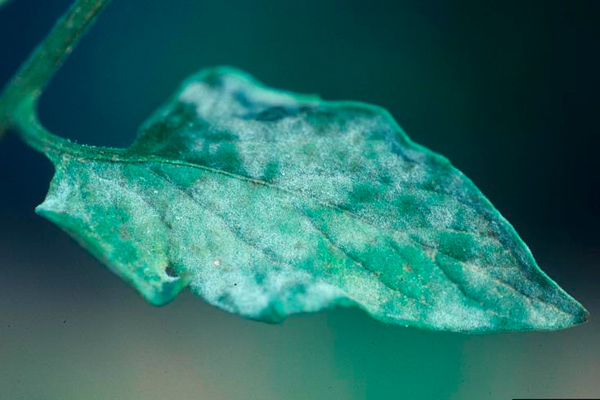
Powdery mildew on tomatoes
Attacks by leaf spot diseases are possible – early blight, grey mould and leaf mould on tomatoes and powdery mildew and downy mildew on cucumbers. Grey mould, early blight, leaf mould and downy mildew develop at high air humidity, while powdery mildew – at low humidity. An optimal temperature-humidity regime must be maintained in the seedling premises. Upon appearance of early blight (Alternaria), treatment is carried out with: Azaka 80 ml/ha; Dagonis 100 ml/ha; Zoxis 250 SC 70-80 ml/ha; Kopfors Extra 200 g/ha; Ortiva Top SC 100 ml/ha; Polyram DF 0.2%; Prev-Gold 200-600 ml/ha; Sinstar 70-80 ml/ha; Taegro 18.5-37.0 g/ha; Tazer 250 SC 80-200 ml/ha. Upon appearance of grey mould (Botrytis), apply: Avalon 200 ml/ha; Geox WG 50 g/ha; Erune 40 SC 200 ml/ha; Pretil 200 ml/ha; Prolectus 50 WG 80-120 g/ha; Signum 100-150 g/ha; Switch 62.5 WG 100 g/ha; Folpetis 50 SC 250 ml/ha; Fontelis SC 240 ml/ha. For the control of leaf mould, the following plant protection products are registered: Eminent 125 ME 40-60 ml/ha; Zoxis 250 SC 70-80 ml/ha; Ortiva Top SC 100 ml/ha; Signum 100-150 g/ha; Sinstar 70-80 ml/ha; Folpetis 50 SC 250 ml/ha. Against downy mildew on cucumbers, treat with Enervin SC 120 g/ha; Zoxis 250 SC 70-80 ml/ha; Equation Pro 40 g/ha; Infinito SC 120-160 ml/ha; Corsate 60 WG 20-30 g/ha; Prev-Gold 160-600 ml/ha; Taegro 18.5-37.0 g/ha, and against powdery mildew, the following are registered: Vivando 20 ml/ha (0.02%); Dagonis 60 ml/ha; Domark 10 EC 50 ml/ha; Zoxis 250 EC 70 ml/ha; Collis SC 40-50 ml/ha; Legado 80 ml/ha; Ortiva Top SC 100 ml/ha; Sivar 80 ml/ha; Sonata SC 500-1000 ml/ha; Trunfo 80 ml/ha; Phytosev 200 ml/ha; Fontelis SC 240 ml/ha.
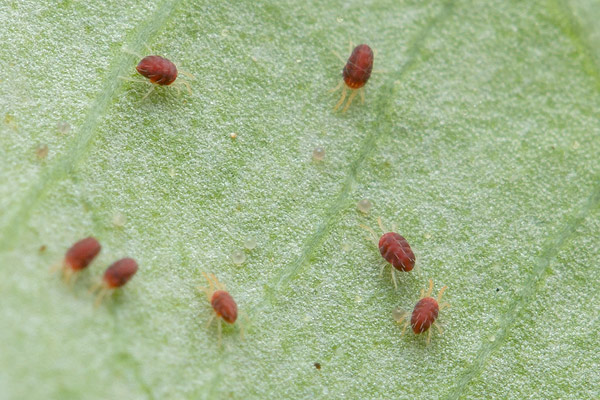
two-spotted spider mite
Pests on seedlings
Among the pests on seedlings during this period, the following may occur: greenhouse whitefly, aphids, thrips, tomato leaf miner, mites. For monitoring and reducing population density, sticky traps are placed – yellow (for whitefly and aphids), light blue (for thrips) and black (for the tomato leaf miner). If necessary, treatments are also carried out: against greenhouse whitefly, spray with Abanto 75 ml/ha; Azatin EC 100-150 ml/ha; Brai 50-112.5 ml/ha; Limocid 400 ml/ha; Closer 120 SC 20-40 ml/ha; Krisant EC 75 ml/ha; Natur Breaker 75 ml/ha; Niimik Ten 390 ml/ha; Oikos 100-150 ml/ha; OroCid Plus 80-800 ml/ha; Pyregard 75 ml/ha; Prev-Gold 160-600 ml/ha; Requiem Prime 500-1000 ml/ha; Sivanto Prime 56 ml/ha; Naturalis 75-100 ml/ha; against aphids, apply Azatin EC 100-150 ml/ha; Ampligo 150 ZC 40 ml/ha; Delmur 50 ml/ha; Deltagri 30-50 ml/ha; Closer 120 SC 20 ml/ha; Mavrik 2 F 20 ml/ha; Niimik Ten 390 ml/ha; Oikos 100-150 ml/ha; Sivanto Prime 45 ml/ha; Tepeki/Afinto 10 g/ha; Flipper 1-2 l/ha; Shirudo 15 g/ha. Against thrips, the following are effective: Azatin EC 100-150 ml/ha; Dicarzol 10 SP 556 g/ha; Exalt 200-240 ml/ha; Limocid 800 ml/ha; Niimik Ten 390 ml/ha; Oikos 100-150 ml/ha; Requiem Prime 500-1000 ml/ha; Sineis 480 SC – 10-37.5 ml/ha, Naturalis 100-150 ml/ha. Upon detection of two-spotted spider mite, apply Apollo 50 SC 30-40 ml/ha; Bermektin 50-100 ml/ha; Akramite 480 SC 20-25 ml/ha; Apache EW 30-100 ml/ha; Butik 30-100 ml/ha; Valmek 15-100 ml/ha; Vertimec 018 EC 60 ml/ha; Voliam Targo 063 SC 80 ml/ha; Zoom 11 SC 12.55-50 ml/ha; Requiem Prime 500-1000 ml/ha; Laota 15-100 ml/ha; Naturalis 100-200 ml/ha; Nim Azal T/S 0.3%; Nissorun 10 WP 75 g/ha; Danitron 5 SC 100 ml/ha; Flipper 1-2 l/ha; Floramite 240 SC 40 ml/ha; Shirudo 15 g/ha, and against tomato leaf miner – Avant 150 EC 25 ml/ha; Alverde 240 SC 100 ml/ha; Altacor 35 WG 8-12 g/ha; Ampligo 150 ZC 40 ml/ha; Affirm 095 SG 150 g/ha; Voliam Targo 063 SC 80 ml/ha; Delmur 50 ml/ha; Exalt 200-240 ml/ha; Coragen 20 SC 14-20 ml/ha; Nim Azal T/S 0.3%; Niimik Ten 390 ml/ha; Oikos 150 ml/ha; Rapax SBS 100-200 ml/ha; Sineis 480 SC 10-25 ml/ha.
One week before moving the seedlings outdoors, they are sprayed preventively with a broader-spectrum insecticide such as Deltagri 30-50 ml/ha; Closer 120 SC 20 ml/ha; Sineis 480 SC 10-25 ml/ha and the fungicides Polyram DF 0.2% or Signum 0.1%.
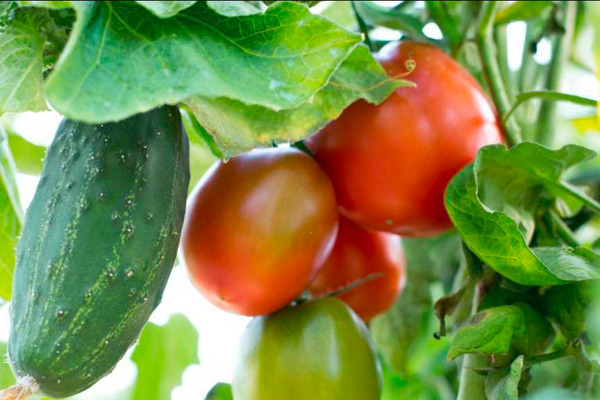
Greenhouse production
The cultivated crops are at the stage of mass fruiting. In unheated greenhouses, the first harvests are beginning, and in heated ones, mass harvests are carried out – 2-3 times a week. It is necessary to select very carefully plant protection products – with a shorter pre-harvest interval. The pre-harvest intervals must be strictly observed.
Due to the increase in outside temperatures and the intensity of solar radiation, shading must be provided where it has not yet been done. For this purpose, a lime solution or ready-made mixtures offered in agro-pharmacies are used. To maintain air humidity in the facilities, the paths must be sprinkled with water several times a day. The crops must be inspected daily, or at least twice a week, for attacks by diseases and pests. Coloured sticky traps placed at planting at the level of the plant tops can be used as a source of information. During vegetation, they follow the growth of the plants. Leaves, petioles and fruits with disease spots, colonies of aphids, clusters of eggs, larvae, mines, etc. are collected, removed from the greenhouse and destroyed.
On the plants in greenhouses, the diseases indicated for the seedlings can be observed:
On tomatoes these are: early blight (Alternaria), grey mould (Botrytis), leaf mould. In case of attack, the crops are treated with plant protection products indicated for the seedlings. Seeds of tomato varieties resistant to leaf mould are available on the market. If spots are still detected, the plants are sprayed with the specified products.
On cucumbers: The main diseases that can damage cucumbers are powdery mildew and downy mildew. Many of the cucumber varieties grown in greenhouses are resistant to powdery mildew. In susceptible ones, after appearance, treatment is carried out with the fungicides recommended for seedlings. Providing heating in the early morning hours limits attacks by downy mildew. When suitable conditions for occurrence are present, spraying is carried out every 7-10 days with the products indicated for seedlings. There are already cucumber varieties resistant to this disease.
Pests
Greenhouse whitefly, aphids, thrips, tomato leaf miner and two-spotted spider mite cause damage. The products indicated for seedlings may be used.
For the control of root-knot nematodes, the following may be applied through the drip irrigation system: Vidate 10 L 1 l/ha; Allready 1 l/ha; Velum Prime 37.5-62.5 ml/ha; Tervigo 500 ml/ha.

Field production
Transplanting of medium-early tomatoes, peppers, eggplants and cucumbers is forthcoming. Against mole crickets in tomatoes and peppers, Belem 0.8 MG/Colombo 0.8 MG can be applied at 1.2 kg/ha at transplanting/sowing.
In the field, early crops of cabbage, onion, garlic, potatoes, peas, fava beans and beans are at a stage of intensive growth and development. Upon appearance of downy mildew on cabbage, onion and peas, treatments are carried out with appropriate plant protection products – Zoxis 250 SC 80-100 ml/ha; Infinito SC 160 ml/ha; Corsate 60 WG 30-40 g/ha; Orvego 70 ml/ha; Signum 150 g/ha; Tazer 250 SC 80-100 ml/ha. On potatoes, attacks by early blight and late blight are possible. Against late blight, treat with: Banjo 30-40 ml/ha; Banjo Forte 100 ml/ha; Vitene Triplo R 400-450 g/ha; Vitra 50 WP 150 g/ha; Daramun 80 ml/ha; Dimix 500 SC 30-36 ml/ha; Diflunova 100 ml/ha; Enervin SC 120 g/ha; Equation Pro 40 g/ha; Infinito SC 120-160 ml/ha; Kopfors Extra 200 g/ha; Corsate 60 WG 15-20 g/ha; Manamid 100 SC 80 ml/ha; Polyram DF 180-200 g/ha; Ranman Twin Pack 20 ml/ha + 15 ml/ha adjuvant; Revus 250 SC 50 ml/ha; Rival Duo 250 ml/ha; Cymbal Flow 50 ml/ha; Taegro 18.5-37.0 g/ha; Champion WP 150 g/ha. For the control of early blight, the following plant protection products are registered: Vitene Triplo R 400-450 g/ha; Polyram DF 180-200 g/ha; Taegro 18.5-37.0 g/ha. On already transplanted early tomatoes, monitor for attacks by early blight and late blight, and in case of intensive rainfall – also by bacterial diseases. Against the first two, treat with the plant protection products indicated for seedlings and greenhouse production, and against bacterial leaf spots, apply: Cuproxat FL 0.3%; Taegro 18.5-37.0 g/ha; Funguran OH 50 WP 0.3%.
Control continues against the leaf miner fly in allium crops and the cabbage fly in cabbage. Control of the indicated flies is directed against the adult forms. The following are effective: Deka EC/Desha EC/Dena EC/Poleci/Decis 50 ml/ha. Two treatments are carried out at an interval of 7 to 10 days. Against cabbage fly, Force 1.5 G 300-500 g/ha may be applied before or during transplanting. Against pea aphid, treatment can be carried out with Vaztak New 100 EC 12.5 ml/ha; Sumi Alpha 5 EC/Sumicid 5 EC/Oasis 5 EC 20 ml/ha. Effective against pea weevil are Sumi Alpha 5 EC/Sumicid 5 EC/Oasis 5 EC 25 ml/ha. The first spraying is during flowering, therefore measures must be taken to protect bees. Aphids and pea weevil are often observed simultaneously in the crops.
Leafy vegetables such as lettuce and spinach, as well as onion and garlic for green bunching and radishes offered for fresh consumption, should be treated only as a last resort, and the pre-harvest intervals must be strictly observed. When spraying allium and cabbage crops, an adjuvant must be added to the pesticide solutions.
All requirements for the application, storage and transport of pesticides, as well as the pre-harvest intervals indicated on the labels, must be observed. A logbook for the treatment of crops must be kept in accordance with the requirements of the Bulgarian Food Safety Agency (BFSA).