

![MultipartFile resource [file_data]](/assets/img/articles/aphididae.jpg)
Aphids (fam. Aphididae)
As a result of their feeding, they cause chlorotic spots and leaf deformations, stunting and wilting of the plants. They contaminate the leaf surface with the “honeydew” excreted during feeding. Sooty mould fungi develop on it, which reduce the photosynthetic surface. In addition to the direct damage they cause to the plants, aphids also transmit certain dangerous viruses.
Control
Upon detection of the first specimens in the seedlings, treatment with PPP shall be carried out; The final treatment is conducted immediately before planting at the permanent site; Destruction of the weed vegetation in and around the beds, which serves as a reservoir for preservation and a source of viral infection;
Approved aphicides: Azatin EC 100-150 ml/da; Ampligo 150 SC 40 ml/da; Delmur 50 ml/da; Deltagri 30-50 ml/da; Closer 120 SC 20 ml/da; Mavrik 2 F 20 ml/da; Neemik Ten 390 ml/da; Oikos 100-150 ml/da; Sivanto Prime 45 ml/da; Teppeki/Afinto 10 g/da; Flipper 1-2 l/da; Sivanto 15 g/da.
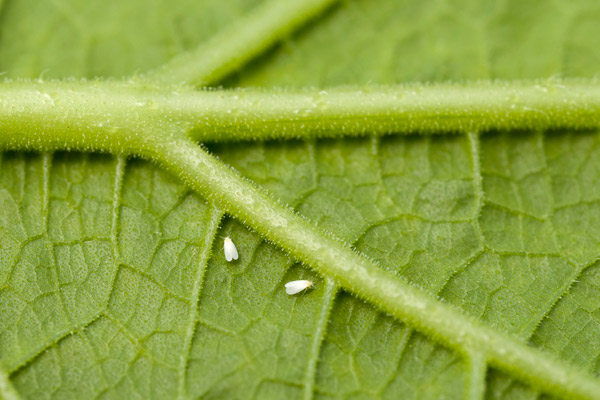
Greenhouse whitefly (Trialeurodes vaporariorum)
The larvae, nymphs and adults cause damage. They suck sap mainly from the lower side of the leaves of the plants. During feeding they excrete “honeydew”, as a result of which the leaves become sticky. Sooty mould fungi develop on them, which reduce the photosynthetic surface. Adult whiteflies are active at night, when they fly over short distances. In addition to direct damage, they also transmit certain dangerous viruses.
Control
To monitor the occurrence and density of the whitefly, yellow sticky traps shall be used; At low density in greenhouses, the biological control agent Encarsia formosa may be introduced; Upon appearance of the first specimens, treatment with PPP shall be carried out;
Approved PPP: Abanto 75 ml/da; Azatin EC 100-150 ml/da; Brai 50-112.5 ml/da; Limocid 400 ml/da; Closer 120 SC 20-40 ml/da; Chrysant EC 75 ml/da; Nature Breaker 75 ml/da; Neemik Ten 390 ml/da; Oikos 100-150 ml/da; Orocid Plus 80-800 ml/da; Pyregard 75 ml/da; Prev-Gold 160-600 ml/da; Requiem Prime 500-1000 ml/da; Sivanto Prime 56 ml/da; Naturalis 75-100 ml/da.
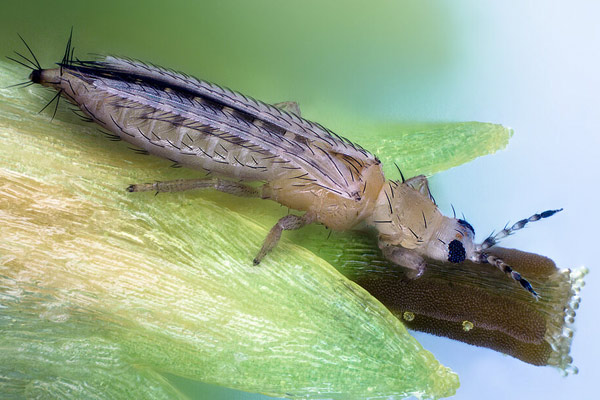
Thrips: onion thrips and western flower thrips (Thrips tabaci; Frankliniella occidentalis)
On the infested plant organs (leaves, petioles, flowers and fruits) small whitish spots with dark specks appear, which are the pest’s excrements. At higher population density the spots merge. The generative organs of plants attacked in the early stages of their development dry up and fall off. Onion thrips is found mainly on the leaves, less frequently on the flowers. Favourable conditions for its development are high temperatures and low air humidity. Western flower thrips attacks mainly the flowers. Thrips are vectors of the tomato spotted wilt virus (bronzing virus).
Control
For monitoring, blue sticky traps shall be used, which, when present in larger numbers, reduce the pest density; Upon appearance, treatment with PPP shall be carried out.
Approved PPP: Azatin EC 100-150 ml/da; Dicarzol 10 WP 556 g/da; Exalt 200-240 ml/da; Limocid 800 ml/da; Neemik Ten 390 ml/da; Oikos 100-150 ml/da; Requiem Prime 500-1000 ml/da; Sineis 480 SC 10-37.5 ml/da; Naturalis 75-100 ml/da.
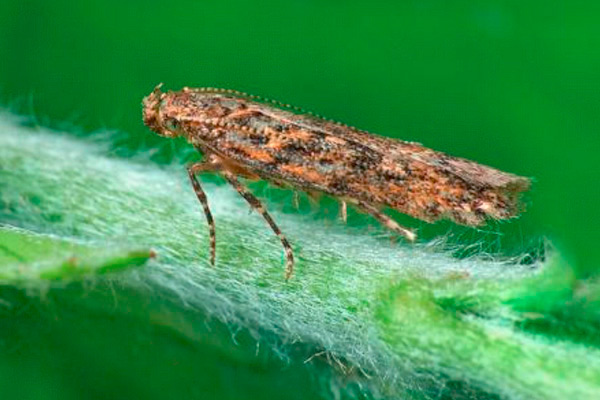
Tomato leafminer (Tuta absoluta)
The moth forms short and wide mines on the leaves, in which caterpillars and excrements can be seen, located at one end. Damage to the fruits provides an opportunity for the development of diseases causing their rotting. The moths of the pest are active at night and hide among the leaves during the day. The damage is caused by the caterpillars. They prefer leaves the most, but also attack the fruits.
Control
Use of pheromone traps and black sticky boards for timely detection of the pest, reduction of its density and implementation of adequate control measures. At low density, one of the biological control agents Macrolophus pygmaeus or Nesidiocoris tenuis may be introduced. Upon detection of the first specimens, treatment with PPP shall be carried out.
Approved PPP: Avant 150 EC 25 ml/da; Alverde 240 SC 100 ml/da; Altacor 35 WG 8-12 g/da; Ampligo 150 SC 40 ml/da; Affirm 095 SG 150 g/da; Voliam Targo 063 SC 80 ml/da; Delmur 50 ml/da; Exalt 200-240 ml/da; Coragen 20 SC 14-20 ml/da; Neemik Ten 390 ml/da; Oikos 150 ml/da; Rapax SBS 100-200 ml/da; Sineis 480 SC 10-25 ml/da.