

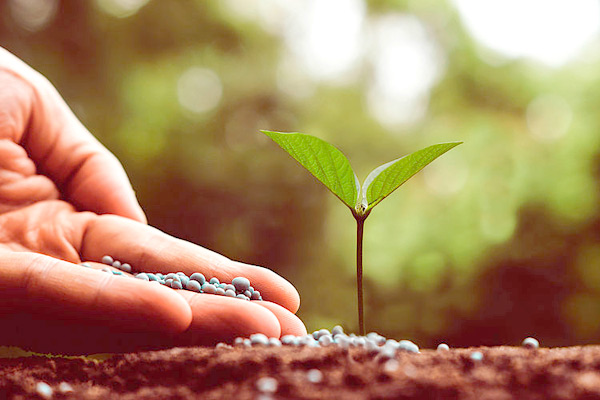
Mineral substances constitute on average about 5% of the total biomass of fruit crops. Despite their low content, they play an important role in all vital processes, therefore insufficient or excessive supply of fruit crops with them causes serious disturbances in growth, productivity and fruit quality. These disturbances, however, can be controlled and corrected by the application of fertilizers. This is why fertilization is one of the effective means for maintaining normal growth and high productivity of fruit plantations.
Fruit crops require balanced nutrition, consistent with their phenological stage of development and the size of the yield. It is necessary to supply precisely defined quantities of the deficient nutrients, since each element exhibits its highest efficiency when the other nutrient elements are present in sufficient quantities.
For their growth and normal development, fruit crops require macronutrients: carbon (C), hydrogen (H), oxygen (O), nitrogen (N), phosphorus (P), sulfur (S), potassium (K), calcium (Ca), magnesium (Mg), as well as micronutrients: iron (Fe), manganese (Mn), copper (Cu), zinc (Zn), molybdenum (Mo) and boron (B).
For information on the status and role of nutrients in fruit crops, on fertilizer rates and timing, on methods of application and suitable fertilizer forms, read issue 6/2020 of the journal "Plant Protection"