

During the first half of the first ten-day period of July, the development of agricultural crops will proceed under above-normal thermal conditions. At the beginning of the month, in most of the country, with the exception of the extreme northwestern (Buzovets agrometeorological station) and southwestern regions (Sandanski agrometeorological station), the vegetation of spring crops will take place under conditions of good soil moisture reserves in the 50 cm and 100 cm layers (over 75-80% of field capacity) – as a result of the significant, above-normal June precipitation, which in places exceeded 90-100 l/m² (Montana – 96 l/m², Veliko Tarnovo – 133 l/m², Ruse – 90 l/m², Silistra – 136 l/m², Dobrich – 105 l/m², Varna – 103 l/m², Kazanlak – 104 l/m², Haskovo – 92 l/m², Kardzhali – 173 l/m², Stara Zagora – 115 l/m²).
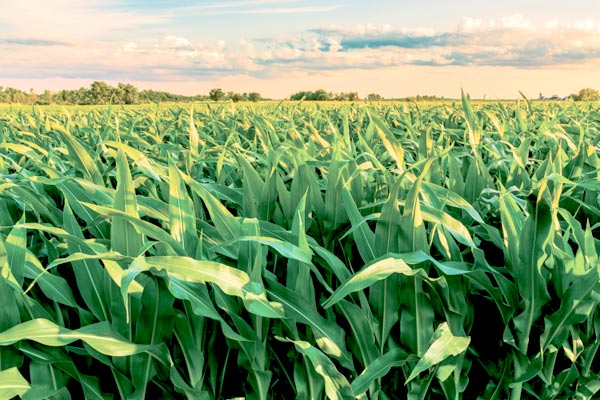
During the first ten-day period, depending on the earliness of maize hybrids, various phases will occur: leaf formation, tasseling, flowering of the tassel, and silking. In sunflower, in the field areas the flowering phase will prevail, while in stands in the higher fields – inflorescence formation. In grain legumes (beans, soybeans), pod formation will be observed.
During the second and the beginning of the third ten-day period, the development of agricultural crops will proceed at a moderate pace, at temperatures around and slightly below the normal for the period. The forecast frequent precipitation during this period will have a beneficial effect on spring crops that are in the reproductive stage of their development, when water demand increases sharply (in maize, during the period from tasseling to milk ripeness, the daily water consumption reaches 6-7 m³/decare). At the beginning of the third ten-day period of July, part of the early maize hybrids in the field areas will enter the milk ripeness stage. In sunflower, seed formation and filling will take place. At the end of the month, in stands sown within the agrotechnical time frame, in places in the Danube Plain and in the southern regions, the beginning of the ripening phase will be observed.
During the last week of July, agrometeorological conditions will be determined by relatively dry, warm, and hot weather, which will necessitate the application of an appropriate irrigation regime for late maize hybrids and vegetable crops from late field production. The meteorological conditions during this period will limit the development of a number of fungal diseases, with the exception of powdery mildews on vegetable crops and fruit trees, and powdery mildew (oidium) on vines.
In July, plant protection spraying in fruit crops against the second generation of codling moths, aphids, and mites should not be underestimated. More suitable conditions for carrying out plant protection treatments will occur on most days of the first and third ten-day periods, during the cooler hours of the day.
During the hottest periods of July, with maximum temperatures up to 38-39°C, the risk of fires during grain harvest will increase.
Source: NIMH