

The average monthly temperature in June is between 18-22℃ for the lowland areas and 16-19℃ for the high fields. Precipitation during this month is in the range of 60 to 90 litres per square metre.
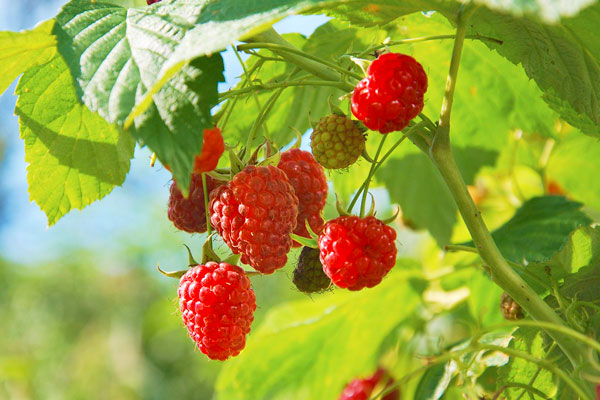
In June, cherries, sour cherries and strawberries ripen massively, as well as early varieties of raspberries, apricots, peaches, pears and apples. The measures for protecting the fruit crop and the trees continue.
In June, in the case of the apple, spraying against scab must continue, as the risk of primary infections still exists. The release of ascospores usually continues for about two months, counting from the beginning of their maturation, which under the conditions of our country occurs at bud burst. This year, in the main apple-producing regions, this period began at the end of March and the beginning of April for most varieties. In addition to scab, the June sprays are also aimed at powdery mildew. Usually, during this month, two or three sprays are carried out against the two fungal diseases, depending on the conditions for development of the pathogens and the duration of action of the fungicides. For control of scab, one of the following fungicides is used: Delan 700 WDG - 50 g/da, Delan PRO - 250 ml/da, Decibel Max - 30 g/da, Dithane DG - 200 g/da, Dithane M 45 - 200 g/da, Difcor 250 EC - 15 ml/da, Embralia – 150 ml/da, Indar 5 EW – 100 ml/da, Karamat – 200 ml/da, Kuimera WG – 20 g/da, Luna Care WG – 300 g/da, Password 25 WG – 50 g/da, Polyram DF – 0.2%, Sancozeb 80 WP – 200 g/da, Syllit 544 SC – 125 ml/da, Scab 80 WG Captan – 188 g/da, Score 250 EC – 15–20 ml/da, Sugoby WG – 20 g/da, Thiovit Jet 80 WG – 600 g/da, Faban – 120 ml/da, Flint Max 75 WG – 0.02%, Folpan 80 WDG – 0.15%, Fontelis SC – 75 ml/da, Heliosulfur C – 150–500 ml/da, Chorus 50 WG – 30–50 g/da, Shavit F 72 WDG – 0.2%, Shardif 25 EC – 20 ml/da, Difenzon 25 EC – 20 ml/da, Dishom 25 EC – 20 ml/da.
For control of powdery mildew one of the following fungicides is used: Bayfidan 250 EC – 15 ml/da, Bellis – 80 g/da, Embralia – 150 ml/da, Kozavet DF – 750 g/da, Kuimera WG – 20 g/da, Kumulus DF – 600-900 g/da, Luna Care – 300 g/da, Systhane 20 EW – 28-42 ml/da, Systhane Ecozome EW – 60-185 ml/da, Score 250 EC – 15-20 ml/da, Solfo 80 WG – 750 g/da, Thiovit Jet 80 WG – 600 g/da, Topaz 100 EC – 25-50 ml/da, Topsin M 70 WDG – 0.12%, Flint Max 75 WG – 0.02%, Heliosulfur C – 150-500 ml/da, Shavit F 72 WDG – 0.2%.
For varieties that are susceptible to scab and powdery mildew it is advisable to use fungicides that are approved for control of both diseases, such as: Embralia – 150 ml/da, Kuimera – 20 g/da, Kumulus DF – 600-900 g/da, Luna Care – 300 g/da, Score 250 EC – 15-20 ml/da, Thiovit Jet 80 WG – 600 g/da, Flint Max 75 WG – 0.02%, Heliosulfur C – 150-500 ml/da, Shavit F 72 WDG – 0.2%. At high temperatures, do not spray with sulfur-containing fungicides, which may cause scorching in some varieties.
To prevent the occurrence of resistance of the fungus causing scab (Venturia inaequalis/, it is best to alternate fungicides with different modes of action on the pathogen or to use fungicide mixtures. Thus, for example, fungicides with active substance difenoconazole (Score 250 EC, Difcor 250 EC, Shardif 25 EC, Dishon 25 EC) should be alternated with fungicides based on kresoxim-methyl (Sugoby) or cyprodinil (Chorus 50 WG), as well as with fungicides based on dodine (Syllit 40 SC) or with Scab with active substance captan.
For varieties highly susceptible to powdery mildew – Jonathan, Jonafree, Moira and others, green pruning must continue to remove the infected shoots.
In June, sprays are also carried out against codling moth, San Jose scale and aphids. Sprays against pests are combined with those against diseases. For control of codling moth, one of the following insecticides is added to the fungicide solution: Avant 150 EC - 33.3 ml/da, Affirm 095 SC - 300 g/da plus 0.02% adjuvant Break-Thru, Aficar 100 EC - 30 ml/da, Affirm Opti - 200 g/da, Voliam Targo 063 SC - 75 ml/da, Delegate 250 WG - 30 g/da, Decis 100 EC - 7.5-12.5 ml/da, Deka EC/Desha EC/Dena EC/Poleci/Decision - 30 ml/da, Dukat 25 EC – 30 ml/da, Efcymertrin 10 EC/Cyper 10 EC – 30 ml/da, Imidan 50 WG – 150 g/da, Calypso 480 SC – 20-25 ml/da, Coragen 20 SC – 16-30 ml/da, Meteor – 0.06%, Proteus O-TEC – 0.05-0.06%, Sineis 480 SC – 30-43.7 ml/da, Sumi Alpha 5 EC – 0.02%, Harpun – 100 ml/da, Cyclon 10 EC – 30 ml/da. Of the listed insecticides, Affirm 095 SC - 300 g/da plus 0.02% adjuvant Break-Thru, Aficar 100 EC - 30 ml/da, Affirm Opti - 200 g/da, Voliam Targo 063 SC - 75 ml/da, Delegate 250 WG - 30 g/da, Dukat 25 EC – 30 ml/da, Efcymertrin 10 EC – 30 ml/da, Calypso 480 SC – 20-25 ml/da, Coragen 20 SC – 16-30 ml/da, Sineis 480 SC – 30-43.7 ml/da, Sumi Alpha 5 EC – 0.02%, Cyclon 10 EC – 30 ml/da are also effective against leaf-mining moths.
For control of codling moth, the bioinsecticides Carpovirusin – 100 ml/da, Madex TOP – 10 ml/da and Madex TWIN – 10 ml/da can also be used; they are applied at mass flight and more precisely before egg hatching.
For control of San Jose scale, the following insecticides are registered: Brai - 28-50 ml/da, 0.03%, Deka EC /Desha EC/Dena EC/Poleci/Decision – 50-75 ml/da, Dursban 4 EC – 150-187 ml/da, Closer 120 SC – 40 ml/da, Meteor - 90 ml/da, Mulligan – 30-50 ml/da, Proximo – 28-70 ml/da, Harpun – 30 ml/da.
In June, the population density of the European red mite usually increases and when the economic threshold of harmfulness is reached, spraying must be carried out. One of the following acaricides is used: Apache EW – 100 ml/da, Bermectin – 60-96 ml/da, Valmec EC – 60-96 ml/da, Vertimec 018 EC - 100 ml/da, Voliam Targo 063 SC – 75 ml/da, Danitron 5 SC – 100-200 ml/da, Zoom 11 SC – 25-50 ml/da, Laota - 60-96 ml/da, Milbeknock – 25 g/da, Naturalis SC - 100-150 ml/da, Nealta SC – 100 ml/da, Nissorun 10 WP – 75 g/da.
For the pear spraying must continue against scab, white and brown leaf spots. For their control, one of the fungicides listed for control of apple scab is used. For control of pear psylla, one of the following insecticides is added to the fungicide solution: Bermectin – 37.5–120 ml/da, Vaztak New 100 EC – 20 ml/da, Valmec – 37.5–120 ml/da, Deka EC/Dena EC/Poleci/Decision – 75 ml/da, Delegate 250 WG – 30 g/da, Decis 100 EC – 12.25 ml/da, Laota – 37.5-120 ml/da, Meteor – 90 ml/da, Movento 100 SC – 0.12-0.15%, Naturalis -100-200 ml/da, Sineis 480 SC – 30-43.7 ml/da, Sumi Alpha/Sumicidin 5 EC/Oasis 5 EC – 0.03%, Harpun – 100 ml/da.
To protect pear fruits from worm damage, one of the insecticides listed for control of codling moth is used.
For the quince spraying continues against brown rot and fruit worms. For control of brown rot the effective fungicides are: Captan 80 WP – 150-180 g/da, Karamat 2.5 EW – 200 ml/da, Scab 80 WG Captan – 188 g/da, Chorus 50 WG – 45-50 g/da, and against fruit worms one of the insecticides listed for control of codling moth.
In June, measures to protect pear, quince and apple from fire blight continue. To limit damage, sanitary pruning is carried out to remove infected branches and shoots (cut 30-40 centimetres below the infection site), after which the wounds are coated with oil paint to which copper-containing products such as Bordeaux Mix 20 WP, Bordeaux mixture, Funguran OH 50 WP, Champion WP/Champ 50 WP/Makk 50 WP are added. Pruning tools are disinfected after each cut with denatured alcohol or bleach diluted with water at a ratio of 1:10. In addition to pruning, to protect the trees from infection, sprays are carried out with:
Bordeaux mixture – 1%, Funguran OH 50 WP – 0.15%, Champion WP/Champ 50 WP/Makk 50 WP – 0.15%, Cosayde 2000 WG – 0.155-0.68 kg/da, Serenade ASO SC – 400-800 ml/da, the growth regulator Regalis Plus can also be used, but not during the first 3-4 years after establishment of the orchard. Under favourable conditions for disease development – susceptible varieties, cool and humid weather, as well as the presence of infection that was not limited in May, preventive sprays are carried out at 5-7 day intervals.
At the beginning of June, harvesting of early-ripening cherry varieties usually begins, and no sprays are carried out on them. During harvesting, all fruits must be picked in order to minimise the overwintering infection of cherry fruit fly. In addition, during harvest it is easy to remove and take out of the orchard all fruits infected with brown rot.
For medium- and late-ripening cherry varieties and sour cherries the sprays at the beginning of June are aimed at control of Cylindrosporium leaf spot (white rust), brown rot and cherry fruit fly. For control of Cylindrosporium leaf spot (white rust) one of the following fungicides is used:
Karamat 2.5 EW – 300 ml/da, Signum - 30 g/da, Score 250 EC – 30 ml/da, Syllit 40 SC – 150 ml/da, Syllit 544 SC – 125 ml/da, Delan 700 WG - 0.05% and Flint Max 75 WG - 30 g/da. Of the listed fungicides, Karamat 2.5 EW - 300 ml/da and Signum – 65-70 g/da are also effective against brown rot.
For control of cherry fruit fly, one of the insecticides authorised for use against this pest is added to the fungicide solution: Decis 100 EC – 10-17.5 ml/da, Imidan 50 WG – 150 g/da, Calypso 480 SC – 20 ml/da, Karate Zeon 5 CS – 15 ml/da, Naturalis – 100-200 ml/da.
Young, non-bearing cherry and sour cherry trees are sprayed against aphids. Effective insecticides against them are: Decis 100 EC – 12.25 ml/da, Mospilan 20 SG – 25 g/da, Closer 120 SC – 20 ml/da, Lamadex Extra – 40-60 g/da, Teppeki – 14 g/da.
For the plum, during this period spraying continues against brown rot, rust, plum fruit moth and common plum scale. For control of brown rot, spray with one of the following fungicides: Difcor 250 EC - 20 ml/da, Indar 5 EW – 150 ml/da, Captan 80 WG - 150-180 g/da, Karamat 2.5 EW – 300 ml/da, Luna Experience – 50 ml/da, Password 25 WG – 50 g/da, Signum – 30 g/da, Systhane 20 EW - 12.5–30 ml/da, Chorus 50 WG – 0.045%. For control of rust and red leaf spot on plum, Indar 5 EW – 150 ml/da, and Karamat 2.5 EW – 300 ml/da are approved.
Effective insecticides against plum fruit moth are: Delegate 250 WG – 100-120 ml/da, Decis 100 EC - 7.5-17.5 ml/da, Coragen 20 SC – 16-30 ml/da, For control of common plum scale the following are recommended: Movento 100 SC – 0.075-0.1% or Proximo – 28-70 ml/da.
For the peach spraying continues against powdery mildew, shot-hole disease, brown rot, Anarsia, oriental fruit moth and aphids.
For control of powdery mildew one of the following fungicides is used: Difcor 250 EC – 20 ml/da, Embralia – 150 ml/da, Indar 5 EW – 150 ml/da, Karamat 2.5 EW – 300 ml/da, Kozavet DF – 150 g/da, Kumulus DF – 750 g/da, Luna Experience – 50 ml/da, Miklofil – 32-60 ml/da, Password 25 WG – 50 g/da, Ritual – 32-60 ml/da, Sercadis - 15 ml/da, Signum WG – 45 g/da, Systhane 20 EW – 15-36 ml/da, Systhane Ecozome EW – 65-200 ml/da, Score 250 EC – 20-30 ml/da, Solfo 80 WG – 750 g/da, Sulgran - 500 g/da, Sulfur WG – 600 g/da, Thiovit Jet 80 WG – 600 g/da, Topaz 100 EC – 50 ml/da, Flosul SC – 500 ml/da, Fontelis SC – 120 ml/da, Heliosulfur C – 125-500 ml/da, Hercules 120 SC – 15-25 ml/da. Of the listed fungicides, Indar 5 EW – 150 ml/da, Karamat 2.5 EW – 300 ml/da, Luna Experience – 50 ml/da, Password 25 WG – 50 g/da, Signum – 45 g/da, Systhane 20 EW – 15-36 ml/da, Systhane Ecozome EW – 65-200 ml/da, Score 250 EC – 20-30 ml/da, Fontelis SC – 120 ml/da are also effective against brown rot and are used for simultaneous control of both diseases.
For control of oriental fruit moth and Anarsia one of the following insecticides is used: Avant 150 EC – 33.3 ml/da, Affirm Opti – 200-225 g/da, Voliam Targo 063 SC – 75 ml/da, Delegate 250 WG – 30 g/da, Imidan 50 WG – 150 g/da, Coragen 20 SC – 16-30 ml/da, Lamadex Extra - 70 g/da, Meteor - 90 ml/da, Sumi Alpha 5 EC - 0.02%.
At high aphid population density, spray with: At high aphid population density, spray with: Abanto – 60 ml/da, Ascot WG - 40-80 g/da, Deka EC/Desha EC/Dena EC/Poleci/Decision – 30-50 ml/da, Decis 100 EC – 8.75-12.25 ml/da, Estrela WG/Lamsha WG/Adalam WG/Indulam WG – 40-80 g/da, Calypso 480 SC – 20 ml/da, Lamadex Extra - 40-60 g/da, Movento 100 SC – 0.075-0.1%, Mospilan 20 SG – 25 g/da, Natur Breaker – 75 ml/da, Proteus O-TEC - 0.05%-0.06%, Teppeki – 14 g/da.
At the beginning of June, for the apricot a spray is carried out aimed at brown rot, gnomonia, shot-hole disease, Anarsia and oriental fruit moth. For control of brown rot, one of the following fungicides is used: Delan 700 WG – 0.05%, Difcor 250 EC – 20 ml/da, Embralia - 150 ml/da, Indar 5 EW - 150 ml/da, Karamat 2.5 EW – 300 ml/da, Luna Experience – 50 ml/da, Password 25 WG – 50 g/da, Signum WG – 30 g/da, Systhane 20 EW – 12.5-30 ml/da, Chorus 50 WG – 40-50 g/da. Of the listed fungicides, Delan 700 WG – 0.05%, Karamat 2.5 EW – 300 ml/da and Signum WG – 30 g/da are also effective against gnomonia. For control of Anarsia and oriental fruit moth, one of the insecticides listed for peach is used.
For the raspberry at the beginning of June, sprays are carried out against didymella, anthracnose, cane blight (leptosphaeriosis), grey mould, raspberry agrilus, raspberry gall midge, raspberry gall midge (cane midge) and raspberry beetle. For control of didymella, anthracnose and cane blight (leptosphaeriosis), one of the following fungicides is used: Signum WG - 100 g/da or Funguran OH 50 WP – 200-300 g/da. Effective fungicides against grey mould are: Serenade ASO SC – 400-800 ml/da, Signum WG - 150 g/da, Switch 62.5 WG – 100 g/da.
Against pests on raspberry (raspberry gall midge, raspberry beetle, aphids) spray with Calypso 480 SC – 0.025%. In case of occurrence of mites, Apollo 50 SC - 30-40 ml/da or NeemAzal T/S at a concentration of 0.3-0.5% is used. This bioproduct also affects aphids and leafhoppers. Against aphids, Lamadex Extra – 28-60 g/da is also approved.
In June there is a likelihood that in some orchards it will be necessary to spray against spotted wing drosophila (Drosophila suzukii), which is a new pest for our country. The results of studies so far show that among fruit species, strawberries, raspberries, plums, peaches and cherries are the most heavily attacked. To determine the need for spraying, growers should consult plant protection specialists from the Regional Food Safety Directorates. These specialists monitor the occurrence and population density of Drosophila suzukii. For control of this pest, the following insecticides are included in the list of plant protection products authorised for use: for strawberry – Affirm Opti – 150 g/da, Deka EC – 50 ml/da, Exalt – 200 ml/da, Calypso 480 SC – 20-30 ml/da, Neem Azal T/S - 0.4 g/da, Sineis 480 SC – 10-20 ml/da; for raspberry - Exalt – 240 ml/da, Calypso 480 SC – 15 ml/da, Lamadex Extra – 28-60 g/da, Neem Azal T/S - 0.4 g/da; for stone fruits - Affirm Opti – 200 g/da, Calypso 480 SC – 20-30 ml/da, Imidan 50 WP – 150 g/da, Coragen 20 SC – 16-30 ml/da, Lamadex Extra – 60–100 g/da, Neem Azal T/S - 0.4 g/da.
For sprays against diseases and pests in fruit species to be effective, they must be carried out in a timely and high-quality manner. It is also very important to determine the need for a given spray, which is related to specialised monitoring to determine pest population density, and when economic thresholds of harmfulness are exceeded, a spray must be carried out.
The adopted economic thresholds of harmfulness for individual pests are:
Codling moth – 0.8–1% fresh entries;
Oriental fruit moth – 1.5% damaged fruits;
Plum fruit moth – 1–1.5% fresh entries;
Anarsia – 3% damaged shoots;
Cherry fruit fly – 10 flies/trap;
Aphids – 10–15% infested shoots;
Common plum scale – 5-7 individuals per leaf;
Leaf-mining moths – 1-2 fresh mines per leaf;
Fruit tree mites – 3-4 individuals per leaf;
Pear psylla – 4-6% shoots with colonies;
Strawberry blossom weevil and strawberry stem weevil – 15% infested plants.
In organic production the use of synthetic pesticides is not permitted. For control of fungal diseases, copper-containing and sulfur-containing fungicides are used. For pest control the following bioinsecticides are approved:
Carpovirusin against codling moth and oriental fruit moth,
Chrysant EC against peach aphid.
Madex Twin and Madex Top against codling moth and oriental fruit moth.
Naturalis against whitefly and spider mite on strawberry, cherry fruit fly, common pear psylla, European red mite,
Neem Azal T/S against leaf-mining moths on apple.
Oikos against aphids, leafhoppers and leaf-mining moths on apple.
Piretrop natura against peach aphid.
Rapax against oriental fruit moth, Anarsia on peach and apricot, and tortricid moths on pome fruits.
Sineis against codling moth, apple blotch leafminer, Anarsia and pear psylla.
Pheromones (attractants) are also approved:
Ginko for codling moth
Isomate OFM TT for oriental fruit moth
Isomate C for codling moth
Isomate CRL for codling moth and tortricid moths.
For cherry fruit fly, the visual trap Ferocon AM is approved.