

During the period, as a result of above-normal temperatures, the autumn-sown crops in the field areas will pass from deep to relative dormancy. In places in the Danube Plain and in the eastern regions, where maximum temperatures of up to 14-15°C are forecast, the mean daily temperatures will reach and exceed the biological minimum required for the resumption of vegetative processes in winter cereal crops. These above-normal temperatures will primarily affect the backward stands in the stages of emergence and 1-2 leaves. A significant part of the wheat ceased its autumn vegetation at the third leaf and tillering stages.
The expected precipitation during the next period will be of no economic significance and the soil moisture reserves for the autumn crops in the field areas will remain unusually low for the season. At the end of the second ten-day period of January, in some eastern regions (Razgrad, Sliven) the level of moisture reserves in the 50 and 100 cm layers was below 60% of field capacity.
At the beginning of February, the agrometeorological conditions will be determined by weather that is warm for the season. By the middle of the first ten-day period of February, maximum temperatures of around 18-20°C are forecast in many parts of the country, and mean daily temperatures 4-5°C above the biological minimum required for the vegetation of winter cereal crops. Under these high temperatures, which are unusual for the season, in a large part of the field areas the limiting factor for the resumption of vegetative processes in the autumn-sown crops will be the moisture deficit in the upper soil layers, as a result of the scarce January precipitation, which, with few exceptions, is below 10 l/m². Due to the lack of moisture, partial yellowing of wheat stands is observed in some field areas.
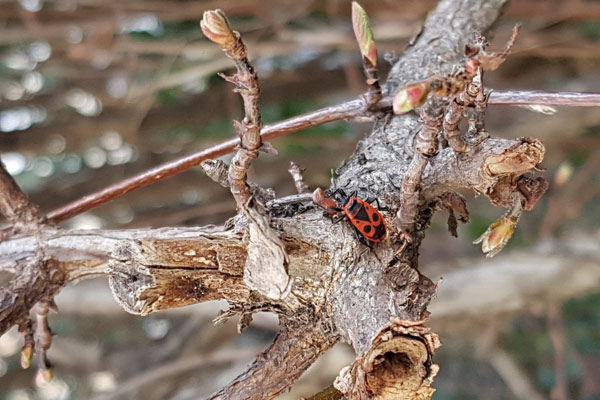
At the end of the current week, a significant change in the agrometeorological conditions is expected. The forecast sharp drop in temperatures will hinder the prematurely initiated bud swelling in some early-flowering fruit trees. Precipitation of rain and snow is expected, as well as an improvement in the conditions for overwintering agricultural crops.
On most days of the period, conditions will allow the carrying out of pruning in vineyards and orchards. In fruit crops, along with thinning and shortening pruning, phytosanitary pruning is also performed – mummified, dried, and disease-infested branches and shoots are destroyed. When carrying out phytosanitary pruning, cuts should be made at a distance of 30-40 cm from the damaged area, and tools must be disinfected after each cut.
Source: NIMH